


The Staff Ratios and Adequate Supervision information, for NSW early childhood services, has been revised and updated by the NSW Regulatory Authority, NSW Department Of Education.
When writing Summative Assessments it provides you an opportunity to summarise all the documentation you have collected on each child's learning and development and "sum" up to emphasize children's strengths and make learning visible.
In partnership with the New South Wales regulatory authority, ACECQA has developed a series of short, interactive eLearning modules to help approved providers understand their responsibilities under the National Law and Regulations. These modules are also available in web accessible versions.
Anecdotes are the most commonly used tool in gathering information about children.

The following lists the sub outcomes, examples of evidence when children can achieve each sub outcome and how educators can promote and help children to achieve MTOP Learning Outcome 5 - Children Are Effective Communicators.

In a mixed age group of children, an educator who is caring for one age range of children can also be counted against another age range of children, as long as the ratio for each age range is maintained and adequate supervision is maintained at all times.

Conducting performance reviews is an effective way to recognise and reward individual educators contributions within the service. The purpose of performance reviews is to assess the performance of individual educators and to improve communication between Educators and management.

Within the Early Years Learning Framework, there are three basic concepts that children’s lives are characterized by. They are Belonging, Being and Becoming.
As a Diploma Qualified educator, you are to plan, implement and evaluate an educational program that supports a holistic approach to the care and development of children aged from birth to six years of age.
As a Cert 3 Qualified Education, you are required to work in a team to provide high-quality early childhood education development, learning and care to children.
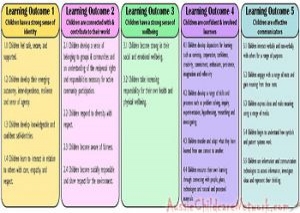 Here is the list of the EYLF Learning Outcomes that you can use as a guide or reference for your documentation and planning. The EYLF… Read More
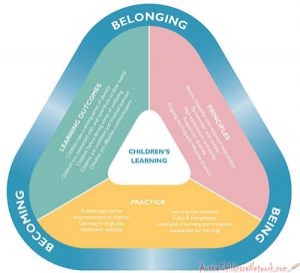 The EYLF is a guide which consists of Principles, Practices and 5 main Learning Outcomes along with each of their sub outcomes, based on identity,… Read More
 This is a guide on How to Write a Learning Story. It provides information on What Is A Learning Story, Writing A Learning Story, Sample… Read More
 One of the most important types of documentation methods that educators needs to be familiar with are “observations”. Observations are crucial for all early childhood… Read More
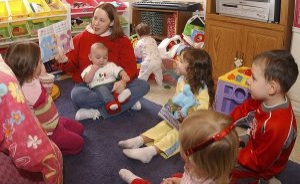 To support children achieve learning outcomes from the EYLF Framework, the following list gives educators examples of how to promote children's learning in each individual… Read More
 Reflective practice is learning from everyday situations and issues and concerns that arise which form part of our daily routine while working in an early… Read More
 When observing children, it's important that we use a range of different observation methods from running records, learning stories to photographs and work samples. Using… Read More
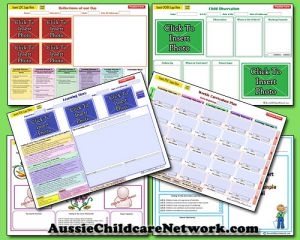 Within Australia, Programming and Planning is reflected and supported by the Early Years Learning Framework. Educators within early childhood settings, use the EYLF to guide… Read More
 This is a guide for educators on what to observe under each sub learning outcome from the EYLF Framework, when a child is engaged in… Read More
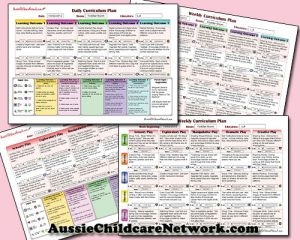 The Early Years Learning Framework describes the curriculum as “all the interactions, experiences, activities, routines and events, planned and unplanned, that occur in an environment… Read More
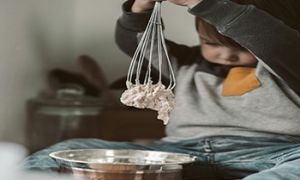
Cooking with toddlers in early childhood services can be a delightful and educational experience. It...
See more...
Australia Day offers a powerful opportunity to reflect on the rich tapestry that makes this...
See more...
“Thank You for the Memories” is a beautifully crafted end‑of‑year portfolio template designed to help...
See more...