


The beginning of the year often brings fresh opportunities for both educators and services. For managers, this is a critical time to recruit new staff who will shape the culture and quality of care for the months ahead. Interviewing for a Cert III position requires more than checking qualifications; it demands a thoughtful approach that balances compliance, creativity, and a child-centered philosophy.
This article provides managers with practical strategies, sample questions, and example responses to ensure interviews uncover the qualities that matter most in early childhood education.

The start of a new year is a powerful moment for educators to pause and reflect. Beyond compliance requirements, it’s an opportunity to reconnect with the values that guide our practice. By intentionally setting a vision rooted in values, educators can ensure that compliance becomes a scaffold for authentic engagement rather than a burden.

In today’s competitive early childhood sector, resumes must do more than list qualifications—they should reflect the educator’s philosophy, regulatory expertise, and creative contributions to children’s learning. A well-crafted resume can communicate not only your compliance knowledge but also your ability to design joyful, inclusive, and child-centered experiences.

As the festive season approaches and the calendar ticks down to Christmas, the air is filled with anticipation. For children, it’s the thrill of waiting for Santa, the sparkle of decorations, and the joy of shared traditions. For educators, it’s something deeper a season that highlights the care, connection, and community they nurture every day.

Educator well-being has been one of the most urgent conversations in early childhood this year. For too long, wellbeing was treated as a “personal responsibility,” something educators were expected to manage on their own, often in the margins of already overloaded days. But 2025 revealed something different: wellbeing is not an individual add‑on. It is a systemic, cultural, and professional issue that requires collective attention.

For years, burnout has been treated as an unavoidable part of early childhood education, a by product of caring deeply, working long hours, and navigating a system that often demands more than it gives. But this year, something changed. Educators began naming burnout for what it is: a systemic issue, not a personal failure. And in doing so, they opened the door to something far more powerful: boundaries.
Boundaries are not walls. They are not selfish. They are not a lack of commitment. Boundaries are the quiet, steady practices that protect educators’ capacity to care, think, create, and connect. They are the antidote to burnout, and they are reshaping the culture of early childhood in ways that matter.

As the year draws to a close, early childhood educators across the country find themselves in a familiar tension: the rush to finish documentation, complete assessments, and tie up loose ends—while simultaneously holding the emotional weight of transition, endings, and the quiet realisation that children are not the same people they were in January.
In a sector often dominated by checklists, compliance tasks, and the pressure to “prove” learning, it’s easy for the most meaningful parts of the year to slip through the cracks. Yet when educators pause—truly pause—a different story emerges. One that isn’t captured in formal observations or assessment grids, but in the lived, relational, surprising moments that shaped the year.
These are the moments that mattered.

Rethink group time: flexible, child‑led alternatives that foster connection, inclusion, and meaningful shared learning without the circle.

As 2026 winds down, educators across Australia are asking the same question they’ve been asking all year: Why haven’t ratios been addressed?
Despite months of advocacy, countless submissions, and direct feedback from the floor, the issue remains untouched. Ratios, the single most urgent concern raised by educators, have been sidelined in favour of training modules, registers, and compliance tweaks.
Yes, we’ve seen movement in workforce pay, child safety training, and regulation. But the one thing that determines whether educators can actually keep children safe, supported, and emotionally secure—staffing ratios and group sizes is still being tiptoed around.

Our thoughts and deepest sympathies are with everyone affected by the tragic events at Bondi. We hold close in our hearts those who have suffered loss, those who were injured, and all families and community members navigating shock, grief, or uncertainty. In moments like these, we stand together in compassion, care, and solidarity.
When our wider community is shaken, children and families often look to us for steadiness, gentleness, and a sense of safety. Even when the world feels uncertain, the relationships we build in early childhood settings become powerful anchors.
As educators, we don’t need all the answers. What we can offer is presence, predictability, and compassion.
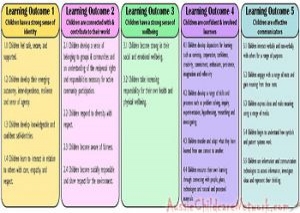 Here is the list of the EYLF Learning Outcomes that you can use as a guide or reference for your documentation and planning. The EYLF… Read More
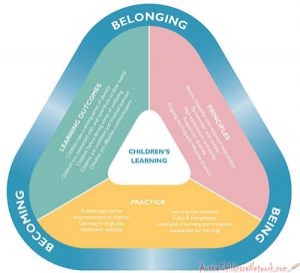 The EYLF is a guide which consists of Principles, Practices and 5 main Learning Outcomes along with each of their sub outcomes, based on identity,… Read More
 This is a guide on How to Write a Learning Story. It provides information on What Is A Learning Story, Writing A Learning Story, Sample… Read More
 One of the most important types of documentation methods that educators needs to be familiar with are “observations”. Observations are crucial for all early childhood… Read More
 To support children achieve learning outcomes from the EYLF Framework, the following list gives educators examples of how to promote children's learning in each individual… Read More
 Reflective practice is learning from everyday situations and issues and concerns that arise which form part of our daily routine while working in an early… Read More
 When observing children, it's important that we use a range of different observation methods from running records, learning stories to photographs and work samples. Using… Read More
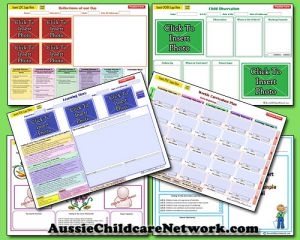 Within Australia, Programming and Planning is reflected and supported by the Early Years Learning Framework. Educators within early childhood settings, use the EYLF to guide… Read More
 This is a guide for educators on what to observe under each sub learning outcome from the EYLF Framework, when a child is engaged in… Read More
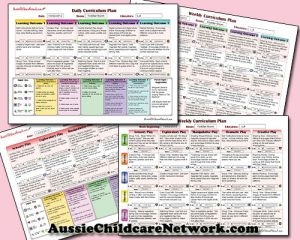 The Early Years Learning Framework describes the curriculum as “all the interactions, experiences, activities, routines and events, planned and unplanned, that occur in an environment… Read More

The Education and Care Services National Law and National Regulations prescribe requirements for children participating...
See more...
Writing a learning story is a wonderful way to document and celebrate children’s development and...
See more...
If an employee is frequently calling in sick, balance empathy with accountability. Support them by...
See more...