
The wellbeing of educators is not peripheral to quality practice—it is central. The health of those leading early childhood programs directly influences the emotional climate of classrooms, the strength of family partnerships, and the resilience of sector teams. When educators begin the year with a clear commitment to their own wellbeing, they establish a tone of stability, professionalism, and care that reverberates across the service.
Common Stressors in Early Childhood Practice
Early childhood education is a profession of profound responsibility, and with it comes unique stressors:
- Emotional intensity: Supporting children’s regulation, responding to diverse family needs, and maintaining professional composure.
- Administrative load: Compliance, documentation, and curriculum planning often compete with relational practice.
- Physical demands: Long hours on the floor, lifting, and repetitive tasks contribute to fatigue.
- Resource constraints: Staffing shortages and limited budgets amplify pressure.
- Identity tension: Navigating the balance between educator values and regulatory expectations.
Recognising these stressors is the first step in reframing wellbeing as a professional necessity rather than a personal indulgence.
Practical Health Strategies for Educators
Embedding health practices into daily routines strengthens resilience and models positive habits for children:
- Hydration: Accessible water stations and regular reminders prevent fatigue and support concentration.
- Movement: Stretching, yoga with children, or short walks during breaks reduce strain and improve energy.
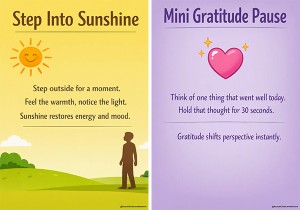
- Restorative pauses: Intentional breaks—fresh air, mindful breathing, or quiet reflection—reset focus.
- Balanced nutrition: Simple, nourishing snacks stabilise energy and mood.
- Sleep hygiene: Consistent rest is essential for sustaining professional performance.
These strategies are not ancillary; they are integral to maintaining the stamina required for high-quality practice.
Building Supportive Team Culture
Individual health flourishes in environments where team culture actively supports wellbeing. Strong cultures are characterised by:
- Transparent communication: Open dialogue about challenges and successes builds trust.
- Shared responsibility: Rotating tasks and distributing workload equitably prevents burnout.
- Mentorship and peer support: Experienced educators guiding new colleagues strengthens confidence and cohesion.
- Recognition and celebration: Acknowledging achievements, large and small, fosters morale.
- Collective rituals: Weekly check-ins, gratitude practices, or team walks embed wellbeing into organisational rhythm.
A supportive team culture transforms wellbeing from an individual pursuit into a collective commitment.
Educator wellbeing must be understood as a cornerstone of professional sustainability. It is not about surviving the demands of the year, but about ensuring the longevity and vitality of the profession itself. By embedding health practices and cultivating supportive cultures, services create environments where educators can thrive—sustaining their capacity to nurture, inspire, and lead with integrity.
Further Reading
Mental Health and Well Being Of Educators
Free Educator Wellbeing Posters
Educational Leader Guide: Empowering Educator Well-Being
Wellbeing Wednesday Ideas That Actually Work
Self Care For Educators



 The Children’s Services Award introduces a streamlined classification system and updated pay rates designed to better recognise the skills, qualifications, and responsibilities of early childhood
 The Children’s Services Award has 8 clear levels. These levels make it easier to understand where you fit, based on your experience, qualifications, and responsibilities.
 When working as a qualified early childhood teacher (with a university degree) within a service, your rate of pay will come from the Educational Services
 Diploma-qualified educators play a vital role in early childhood services, taking on responsibilities that range from supporting children’s learning and development to leading rooms and
 Certificate III qualified educators form the backbone of early childhood services, providing essential care and learning support for children across all settings. Their wages under
 Early Childhood Teachers (ECTs) play a vital role in leading curriculum and pedagogy in early learning settings. Regulation 272 of the Education and Care Services
 Discover how school readiness programs support children’s independence, confidence, and skills for a successful transition into primary school.
 When an Educator is not performing their tasks or responsibilities at best practice, these issues need to be addressed for the Educator to understand where
 Educators can maximise tax deductions by claiming classroom supplies, training, union fees, and home office costs this financial year.
 A staff appraisal is a formal, systematic process of determining and reviewing the performance of early childhood educators over a period of time, usually a