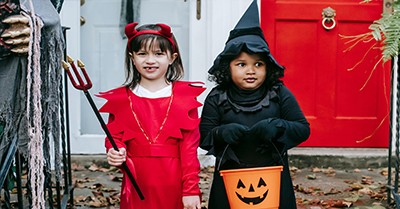
Here’s a playful set of questions you can use during group time to explore children’s understanding of Halloween. These are designed to spark curiosity, storytelling, and cultural reflection, while keeping things warm and inclusive.
Exploring What They Know
- What do you think Halloween is all about?
- Why do people dress up in costumes on Halloween?
- Have you ever heard a story about Halloween? What happened in it?
Feelings and Experiences
- How do you feel when Halloween is coming?
- What’s your favorite thing about Halloween?
- Is there anything about Halloween that feels a little bit spooky or strange?
Symbols and Traditions
- What kinds of things do you see around Halloween time?
- Why do you think people carve pumpkins?
- What do you think ghosts, witches, or skeletons mean in Halloween stories?
Costumes and Celebrations
- If you could dress up as anything for Halloween, what would you choose?
- Have you ever gone trick-or-treating? What was it like?
- What’s your favorite Halloween snack or treat?
Cultural Connections
- Do you think Halloween is celebrated the same way everywhere in the world?
- Are there any special celebrations in your family or culture that feel a little like Halloween?
- What would Halloween look like if it were celebrated in your favorite place?
Further Reading
Halloween Activities For Children
Celebrating Halloween In Early Childhood Settings
Halloween Songs and Rhymes Posters
Celebrate Halloween With Free Printables And Activities


 The Children’s Services Award introduces a streamlined classification system and updated pay rates designed to better recognise the skills, qualifications, and responsibilities of early childhood
 The Children’s Services Award has 8 clear levels. These levels make it easier to understand where you fit, based on your experience, qualifications, and responsibilities.
 When working as a qualified early childhood teacher (with a university degree) within a service, your rate of pay will come from the Educational Services
 Diploma-qualified educators play a vital role in early childhood services, taking on responsibilities that range from supporting children’s learning and development to leading rooms and
 Certificate III qualified educators form the backbone of early childhood services, providing essential care and learning support for children across all settings. Their wages under
 Early Childhood Teachers (ECTs) play a vital role in leading curriculum and pedagogy in early learning settings. Regulation 272 of the Education and Care Services
 Children need safe and positive environments to learn and grow. To ensure this, services and educators need to ensure effective supervision at all times. The
 Floorbook is a documentation approach that uses a large book with blank pages for children to record different aspects of their learning in small groups
 When an Educator is not performing their tasks or responsibilities at best practice, these issues need to be addressed for the Educator to understand where
 Educators can maximise tax deductions by claiming classroom supplies, training, union fees, and home office costs this financial year.