



In New South Wales, a disturbing trend is emerging: early childhood education students are paying thousands of dollars for contract cheating services—outsourcing assignments to third parties, often via encrypted platforms like WhatsApp. Some are reportedly using these fraudulent qualifications to fast-track visa approvals and bypass the very training meant to prepare them to support, nurture, and educate our youngest citizens.

When a qualification is cancelled by the Australian Skills Quality Authority (ASQA), it sets off a chain of consequences for educators, employers, and the broader vocational education sector. Here's a breakdown of what happens. The following article provides information on What Triggers Cancellation?, Students Working With Cancelled Qualification. Notification Process, Consequences for Students, FAQs for Cancelled VET Qualifications and more.

Thousands of educators entered the field armed with certificates but short on competence. Driven by profit motives and migration incentives, several education providers offered one-year diplomas with minimal oversight and limited practical learning. This is not just a compliance issue—it’s a moral imperative. The following article provides strategies on how the sector can rebuild quality and credibility.

In a sweeping move to restore integrity to Australia’s vocational education and training (VET) sector, the Australian Skills Quality Authority (ASQA) has revoked an estimated 10,700 that were linked to early childhood education and care in late 2024. Providers like Luvium Pty Ltd and Gills College were found to have issued credentials without proper training or assessment.

Australia’s early childhood education sector is facing a crisis of confidence, with a growing number of insiders warning that fast-tracked qualification courses are putting children at serious risk. A recent investigation by ABC’s Adele Ferguson and Chris Gillett has exposed a troubling trend: education providers, driven by profit and immigration incentives, are flooding the sector with underprepared graduates—many of whom lack the skills, understanding, and commitment necessary to ensure children’s safety and well-being.

The differences between a Certificate III and a Diploma in Early Childhood Education and Care depends on your career goals, current qualifications, and the level of responsibility you wish to take on. The following article provides information on the Cert 3 and Diploma in Early Childhood Education and Care.

TAFE Queensland is offering fee-free entry-level Certificate III qualifications in Early Childhood Education and Care. The qualification is the minimum requirement for early childhood settings in Australia.

For educators looking to update their qualification and have the required knowledge, experience and skills instead of completing assignments and tasks to complete a qualification an alternative option is Recognition of Prior Learning (RPL).
 The Children’s Services Award introduces a streamlined classification system and updated pay rates designed to better recognise the skills, qualifications, and responsibilities of early childhood… Read More
 The Children’s Services Award has 8 clear levels. These levels make it easier to understand where you fit, based on your experience, qualifications, and responsibilities.… Read More
 When working as a qualified early childhood teacher (with a university degree) within a service, your rate of pay will come from the Educational Services… Read More
 Diploma-qualified educators play a vital role in early childhood services, taking on responsibilities that range from supporting children’s learning and development to leading rooms and… Read More
 Certificate III qualified educators form the backbone of early childhood services, providing essential care and learning support for children across all settings. Their wages under… Read More
 Early Childhood Teachers (ECTs) play a vital role in leading curriculum and pedagogy in early learning settings. Regulation 272 of the Education and Care Services… Read More
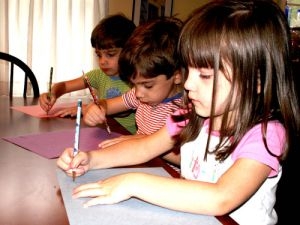 Discover how school readiness programs support children’s independence, confidence, and skills for a successful transition into primary school.
Read More
Discover how school readiness programs support children’s independence, confidence, and skills for a successful transition into primary school.
Read More
 When an Educator is not performing their tasks or responsibilities at best practice, these issues need to be addressed for the Educator to understand where… Read More
 Educators can maximise tax deductions by claiming classroom supplies, training, union fees, and home office costs this financial year.
Read More
Educators can maximise tax deductions by claiming classroom supplies, training, union fees, and home office costs this financial year.
Read More
 A staff appraisal is a formal, systematic process of determining and reviewing the performance of early childhood educators over a period of time, usually a… Read More

Transitioning children into a new room in childcare can be a smooth and positive experience...
See more...
Australia Day, observed on 26 January, is a day of celebration for some but a...
See more...
Here is the list of the MTOP Learning Outcomes that you can use as a...
See more...