


Across OSHC services, educators and leaders are voicing the same challenge: how do we meet documentation requirements with limited staff without drowning in double-handling or excessive detail?

Music has always been a powerful tool in OSHC programs—whether it’s setting the tone for a calm morning or energising children after school. Many educators are exploring how to use music not just as background noise, but as a way to support regulation, inclusion, and child agency.

The following gives you 50+ boredom-busting activities across five themed days—Maker Monday, Challenge Tuesday, Creative Wednesday, Active Thursday, and Chill Friday. Each theme includes 10 low-prep, high-engagement ideas that respect older children’s growing identity and sense of autonomy.

Older children in OSHC often hit us with the classic line: “I’m bored.” But when asked what they’d like to do, the reply is just as familiar: “I don’t know.”
This isn’t laziness; it’s a developmental stage. They’re testing independence, craving novelty, and rejecting anything that feels “too little kid.” The challenge for educators is to offer activities that are low-prep, high-engagement, and feel authentically “big kid.”

Supporting children in OSHC with regulation techniques means creating safe, predictable environments and teaching strategies that help them manage emotions, behaviour, and social interactions. The most effective approaches combine self-regulation, co-regulation, and environmental adjustments tailored to children’s needs.

The My Time, Our Place (MTOP) Framework is designed for school-age care, with five outcomes that guide planning and reflection. Embedding it means linking everyday activities to these outcomes in ways that are intentional, inclusive, and meaningful. Here’s a clear breakdown with activity examples mapped to each outcome.

Transitions are one of the most vulnerable times in OSHC programs. Children move between spaces, activities, or staff supervision, and without structure, these moments can become chaotic. A structured line‑up system provides predictability, safety, and efficiency, ensuring every child is accounted for while fostering calm routines.


Australia is facing a significant shortage in Outside School Hours Care (OSHC), leaving many families—particularly working mothers—struggling to balance employment and childcare responsibilities.
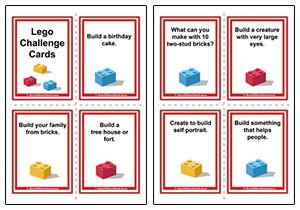
LEGO challenge task cards: a fun classroom management tool that builds creativity, problem‑solving, teamwork, and hands‑on learning for children.
 The Children’s Services Award introduces a streamlined classification system and updated pay rates designed to better recognise the skills, qualifications, and responsibilities of early childhood… Read More
 The Children’s Services Award has 8 clear levels. These levels make it easier to understand where you fit, based on your experience, qualifications, and responsibilities.… Read More
 When working as a qualified early childhood teacher (with a university degree) within a service, your rate of pay will come from the Educational Services… Read More
 Diploma-qualified educators play a vital role in early childhood services, taking on responsibilities that range from supporting children’s learning and development to leading rooms and… Read More
 Certificate III qualified educators form the backbone of early childhood services, providing essential care and learning support for children across all settings. Their wages under… Read More
 Early Childhood Teachers (ECTs) play a vital role in leading curriculum and pedagogy in early learning settings. Regulation 272 of the Education and Care Services… Read More
 Discover how school readiness programs support children’s independence, confidence, and skills for a successful transition into primary school.
Read More
Discover how school readiness programs support children’s independence, confidence, and skills for a successful transition into primary school.
Read More
 When an Educator is not performing their tasks or responsibilities at best practice, these issues need to be addressed for the Educator to understand where… Read More
 Educators can maximise tax deductions by claiming classroom supplies, training, union fees, and home office costs this financial year.
Read More
Educators can maximise tax deductions by claiming classroom supplies, training, union fees, and home office costs this financial year.
Read More
 A staff appraisal is a formal, systematic process of determining and reviewing the performance of early childhood educators over a period of time, usually a… Read More

The concept of supervision zones is a practical strategy to enhance child safety and educator accountability where...
See more...
The Four Eyes Policy—also known as the Four Eyes Principle or Two-Person Rule—is a safeguarding...
See more...
In the ongoing discourse around quality early childhood education, educator-to-child ratios often dominate the conversation...
See more...