



One year on, childcare safety reforms show progress in reporting and training, but true safeguarding depends on culture and daily practice.

Childcare ratios remain frozen in time. Educators face burnout; children need support — urgent reform is vital for quality care in 2026.

The “runny nose test", introduced by former police officer and now early education CEO Kim Clifton, suggests that families can judge a centre’s attentiveness by observing how educators respond to small, everyday needs. The idea is simple: if educators notice and respond to small, everyday needs, like wiping a child’s nose, they demonstrate attentiveness and care.

Is a school readiness program necessary? Explore how skills and dispositions are built through play, programs, and balanced approaches in early childhood.


Family celebrations in early childhood services, Mother’s Day, Father’s Day, and Grandparents’ Day are more than just dates on the calendar. They are cultural anchors that help children express gratitude and build identity. Yet, as inclusivity policies evolve, services face a pressing question: should we rename these days to avoid exclusion or preserve them as distinct recognitions of caregiving roles?

Every time a shocking case of child abuse surfaces, the sector braces for another wave of reactionary policies. Device bans, endless training modules, and compliance paperwork pile up on educators who already uphold professional standards. Yet none of these measures address the core issue: ratios.

Education Minister Jess Walsh has announced today that the government is banning the unsafe business practice of misuse of “under-the-roofline” ratios. For many educators, this statement feels like a long-awaited victory. Yet the choice of wording — misuse — leaves room for interpretation, and that ambiguity deserves closer scrutiny.

As parents, we know the indescribable joy of seeing our child’s face light up when they connect with a peer, master a new skill, or simply laugh with abandon. For educators, these moments are equally profound—they are the heartbeat of our work, the evidence of growth, and the stories that shape a child’s learning journey.
Yet, in recent years, the sector has faced a dilemma: should we continue to capture and share these images, or should we restrict them in the name of safety?
The law in Australia reflects this balance: images are not banned, but services must obtain consent, use secure platforms, and embed strong privacy safeguards. The National Model Code and upcoming NQF Child Safety Reforms make it clear—responsible image use is possible.
1. Transparent Consent
2. Secure Platforms
3. Purposeful Documentation
4. Dignity First
5. Family Connection
6. Child Voice
|
Strategy |
Example | Outcome |
|---|---|---|
| Consent | Parents choose photo-sharing preferences via digital form. | Families feel respected and in control |
| Secure Sharing | Photos uploaded to encrypted parent portal | Protects privacy, builds trust |
| Learning Links | Tower-building photo linked to Outcome 5 | Shows authentic learning evidence |
| Dignity | Child holding certificate instead of toilet photo | Maintains respect and celebrates achievement |
| Child Choice | Children select photos for portfolios. |
Builds identity and agency |
Safety is essential. But so is joy. In our efforts to protect children, we must not erase their visibility. Families deserve to see their child’s milestones. Children deserve to be recognised for their growth. Educators deserve to celebrate the learning they nurture every day.
Images, when used responsibly, are not a risk; they are a gift. They are the bridge between families and educators, the record of childhood unfolding, and the reminder that every child’s story is worth seeing.
Photo Observations In Childcare
Q: Do All Observations Require A Photo?
Opinion: We Don't Need 200 Photos to Prove We're Educators
Q: What Is A Photo Observation

At the end of 2026, the early childhood sector is still waiting for ratio reform. Despite years of advocacy, despite mounting evidence, and despite repeated calls from educators, families, and sector leaders, ratios remain unchanged. Everything else seems to be happening—new frameworks, reporting requirements, compliance checks—but the most fundamental safeguard, the number of adults available to protect and nurture children, is still overlooked.
 The Children’s Services Award introduces a streamlined classification system and updated pay rates designed to better recognise the skills, qualifications, and responsibilities of early childhood… Read More
 The Children’s Services Award has 8 clear levels. These levels make it easier to understand where you fit, based on your experience, qualifications, and responsibilities.… Read More
 When working as a qualified early childhood teacher (with a university degree) within a service, your rate of pay will come from the Educational Services… Read More
 Diploma-qualified educators play a vital role in early childhood services, taking on responsibilities that range from supporting children’s learning and development to leading rooms and… Read More
 Certificate III qualified educators form the backbone of early childhood services, providing essential care and learning support for children across all settings. Their wages under… Read More
 Early Childhood Teachers (ECTs) play a vital role in leading curriculum and pedagogy in early learning settings. Regulation 272 of the Education and Care Services… Read More
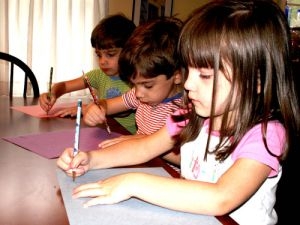 Discover how school readiness programs support children’s independence, confidence, and skills for a successful transition into primary school.
Read More
Discover how school readiness programs support children’s independence, confidence, and skills for a successful transition into primary school.
Read More
 When an Educator is not performing their tasks or responsibilities at best practice, these issues need to be addressed for the Educator to understand where… Read More
 Educators can maximise tax deductions by claiming classroom supplies, training, union fees, and home office costs this financial year.
Read More
Educators can maximise tax deductions by claiming classroom supplies, training, union fees, and home office costs this financial year.
Read More
 A staff appraisal is a formal, systematic process of determining and reviewing the performance of early childhood educators over a period of time, usually a… Read More

Dreamy is a collection of FREE mindful audio stories from the First Storytellers – Aboriginal...
See more...
The International Day of Happiness, observed globally on 20th March, is an opportunity to highlight...
See more...
Quality Area 4 of the National Quality Standard focuses on the provision of qualified and...
See more...