



Becoming an effective leader in early childhood education requires mastering a blend of communication, organizational, and relationship-building skills. Here’s how educational leaders can develop and enhance their leadership abilities.
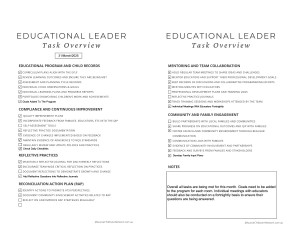
This template is a task overview of the responsibilities as an educational leader within an early childhood service.

Reflective teaching helps educators refine their approaches, understand children’s needs, and foster a culture of continuous growth. This guide provides discussion prompts to support meaningful reflection and professional development.

Reflective practice is essential for continuous growth in early childhood education. As a leader, fostering a culture of self-reflection helps educators refine their teaching methods, identify strengths, and enhance their impact on children’s learning experiences. Here's how to lead reflective practices effectively and an example of reflective practice in action.

Engaging families in early learning is crucial for fostering a collaborative environment that supports children's development. Here are some practical strategies on how to get families involved in their child's learning.

Providing constructive feedback is an essential skill for fostering growth, trust, and improvement. Here’s a structured guide to help you deliver feedback effectively.

This article focuses on providing actionable strategies and practical techniques for educational leaders to effectively mentor their team members in early childhood services. It emphasizes fostering professional growth and building confidence, which are essential for cultivating a strong, collaborative, and motivated team.

Educational leaders play a crucial role in their early childhood service by ensuring that the educational program aligns with best practices and supports the holistic development of children. As per the Children's Services Award, educational leaders are given a yearly allowance based on how many days they are an educational leader for and non-contact time.

The role of an educational leader in early childhood settings in Australia is multifaceted and crucial for the development and implementation of high-quality educational programs. The following articles provides information on Position Description For An Educational Leader, Skills Of An Educational Leader, Educational Leader Allowance, Supporting Educators, Motivating and Inspiring As An Educational Leader and more.

As of 01 November, Cert 3 and Diploma Educational Leaders, will now receive an allowance of $4412.84 per year.
 The Children’s Services Award introduces a streamlined classification system and updated pay rates designed to better recognise the skills, qualifications, and responsibilities of early childhood… Read More
 The Children’s Services Award has 8 clear levels. These levels make it easier to understand where you fit, based on your experience, qualifications, and responsibilities.… Read More
 When working as a qualified early childhood teacher (with a university degree) within a service, your rate of pay will come from the Educational Services… Read More
 Diploma-qualified educators play a vital role in early childhood services, taking on responsibilities that range from supporting children’s learning and development to leading rooms and… Read More
 Certificate III qualified educators form the backbone of early childhood services, providing essential care and learning support for children across all settings. Their wages under… Read More
 Early Childhood Teachers (ECTs) play a vital role in leading curriculum and pedagogy in early learning settings. Regulation 272 of the Education and Care Services… Read More
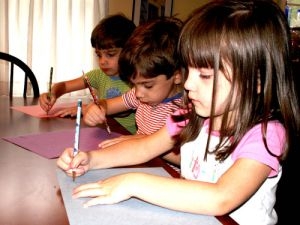 Discover how school readiness programs support children’s independence, confidence, and skills for a successful transition into primary school.
Read More
Discover how school readiness programs support children’s independence, confidence, and skills for a successful transition into primary school.
Read More
 When an Educator is not performing their tasks or responsibilities at best practice, these issues need to be addressed for the Educator to understand where… Read More
 Educators can maximise tax deductions by claiming classroom supplies, training, union fees, and home office costs this financial year.
Read More
Educators can maximise tax deductions by claiming classroom supplies, training, union fees, and home office costs this financial year.
Read More
 A staff appraisal is a formal, systematic process of determining and reviewing the performance of early childhood educators over a period of time, usually a… Read More

Boosting team morale is essential for creating a positive and productive work environment. The following...
See more...
Supervision in an OSHC setting means more than just “watching” children; it’s about actively ensuring...
See more...
No. Under the Education and Care Services National Laws and Regulations: The requirement for an authorised...
See more...