



In early childhood education, the role of the Educational Leader is both visionary and grounded. It’s not just about overseeing curriculum—it’s about cultivating a culture of inquiry, emotional safety, and continuous growth. Each day brings opportunities to mentor, reflect, advocate, and co-create learning environments where children and educators thrive.
This guide outlines the core responsibilities and daily tasks that shape pedagogical leadership. It honours the invisible labour, the quiet coaching moments, and the intentional decisions that uphold quality practice and sector integrity.

In early childhood services, leadership is relational. Whether you're guiding a new educator or supporting a seasoned team member through change, knowing when to coach and when to mentor is essential. These approaches aren’t interchangeable; they serve different purposes, require different skills, and yield different outcomes. This cheat sheet helps leaders distinguish between coaching and mentoring, apply each effectively, and embed both into everyday practice.

In the fast-paced world, leadership isn’t just about compliance or curriculum; it’s about connection. One of the most powerful, yet often overlooked, tools in a leader’s toolkit is the humble check-in ritual. These moments of intentional pause can transform team dynamics, foster psychological safety, and embed a culture of care into the everyday rhythm of a service.

A “Look-For” guide is a practical tool used by educational leaders and mentors to identify and reflect on key indicators of quality practice during observations, walkthroughs, or self-assessments. Think of it as a lens—it helps you focus on what matters most in a learning environment.

An educational leader in early childhood plays a pivotal role in shaping not just curriculum, but the entire culture of a service. The following article provides information on standout qualities that define effective leadership in this space and applying these qualities to a service.

Under the Children’s Services Award 2010, an allowance is payable to an educator formally appointed as the Educational Leader under Regulation 118 of the Education and Care Services National Regulations 2011. From 01 July, the educational leader's allowance will be paid based on the number of days per week you are appointed in the Educational Leader role.
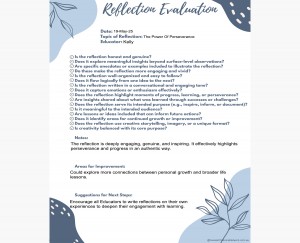
This template is to be used for assessing and enhancing the quality of reflections.

Empowering educator well-being and belonging is about creating an environment where educators feel seen, supported, and valued—not just as professionals, but as whole people. When educators feel that what they do truly matters, they’re more engaged, resilient, and effective in fostering meaningful connections with children. Here are some ways to bring this into everyday practice.

Shifting toward a more interactive culture requires intentional, supportive practice. Here are some ideas to encourage educators to actively engage with children.

Becoming an effective leader in early childhood education requires mastering a blend of communication, organizational, and relationship-building skills. Here’s how educational leaders can develop and enhance their leadership abilities.
 The Children’s Services Award introduces a streamlined classification system and updated pay rates designed to better recognise the skills, qualifications, and responsibilities of early childhood… Read More
 When working as a qualified early childhood teacher (with a university degree) within a service, your rate of pay will come from the Educational Services… Read More
 Diploma-qualified educators play a vital role in early childhood services, taking on responsibilities that range from supporting children’s learning and development to leading rooms and… Read More
 Certificate III qualified educators form the backbone of early childhood services, providing essential care and learning support for children across all settings. Their wages under… Read More
 Early Childhood Teachers (ECTs) play a vital role in leading curriculum and pedagogy in early learning settings. Regulation 272 of the Education and Care Services… Read More
 Children need safe and positive environments to learn and grow. To ensure this, services and educators need to ensure effective supervision at all times. The… Read More
 Floorbook is a documentation approach that uses a large book with blank pages for children to record different aspects of their learning in small groups… Read More
 In Norway and most other Scandinavian countries, children nap in the outdoors. According, to research outdoor sleeping not only promotes better daytime sleeping, but it… Read More
 From 2026, every educator covered by the Children’s Services Award will move into a new, simplified classification structure. Instead of navigating 30 different levels, educators… Read More
 Educational leaders play a crucial role in their early childhood service by ensuring that the educational program aligns with best practices and supports the holistic… Read More

A: This typically refers to opening a room or service with two educators holding Certificate...
See more...
In OSHC, children often mirror cultural trends. The rise of “Sephora kids," young people fascinated...
See more...
The approvals assessment process helps ensure all applicants, prior to approval, understand their responsibilities under...
See more...