



There is often a debate on whether colouring pages should be used in early childhood services. Do they limit creativity? Or foster creativity? Do they restrict children from thinking freely? Or can it they be used as inspiration? The following article provides information on the Pro and Cons Of Colouring Pages, Does Colouring Pages Hinder Creativity, Using Colouring Pages To Complement Open Ended Activities, Colouring Pages and the EYLF and more.

Painting with toddlers and preschoolers can be a wonderful and enriching activity. It not only stimulates their creativity but also supports their overall development. The following article provides information on the Benefits Of Painting, Appropriate Painting Materials and Resources For Children, Painting Experiences With Toddlers, Painting Experiences For Toddlers, Painting Experiences For Preschoolers, Linking To The EYLF and more.

Showcasing children’s work creatively can boost their confidence and make them feel valued. The following article provides information on Showcasing Children's Work, Showcasing Children's Work Outdoors, Showcasing Ongoing Projects, Showcasing Collaborative Projects and more.

This quick art is easy and enables children to create their own fireworks with chalk. Children can create their own fireworks designs and colours to make their own unique fireworks display.

Play provides opportunities for children to learn as they discover, create, improvise and imagine. Creative play in children immerse themselves in their imaginary worlds they become whatever they want to be. Also known as role play, and pretend play, the benefits of creative play range from learning to think in abstractions to social and emotional learning. The following article provides ideas and strategies for incorporating creative play in each individual eylf learning outcomes.

This STEAM activity is a great project. It uses shapes, gravity and movement to create art with some awesome colours. Children will learn to create a roly-poly art using a fun technique with balls. Children will begin to understand explore its effects and use it to create a colourful piece of art.
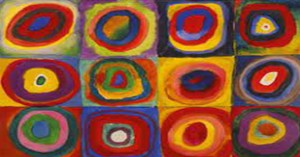
Wassily Kandinsky was a Russian artist, printmaker and art theorist whose works were among the first to herald the modernist movement in art. Since childhood, he was deeply fascinated by colour and shapes and this is reflected over the many artistic phases of his own career. The following provides information on Wassily Kandinsky's art experiences that can be created by children.
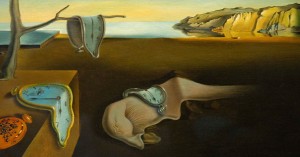
Salvador Dali was a famous Spanish artist known for being unconventional in both his creations and appearance. His paintings, sculptures and films often have a dream-like quality about them, often because the bizarre landscapes or actions depicted cannot happen in the real world. This led to his art being described as Surrealism. Though such terms might sound rather highbrow, the art can be surprisingly conducive to working with children because of the very lack of logical possibility. Here are a few ways that you can explore Salvador Dali with your learners in early childhood settings.

Jackson Pollock was an American artist who painted in the abstract expressionist style. He is best known for works created by dripping and splashing paint on a large canvas that would lie flat on the floor. Additionally, he would often use dance-like movements when splashing colour on the canvas - a method that came to be known as action painting. Here are a few ways that you can explore Jackson Pollock with your learners in early childhood settings.

One of the greatest French artists of the 20th century, Henri Matisse is known for his fluid use of colours and forms in paintings and sculptures. The following provides information on Henri Matisse's art experiences that can be created by children.
 The Children’s Services Award introduces a streamlined classification system and updated pay rates designed to better recognise the skills, qualifications, and responsibilities of early childhood… Read More
 The Children’s Services Award has 8 clear levels. These levels make it easier to understand where you fit, based on your experience, qualifications, and responsibilities.… Read More
 When working as a qualified early childhood teacher (with a university degree) within a service, your rate of pay will come from the Educational Services… Read More
 Diploma-qualified educators play a vital role in early childhood services, taking on responsibilities that range from supporting children’s learning and development to leading rooms and… Read More
 Certificate III qualified educators form the backbone of early childhood services, providing essential care and learning support for children across all settings. Their wages under… Read More
 Early Childhood Teachers (ECTs) play a vital role in leading curriculum and pedagogy in early learning settings. Regulation 272 of the Education and Care Services… Read More
 Children need safe and positive environments to learn and grow. To ensure this, services and educators need to ensure effective supervision at all times. The… Read More
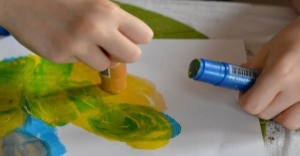 Floorbook is a documentation approach that uses a large book with blank pages for children to record different aspects of their learning in small groups… Read More
 In Norway and most other Scandinavian countries, children nap in the outdoors. According, to research outdoor sleeping not only promotes better daytime sleeping, but it… Read More
 From 2026, every educator covered by the Children’s Services Award will move into a new, simplified classification structure. Instead of navigating 30 different levels, educators… Read More

Here’s a streamlined set of weekly reflection questions designed for educators to use quickly—whether during...
See more...
In early childhood education, ratios are more than numbers. They are the heartbeat of safety...
See more...
Intentional Teaching examples are provided for each key focus and significant aspect of learning.
See more...