


In early childhood education, the practice of moving educators to new rooms each year is common. Some services see it as a way to keep things fresh, while others worry it disrupts continuity for children. So, are yearly room changes supporting children’s well-being or unsettling the very relationships they rely on?

Building positive relationships with families is essential, and simple, thoughtful greetings go a long way in creating a welcoming environment. The following article provides tips for educators on how they can approach drop-offs and pick-ups effectively.

Positive phrases play a crucial role in children's growth because they help nurture their emotional, social, and cognitive development. The following article lists 30 positive phrases that educators should say to children.


Engaging parents in early childhood activities is a wonderful way to build a strong community and support children's development. The following article provides a list of Activity Ideas For Parents in early childhood settings.

Workplace bullying is a serious issue that can have significant impacts on an individual's mental health, job satisfaction, and overall well-being. The following article provides information on How To Handle A Workplace Bully, What To Do If Someone Is Ignoring You At Work, What To Do If Someone Is Being Disrespecting You At Work, What To Do If Someone Is Gossiping About You At Work, What To Do If Someone Is Yelling At You At Work and more.

The role of an educational leader in early childhood settings in Australia is multifaceted and crucial for the development and implementation of high-quality educational programs. The following articles provides information on Position Description For An Educational Leader, Skills Of An Educational Leader, Educational Leader Allowance, Supporting Educators, Motivating and Inspiring As An Educational Leader and more.

Self-regulation can be understood as a suite of skills needed to control and manage one’s own emotions and behaviours in a wide range of setting. Learning self-regulation in the early years has been consistently linked to not just better adjusted adults but also higher levels of academic achievement in later life. The following provides strategies to support children’s self-regulation in the learning environment.

In early childhood, positive relationships with teachers are extremely important for intellectual, social and emotional development. Indeed research shows that secure attachments formed in early years do not just prepare the foundations for positive relationships in adulthood but predict positive life outcomes as well. The following article provides strategies on how Educators can build relationships with children.

Effective communication is key to building positive relationships with children and facilitating their learning. However, if our words are to have the desired impact, they need to be adequately complemented with non-verbal cues. This is even more pertinent in the early childhood contexts when young children are yet to fully acquire language. The following article provides strategies for using non-verbal communication with children.
 The Children’s Services Award introduces a streamlined classification system and updated pay rates designed to better recognise the skills, qualifications, and responsibilities of early childhood… Read More
 Children need safe and positive environments to learn and grow. To ensure this, services and educators need to ensure effective supervision at all times. The… Read More
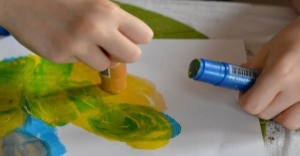 Floorbook is a documentation approach that uses a large book with blank pages for children to record different aspects of their learning in small groups… Read More
 In Norway and most other Scandinavian countries, children nap in the outdoors. According, to research outdoor sleeping not only promotes better daytime sleeping, but it… Read More
 Nature programs in early childhood settings are a fantastic way to connect children with the natural world and promote holistic development. The following article provides… Read More
 From 2026, every educator covered by the Children’s Services Award will move into a new, simplified classification structure. Instead of navigating 30 different levels, educators… Read More
 Schemas are patterns of repeated behavior that allow children to explore and express developing ideas and thoughts through their play and exploration. The following article… Read More
 The following article lists 30 art and craft descriptions and links to the EYLF. These can be used as a blurb, during observations, used for… Read More
 Positive phrases play a crucial role in children's growth because they help nurture their emotional, social, and cognitive development. The following article lists 30 positive… Read More
 The Education and Care Services National Regulations emphasise that children's individual needs, including sleep and rest, must be met. The overarching goal is to ensure… Read More
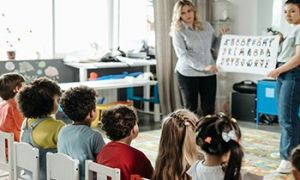
Across the early childhood education and care sector, educators are sounding the alarm: current staffing...
See more...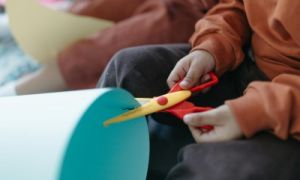
Hand-eye coordination is a crucial skill for preschoolers, helping them with everyday tasks, sports, and...
See more...
Regulatory authorities administer the National Quality Framework (NQF) in each state and territory, usually as...
See more...