



Exceeding Theme 3: Practice is shaped by meaningful engagement with families and/or the community. It focuses on practice being shaped by meaningful engagement with families and the community. It highlights that high-quality services don’t operate in isolation; educators actively collaborate with families, children, and community partners to co-construct learning, well-being, and service identity.

Minecraft has become a powerful tool for engaging children in OOSH. Its open-ended, creative environment allows children to explore, build, and collaborate in ways that naturally align with the MTOP. When thoughtfully facilitated, Minecraft activities can extend children’s interests, foster teamwork, and embed meaningful learning outcomes.

OSHC educators play a vital role in supporting children’s well-being during transitions, play, and rest. With new child safety reforms under the National Quality Framework (NQF) coming into effect from September 2025 and January 2026, services are required to adopt clearer boundaries and transparent practices around physical contact. This article explores how educators can balance emotional support with safeguarding obligations.

In OSHC, children often mirror cultural trends. The rise of “Sephora kids," young people fascinated by skincare and makeup, has sparked curiosity about how educators can channel this interest safely. While applying cosmetics directly to children’s skin isn’t appropriate, there are many playful, imaginative strategies that let them explore beauty culture without risk.

Working in OSHC means being prepared for the unexpected. Children are naturally curious, and sometimes their questions can feel confronting—especially when asked in front of peers. One educator recently shared an experience where a Year 4/5 child interrupted a group discussion to ask, “Are you gay?” This scenario highlights the importance of professional boundaries, inclusivity, and reflective practice.

Children thrive when they can do—exploring, tinkering, and experimenting. Science activities in OSHC settings not only engage curious minds but also build teamwork, problem‑solving, and resilience. Best of all, many experiments can be done with everyday materials, keeping costs low while maximising fun.

In OSHC, language plays a powerful role in shaping the culture of the environment. Inappropriate language and swearing can undermine respect, safety, and inclusivity. Educators often face the challenge of balancing children’s freedom of expression with the need to maintain a positive, professional atmosphere.
Documenting for Out of School Hours (OOSH) services can be quite a task, but it's essential for ensuring quality care and learning experiences for children. The following article provides information on Documenting The Program For OOSh Services, Changes To The Documenting Requirements, Considerations In Developing Documentation, Appropriate and Relevant Documentation, Involving Children In Documentation and more.

The years between five and twelve are a time brimming with activity for children – they are developing close friendships, getting stronger in body and mind as well as widening their circle of hobbies and interests. While all this exploration makes for great learning and excitement, also sets the stage for some challenging behaviour. The following article provides information on strategies that Educators can use to promote positive behaviour in OOSH services.

OOSH Educators Day 2026 will be celebrated on Wednesday, 29th July, recognising the vital role OOSH educators play in supporting children, families, and communities throughout Australia. This year’s theme is “Valuing Every OOSH Educator Every Day”, highlighting their contribution to resilience, wellbeing, and lifelong learning.
 Working as a childcare professional can be a challenge especially when dealing with behavioural problems which may arise. The techniques we use when dealing with… Read More
 There are different types of behaviour that children can display and sometimes it can be hard to manage, especially if a child is having behavioural… Read More
 As Educators, there will be many instances where you will need to write about a child's behaviour. For a behaviour management plan, assessments, half-yearly or… Read More
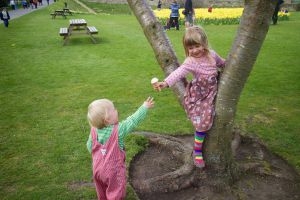 As a parent, your behavioural expectations of your child can be higher than what is actually developmentally appropriate for your child's age.
Read More
As a parent, your behavioural expectations of your child can be higher than what is actually developmentally appropriate for your child's age.
Read More
 As Educators when communicating with Parents (through verbal or non-verbal communication), there will be times where we need to discuss issues or concerns that may… Read More
 Challenging Behaviour is when a child does something that hurts themselves and/or other people.
Read More
Challenging Behaviour is when a child does something that hurts themselves and/or other people.
Read More
 It's always difficult to bring up behavioural issues with parents, it can be nerve wrecking to tell a parent that their child misbehaves but that… Read More
 As part of your child's development it is normal for your child to have anxiety and fears. A baby commonly shows a fearful sign to… Read More
 All children deal with anger on a daily basis. Thinking about it as a child, there is a lot to be angry about. Elder people… Read More
 It is important to understand that your child behaviour problems could not just be from attention seeking. There are many factors to take into consideration… Read More

Internet is an important resource in today’s society for everyone and it has become a...
See more...
Your child is about to enter one of the most important parts of their lives...
See more...
Babies will begin to find new ways of moving themselves around the house and has...
See more...