



Here’s a curated set of critical reflection questions tailored for room displays in early childhood settings—designed to provoke deeper thinking around pedagogy, child voice, aesthetics, and relational intent. These can be used during planning, team reflection, or documentation audits.

This reflection guide is designed to support educators in rethinking school readiness through a holistic, child-centered lens. It encourages dialogue, challenges assumptions, and strengthens programming that honours each child’s unique journey.

Here’s a curated set of critical reflection questions designed to provoke deep thinking around educator-to-child ratios in early childhood settings.

A: Creating your own critical reflections is a bit like having a conversation with yourself—one where you ask thoughtful questions, dig deeper into your actions, and look for meaningful ways to grow. Here’s a step-by-step guide to help you shape reflections that go beyond surface-level observations.

Here are some thoughtfully crafted critical reflection prompts to help you explore and strengthen relationships with children, aligned with Quality Area 5 of the NQS.

Here’s a thoughtful set of critical reflection questions you can use to evaluate and enrich cultural displays in your service.

Here are some thoughtfully framed critical reflection questions you can use with your team or in professional discussions to unpack the AEDC 2024 findings.

The following provides practical examples of critical reflections in early childhood education, drawn from real-world scenarios.

The following list of questions helps educators critically reflect on their supervision practices, ensuring a balance between safety, engagement, and autonomy.
Critical reflection is a powerful tool for understanding and addressing challenging behaviours in young children. Here are some reflective questions you might consider when analysing a child's behaviour. The following article provides information on: Reflective Question When Analysing A Child's Behaviour, Applying These Reflection Questions In Practice, Example in Practice, Example Of Reflection Questions In Action and more.
 Working as a childcare professional can be a challenge especially when dealing with behavioural problems which may arise. The techniques we use when dealing with… Read More
 There are different types of behaviour that children can display and sometimes it can be hard to manage, especially if a child is having behavioural… Read More
 As Educators, there will be many instances where you will need to write about a child's behaviour. For a behaviour management plan, assessments, half-yearly or… Read More
 As a parent, your behavioural expectations of your child can be higher than what is actually developmentally appropriate for your child's age.
Read More
As a parent, your behavioural expectations of your child can be higher than what is actually developmentally appropriate for your child's age.
Read More
 As Educators when communicating with Parents (through verbal or non-verbal communication), there will be times where we need to discuss issues or concerns that may… Read More
 Challenging Behaviour is when a child does something that hurts themselves and/or other people.
Read More
Challenging Behaviour is when a child does something that hurts themselves and/or other people.
Read More
 It's always difficult to bring up behavioural issues with parents, it can be nerve wrecking to tell a parent that their child misbehaves but that… Read More
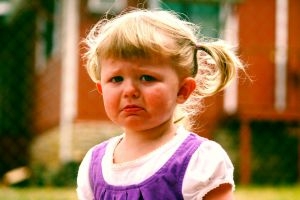 As part of your child's development it is normal for your child to have anxiety and fears. A baby commonly shows a fearful sign to… Read More
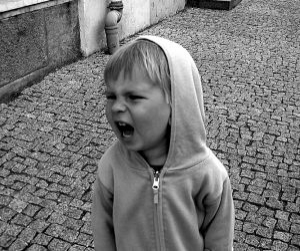 All children deal with anger on a daily basis. Thinking about it as a child, there is a lot to be angry about. Elder people… Read More
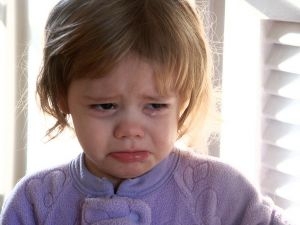 It is important to understand that your child behaviour problems could not just be from attention seeking. There are many factors to take into consideration… Read More
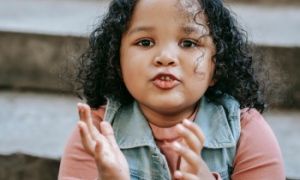
Stimming refers to repetitive movements, sounds, or actions that people use to regulate emotions, manage...
See more...
It is not uncommon for educators to confide that transitions tend to be the most...
See more...
Fine Motor involves the development of the small muscles of the body. The development of...
See more...