




The Child Safe Standards provide a framework to ensure that every child in early childhood education is protected, respected, and empowered. These standards are not just compliance requirements; they are everyday practices that safeguard children’s well-being while fostering environments where they can thrive.
For educators, translating these standards into age‑appropriate strategies is essential. Babies, toddlers, and preschoolers each experience safety differently, and educators must adapt their approaches to meet developmental needs. This guide offers practical checklists and examples to help educators embed child safety into daily routines, interactions, and learning experiences.

All children have the fundamental right to feel safe, valued, respected and supported while attending early childhood education and care (ECEC) in NSW. To reinforce this right, the NSW Government has amended the Children (Education and Care Services) National Law (NSW) as part of recent child safety reforms. These changes introduce new provisions that make it an offence to subject a child in ECEC to “inappropriate conduct” and clearly define what that means in an early childhood context.

In the ongoing discourse around quality early childhood education, educator-to-child ratios often dominate the conversation. While ratios are undeniably important for supervision and safety, a critical yet under-addressed factor is the physical space allocated to each child. The reality is stark: even with ideal ratios, overcrowded rooms can undermine well-being, learning outcomes, and emotional safety.

In light of the recent Four Corners investigation and the distressing realities it has brought to the surface, the following is a sample letter to share with families. This letter is designed to offer calm, transparent reassurance while reaffirming your service's commitment to safeguarding every child in your care. This letter may be used, edited, and adapted for your particular service to reassure families that their concerns are valid and their children are safe.

The concept of supervision zones is a practical strategy to enhance child safety and educator accountability where educators are assigned to actively supervise and engage with children.

Here are 5 gentle, emotionally intelligent, story-based resources designed to help young children understand body boundaries, safe adults, and protective behaviors.
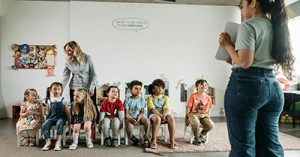
Talking to young children about child protection is one of the most powerful ways to build their sense of safety, agency, and trust. It’s not about instilling fear—it’s about giving them language, confidence, and clarity to navigate their world. Here’s how to approach it with warmth, honesty, and age-appropriate care.

Bravehearts Day, held annually on 12 September, is a national child protection awareness initiative focused on preventing child sexual assault and promoting safe relationships. For early childhood educators, this day offers a chance to gently introduce foundational safety concepts through emotionally intelligent, developmentally appropriate practice.

Today, 1 September 2025, marks a pivotal shift in Australia’s early childhood education landscape, with strengthened child safety regulations now officially in force under the National Quality Framework (NQF). These reforms—fast-tracked following the national review of child safety arrangements—aim to close regulatory gaps, improve incident response, and safeguard children in increasingly digital environments.
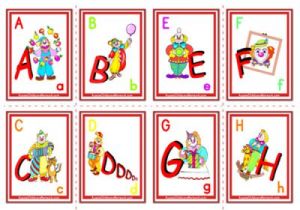
Make learning fun with clown‑themed alphabet flashcards featuring uppercase letters A to Z. These colourful...
View Worksheet...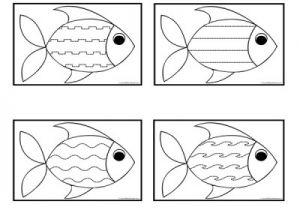
Fish Tracing Lines aims to help children in the development of pre-writing skills. It provides children...
View Worksheet...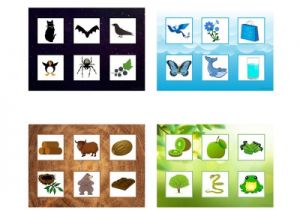
The Rainbow Collage Sorting Mats enable children to sort the different coloured objects into the...
View Worksheet...