



A: An anecdotal record is a type of observational documentation used in education, early childhood development, and research to capture significant moments or behaviors of an individual in a natural setting. It is a brief, narrative account that describes what was observed, without interpretation or analysis.

The following lists reflection questions designed to help educators reflect on how sustainability is embedded into their practices.
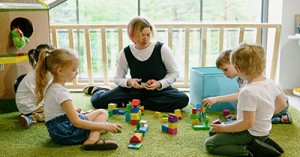
Quality Area 5 of the National Quality Standard focuses on relationships with children. The following article provides a structured list of critical reflection questions for NQS Quality Area 5—Relationships with Children. These questions are designed to help you examine, evaluate, and enhance the ways in which your service fosters secure, respectful, and responsive relationships with children.

When celebrations are well thought out—integrating community input, respecting complexity, and linking meaningfully with the curriculum—they transform into powerful learning experiences. But when they become obligatory, surface-level gestures, they risk doing more harm than good by trivializing cultural significance. Here are some reflective questions you can ask to guide your decision on which significant cultural event to celebrate in an early childhood setting.

The following lists reflection questions designed to help educators examine and enhance the learning environment in early childhood settings.

Quality Area 4 focuses on staffing arrangements. The following questions are designed to help you critically evaluate how your service recruits, supports, retains, and empowers its educators to deliver high-quality, intentional interactions with children.

An integrated curriculum in early childhood education in Australia focuses on holistic learning, where different subject areas and developmental domains are connected rather than taught in isolation. This approach aligns with the EYLF and the National Quality Standard (NQS), ensuring that children's learning experiences are meaningful and interconnected.

The following lists reflection questions to guide programming and planning in early childhood education.

Guidance on deepening educator reflections for practice improvement. Encourages critical reflection.

A: Writing an observation for child learning development can feel tricky at first, but once you get the hang of it, it becomes much easier! The key is to focus on what you see and hear, rather than interpreting how the child might feel. Here are some steps to help you improve:
 Open ended questions cannot be responded to with one word answers such as yes or no. These types of questions enables a child to provide… Read More
 During your child’s preschool years, an important milestone begins to emerge. This is the development of pre-writing skills. Pre-writing skills are used to encourage, develop… Read More
 An Acknowledgment of the Country is a way of showing respect for the Traditional Owners and can be given by both non-Indigenous people and Aboriginal… Read More
 Open ended materials enables children to play freely. They are objects that have no rules to follow, use or function. Raw materials that can be… Read More
 Language plays an important role in a child’s development. It enables a child to communicate effectively with their family, learn at school, socialize with friends,… Read More
 Like adults, children have to deal with their own stress in life. Moving house, starting a new school, preparing for a new sibling - these are… Read More
 Playdough is such a versatile material. It provides numerous benefits to children as they manipulate it, it is safe and soothing and provides children with… Read More
 Teaching children about sustainability enables them to appreciate and respect the natural environment. Early childhood services can provide meaningful hand on learning experiences in order… Read More
 Recycling is an important concept that teaches children to care for the environment. It encourages children to be responsible and show a growing appreciating for… Read More
 Incursions provide children with the opportunity to explore meaningful learning experiences in the comfort of their early childhood service. The following provides a directory of… Read More

Creating a sea-themed learning adventure for toddlers and preschoolers can be an engaging and educational...
See more...
The "No Hat, No Play" policy is a common sun safety rule in early childhood...
See more...
Educational leaders hold a unique position in early childhood services: part mentor, part compliance guide...
See more...