Weekly summaries are collective reflections that capture the learning, play, and experiences of a group of children over the course of a week. Instead of documenting daily group observations, educators compile a broader overview that highlights key themes, interests, and developmental progress.
They serve as:
- A communication tool for families.
- A reflective practice for educators.
- A record of curriculum planning and children’s engagement.
Why Shift to Weekly Summaries?
- Time efficiency: Less time spent writing daily notes means more time engaging with children.
- Depth over frequency: Allows educators to focus on meaningful individual observations when needed.
- Holistic perspective: Captures patterns and themes across the week rather than isolated daily snapshots.
- Family engagement: Provides parents with a digestible, narrative-style update.
How to Write Weekly Summaries
1. Structure the Summary
- Introduction: A warm greeting or overview of the week.
- Highlights: Key activities, interests, and spontaneous play moments.
- Learning Links: Connect experiences to EYLF/MTOP outcomes or service philosophy.
- Photos or Anecdotes: Include visuals or short stories that bring the week to life.
- Looking Ahead: Mention upcoming plans or how children’s interests will be extended.
2. Keep It Child-Centered
- Focus on children’s voices, actions, and discoveries.
- Use inclusive language (“the children explored…” rather than “we taught…”).
3. Balance Detail and Brevity
- Aim for 2–3 paragraphs per group.
- Use bullet points for quick highlights if preferred.
Example Weekly Summary (Preschool Room)
This week, our preschoolers showed a strong interest in building and construction.
- They collaborated to create tall block towers, experimenting with balance and stability.
- Outdoor play saw children digging and designing “roads” in the sandpit, sparking conversations about traffic and community.
- During group time, we read The Three Little Pigs, which inspired role-play and storytelling.
Learning Links:
- EYLF Outcome 4: Children are confident and involved learners.
- EYLF Outcome 2: Children are connected with and contribute to their world.
Next Week: We’ll extend this interest by introducing recycled materials for construction and inviting children to design their own “mini city.”
Pros and Cons of Weekly Summaries
| Pros | Cons |
|---|---|
| Saves time for educators | Less detail on daily events |
| Encourages deeper reflection | Risk of missing small but significant moments |
| Strengthens family communication | Requires consistent formatting to stay effective |
| Highlights group learning themes | May not satisfy services that require daily documentation |
Practical Strategies
- Use digital platforms - Appsessement for easy sharing and family feedback.
- Create a template with headings (Highlights, Learning Links, Next Steps) to streamline writing.
- Rotate responsibility among educators to share the workload.
- Pair with individual observations so children’s unique progress is still captured.
- Invite family input by asking questions like “What construction projects do you see at home?”
Do These Replace Daily Diaries?
Weekly summaries don’t automatically replace daily diaries—it depends on your service’s philosophy, compliance requirements, and how you want to communicate with families.
- For older age groups (preschool/OSHC): Weekly summaries can often replace daily diaries because families are more interested in learning highlights and developmental progress than routine care notes.
- For younger children (babies/toddlers): Daily diaries are usually still needed to communicate care routines (feeding, sleeping, toileting). Weekly summaries can complement these by showing the bigger picture of play and learning.
- Compliance considerations: Some services choose to keep both—daily diaries for routines and weekly summaries for curriculum reflection. Others streamline to one format if families and leadership agree it meets communication needs.
Practical Approach
- Hybrid model:
- Daily diaries for infants/toddlers (short, routine-focused).
- Weekly summaries for preschool/OSHC groups (learning-focused).
- Family consultation: Ask families what type of documentation they value most.
- Policy alignment: Ensure your choice aligns with NQS expectations around documentation and family communication.
Weekly summaries can replace daily diaries in some contexts, but they’re not a one-size-fits-all solution. Think of them as a curriculum reflection tool, while daily diaries are more of a care communication tool. Many services use both, tailored to age groups and family expectations.
Can You Add Follow-Up Experiences
Adding follow-up experiences to weekly summaries is a powerful way to show continuity in learning and demonstrate intentional curriculum planning. It bridges what children have done with what they will do next, making documentation more meaningful for both educators and families.
Why Include Follow-Up Experiences?
- Shows progression: Families see how children’s interests are extended over time.
- Supports planning: Educators can map out next steps linked to EYLF/MTOP outcomes.
- Strengthens reflection: Encourages educators to think critically about how to build on children’s engagement.
- Evidence for NQS: Demonstrates intentional teaching and responsive curriculum design.
How to Add Follow-Up Experiences
-
Identify emerging interests
- Look for repeated play themes (e.g., construction, role-play, nature exploration).
- Note children’s questions or problem-solving moments.
-
Link to learning outcomes
- Connect the interest to EYLF/MTOP outcomes (e.g., Outcome 4: confident learners).
-
Plan extensions
- Suggest specific experiences, resources, or provocations that build on the interest.
-
Document clearly
- Add a “Next Steps” or “Follow-Up Experiences” section at the end of the weekly summary.
Example Weekly Summary with Follow-Up Experiences
This week, the toddlers showed a fascination with water play.
- They experimented with pouring, filling, and splashing.
- Conversations emerged about “big waves” and “boats.”
- Several children worked together to float objects, testing which ones sank.
Learning Links:
- EYLF Outcome 4: Children are confident and involved learners.
- EYLF Outcome 2: Children are connected with and contribute to their world.
Follow-Up Experiences:
- Introduce floating and sinking experiments with varied materials.
- Set up a small-world “boat play” area with recycled containers.
- Read picture books about the ocean and sea creatures.
- Invite children to draw or paint “waves” to extend creative expression.
Practical Tips
- Keep it short: 3–4 bullet points are enough.
- Be flexible: Follow-up experiences should be adaptable depending on children’s ongoing interests.
- Collaborate: Invite families to contribute ideas (e.g., “What water play do you do at home?”).
- Rotate focus: Not every child’s interest needs a follow-up each week—highlight group themes and balance with individual observations.
Adding follow-up experiences transforms weekly summaries from a record of the past into a plan for the future. It shows families that educators are listening to children’s voices and intentionally scaffolding their learning journey.
Weekly summaries are not just a time-saving measure—they can be a powerful way to showcase children’s collective learning journeys. By focusing on themes, interests, and developmental links, educators can create meaningful documentation that supports both reflective practice and family engagement.
Further Reading
A Guide To Writing A Daily Reflection
Weekly Reflection Questions
Q: Should I Plan Daily Or Weekly?



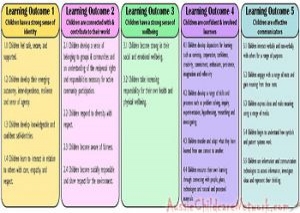 Here is the list of the EYLF Learning Outcomes that you can use as a guide or reference for your documentation and planning. The EYLF
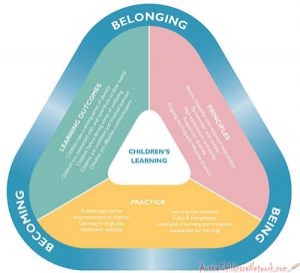 The EYLF is a guide which consists of Principles, Practices and 5 main Learning Outcomes along with each of their sub outcomes, based on identity,
 This is a guide on How to Write a Learning Story. It provides information on What Is A Learning Story, Writing A Learning Story, Sample
 One of the most important types of documentation methods that educators needs to be familiar with are “observations”. Observations are crucial for all early childhood
 To support children achieve learning outcomes from the EYLF Framework, the following list gives educators examples of how to promote children's learning in each individual
 Reflective practice is learning from everyday situations and issues and concerns that arise which form part of our daily routine while working in an early
 When observing children, it's important that we use a range of different observation methods from running records, learning stories to photographs and work samples. Using
 Within Australia, Programming and Planning is reflected and supported by the Early Years Learning Framework. Educators within early childhood settings, use the EYLF to guide
 This is a guide for educators on what to observe under each sub learning outcome from the EYLF Framework, when a child is engaged in
 The Early Years Learning Framework describes the curriculum as “all the interactions, experiences, activities, routines and events, planned and unplanned, that occur in an environment