



Family celebrations in early childhood services, Mother’s Day, Father’s Day, and Grandparents’ Day are more than just dates on the calendar. They are cultural anchors that help children express gratitude and build identity. Yet, as inclusivity policies evolve, services face a pressing question: should we rename these days to avoid exclusion or preserve them as distinct recognitions of caregiving roles?

Education Minister Jess Walsh has announced today that the government is banning the unsafe business practice of misuse of “under-the-roofline” ratios. For many educators, this statement feels like a long-awaited victory. Yet the choice of wording — misuse — leaves room for interpretation, and that ambiguity deserves closer scrutiny.

As parents, we know the indescribable joy of seeing our child’s face light up when they connect with a peer, master a new skill, or simply laugh with abandon. For educators, these moments are equally profound—they are the heartbeat of our work, the evidence of growth, and the stories that shape a child’s learning journey.
Yet, in recent years, the sector has faced a dilemma: should we continue to capture and share these images, or should we restrict them in the name of safety?

At the end of 2026, the early childhood sector is still waiting for ratio reform. Despite years of advocacy, despite mounting evidence, and despite repeated calls from educators, families, and sector leaders, ratios remain unchanged. Everything else seems to be happening—new frameworks, reporting requirements, compliance checks—but the most fundamental safeguard, the number of adults available to protect and nurture children, is still overlooked.

Recent headlines have sounded alarms about the sharp rise in “serious incidents” reported in Australian childcare services. At first glance, the numbers appear troubling: more breaches of national guidelines, more incidents logged, and a decline in staff qualifications. Yet to interpret this solely as evidence of worsening safety is to miss a deeper, more hopeful story.

Recent headlines have warned of a “systemic and escalating” risk in childcare allergy management, claiming that regulations are failing children by requiring only one staff member per centre to be trained in anaphylaxis response. While the concern for child safety is valid, this framing overlooks a critical fact: Diploma-qualified educators are already required to hold current First Aid, CPR, Asthma, and Anaphylaxis training—and at least 50% of staff in every service must hold a Diploma.

As 2026 winds down, educators across Australia are asking the same question they’ve been asking all year: Why haven’t ratios been addressed?
Despite months of advocacy, countless submissions, and direct feedback from the floor, the issue remains untouched. Ratios, the single most urgent concern raised by educators, have been sidelined in favour of training modules, registers, and compliance tweaks.
Yes, we’ve seen movement in workforce pay, child safety training, and regulation. But the one thing that determines whether educators can actually keep children safe, supported, and emotionally secure—staffing ratios and group sizes is still being tiptoed around.

Somewhere along the way, our sector slipped into a strange belief: if we don’t take hundreds of photos a week, we’re not doing our job.
But here’s the truth that many educators whisper quietly, often only to each other: We don’t need 200 photos to prove we’re educators.
We never did.
The heart of early childhood education has always been relationships, presence, and professional decision-making, not the size of a digital gallery.
An opinion article for early childhood educators exploring why excessive photo-taking doesn’t define quality practice. Highlights the importance of presence, intentional documentation, and sector-savvy approaches to capturing photos for families, observations, and learning documentation.

In early childhood education, timing shapes interpretation. A message that would normally pass quietly through the sector can suddenly feel loaded when educators are already carrying frustration, fatigue, and a sense of being unheard. That’s exactly what happened when ACECQA published a routine #funfactfriday post. The post itself was simple and familiar. ACECQA shared a link to one of their infographics, saying, "Did You Know... ACECQA Does Not Conduct Assessment and Rating Visits?

Early childhood education is facing a crisis that cannot be solved with more training modules or compliance checklists. Educators are not leaving because they lack skills or passion. They are leaving because they are being treated as expendable, micromanaged to exhaustion, and denied the respect they deserve as professionals and as people.
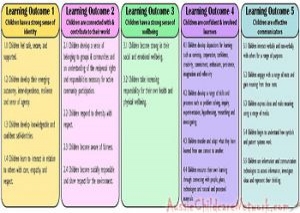 Here is the list of the EYLF Learning Outcomes that you can use as a guide or reference for your documentation and planning. The EYLF… Read More
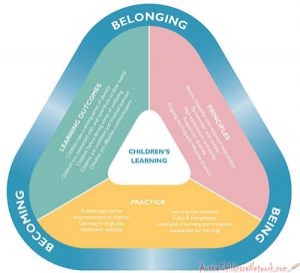 The EYLF is a guide which consists of Principles, Practices and 5 main Learning Outcomes along with each of their sub outcomes, based on identity,… Read More
 This is a guide on How to Write a Learning Story. It provides information on What Is A Learning Story, Writing A Learning Story, Sample… Read More
 One of the most important types of documentation methods that educators needs to be familiar with are “observations”. Observations are crucial for all early childhood… Read More
 To support children achieve learning outcomes from the EYLF Framework, the following list gives educators examples of how to promote children's learning in each individual… Read More
 Reflective practice is learning from everyday situations and issues and concerns that arise which form part of our daily routine while working in an early… Read More
 When observing children, it's important that we use a range of different observation methods from running records, learning stories to photographs and work samples. Using… Read More
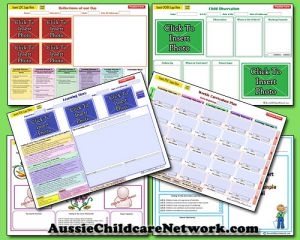 Within Australia, Programming and Planning is reflected and supported by the Early Years Learning Framework. Educators within early childhood settings, use the EYLF to guide… Read More
 This is a guide for educators on what to observe under each sub learning outcome from the EYLF Framework, when a child is engaged in… Read More
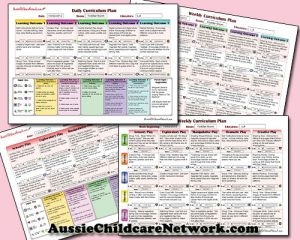 The Early Years Learning Framework describes the curriculum as “all the interactions, experiences, activities, routines and events, planned and unplanned, that occur in an environment… Read More

The recent tragedy is a stark reminder that compliance alone is not enough. Despite holding...
See more...
Penguin Awareness Day is celebrated on January 20th each year. The following article provides information...
See more...
On the first Sunday of September, it is Father's Day. The following provides Father's Day Templates...
See more...