


Recent headlines have sounded alarms about the sharp rise in “serious incidents” reported in Australian childcare services. At first glance, the numbers appear troubling: more breaches of national guidelines, more incidents logged, and a decline in staff qualifications. Yet to interpret this solely as evidence of worsening safety is to miss a deeper, more hopeful story.

Recent headlines have warned of a “systemic and escalating” risk in childcare allergy management, claiming that regulations are failing children by requiring only one staff member per centre to be trained in anaphylaxis response. While the concern for child safety is valid, this framing overlooks a critical fact: Diploma-qualified educators are already required to hold current First Aid, CPR, Asthma, and Anaphylaxis training—and at least 50% of staff in every service must hold a Diploma.

Australia Day, observed on 26 January, is a day of celebration for some but a day of mourning for many First Nations peoples. As educators, we hold the responsibility to model respect, inclusion, and truth-telling. Reframing the day as Our Land and Community Day allows us to celebrate what is beautiful about Australia—its land, animals, foods, and cultural diversity—while acknowledging the pain this date represents.
This approach is not about division. It is about honesty, empathy, and creating a safe, inclusive space for children and families.

As 2026 winds down, educators across Australia are asking the same question they’ve been asking all year: Why haven’t ratios been addressed?

Somewhere along the way, our sector slipped into a strange belief: if we don’t take hundreds of photos a week, we’re not doing our job.
But here’s the truth that many educators whisper quietly, often only to each other: We don’t need 200 photos to prove we’re educators.
We never did.
The heart of early childhood education has always been relationships, presence, and professional decision-making, not the size of a digital gallery.
An opinion article for early childhood educators exploring why excessive photo-taking doesn’t define quality practice. Highlights the importance of presence, intentional documentation, and sector-savvy approaches to capturing photos for families, observations, and learning documentation.

In early childhood education, timing shapes interpretation. A message that would normally pass quietly through the sector can suddenly feel loaded when educators are already carrying frustration, fatigue, and a sense of being unheard. That’s exactly what happened when ACECQA published a routine #funfactfriday post. The post itself was simple and familiar. ACECQA shared a link to one of their infographics, saying, "Did You Know... ACECQA Does Not Conduct Assessment and Rating Visits?

As the year draws to a close, many early childhood services find themselves navigating the familiar tradition of end‑of‑year gifting. Families want to show appreciation, educators want to be gracious, and services try to balance gratitude with fairness.
But in recent years, this once‑simple gesture has become more complicated. Rising living costs, shifting expectations, and concerns about equity have prompted many educators and leaders to ask an important question:
Are end‑of‑year gifts still a kind tradition, or have they become an unnecessary pressure for families and staff?

Early childhood education is facing a crisis that cannot be solved with more training modules or compliance checklists. Educators are not leaving because they lack skills or passion. They are leaving because they are being treated as expendable, micromanaged to exhaustion, and denied the respect they deserve as professionals and as people.

The recent announcement by Minister for Education Jason Clare that childcare centres will receive funding to close early for mandatory child safety training. But let’s be clear—child protection training is not new. Educators already undertake annual courses and ongoing professional development throughout the year. You cannot work in this industry without it. Training is essential, but it is not where the real problems begin.
Child protection courses are already mandatory. The real crisis?
Too many children per educator
Understaffed centres
Lack of inclusion support for children with disabilities
Until ratios drop and staffing rises, training alone won’t fix child safety.

Australia’s Early Childhood Education and Care (ECEC) sector is facing a crisis that numbers alone cannot explain. On paper, more than 70,000 students are enrolled in early childhood qualifications across the country. Yet services report a shortfall of 21,000 qualified educators. Families are stuck on waitlists, centres are forced to reduce hours, and educators already in the field are stretched to breaking point.
This paradox—so many in training, yet so few in classrooms—reveals a deeper structural failure.
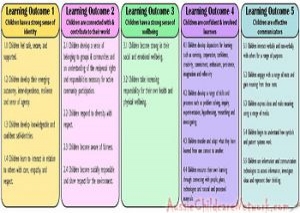 Here is the list of the EYLF Learning Outcomes that you can use as a guide or reference for your documentation and planning. The EYLF… Read More
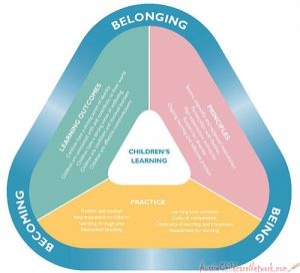 The EYLF is a guide which consists of Principles, Practices and 5 main Learning Outcomes along with each of their sub outcomes, based on identity,… Read More
 This is a guide on How to Write a Learning Story. It provides information on What Is A Learning Story, Writing A Learning Story, Sample… Read More
 One of the most important types of documentation methods that educators needs to be familiar with are “observations”. Observations are crucial for all early childhood… Read More
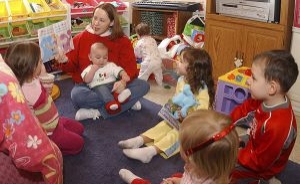 To support children achieve learning outcomes from the EYLF Framework, the following list gives educators examples of how to promote children's learning in each individual… Read More
 Reflective practice is learning from everyday situations and issues and concerns that arise which form part of our daily routine while working in an early… Read More
 When observing children, it's important that we use a range of different observation methods from running records, learning stories to photographs and work samples. Using… Read More
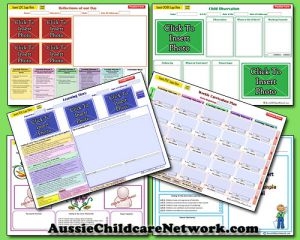 Within Australia, Programming and Planning is reflected and supported by the Early Years Learning Framework. Educators within early childhood settings, use the EYLF to guide… Read More
 This is a guide for educators on what to observe under each sub learning outcome from the EYLF Framework, when a child is engaged in… Read More
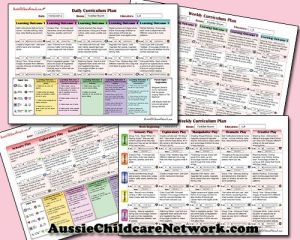 The Early Years Learning Framework describes the curriculum as “all the interactions, experiences, activities, routines and events, planned and unplanned, that occur in an environment… Read More

Creating a supportive environment where children feel safe to express their emotions is crucial for...
See more...
A waiver enables a service that is non-compliant with the National Regulations or an element...
See more...
Higher duties in the Children's Services Award refer to situations where an educator temporarily performs tasks...
See more...