


The following lists reflection questions designed to help educators reflect on how sustainability is embedded into their practices.
Quality Area 5 of the National Quality Standard focuses on relationships with children. The following article provides a structured list of critical reflection questions for NQS Quality Area 5—Relationships with Children. These questions are designed to help you examine, evaluate, and enhance the ways in which your service fosters secure, respectful, and responsive relationships with children.

When celebrations are well thought out—integrating community input, respecting complexity, and linking meaningfully with the curriculum—they transform into powerful learning experiences. But when they become obligatory, surface-level gestures, they risk doing more harm than good by trivializing cultural significance. Here are some reflective questions you can ask to guide your decision on which significant cultural event to celebrate in an early childhood setting.

The following lists reflection questions designed to help educators examine and enhance the learning environment in early childhood settings.

Quality Area 4 focuses on staffing arrangements. The following questions are designed to help you critically evaluate how your service recruits, supports, retains, and empowers its educators to deliver high-quality, intentional interactions with children.

An integrated curriculum in early childhood education in Australia focuses on holistic learning, where different subject areas and developmental domains are connected rather than taught in isolation. This approach aligns with the EYLF and the National Quality Standard (NQS), ensuring that children's learning experiences are meaningful and interconnected.

The following lists reflection questions to guide programming and planning in early childhood education.

Guidance on deepening educator reflections for practice improvement. Encourages critical reflection.

A: Writing an observation for child learning development can feel tricky at first, but once you get the hang of it, it becomes much easier! The key is to focus on what you see and hear, rather than interpreting how the child might feel. Here are some steps to help you improve:

A: A jotting observation is a concise and informal way to document significant events, behaviors, or interactions. These observations are typically brief, focusing on specific moments rather than a sequence of events. They provide a snapshot of a child's interests, development, or skills and can be recorded in various formats, such as notebooks or post-it notes.
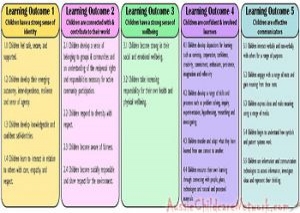 Here is the list of the EYLF Learning Outcomes that you can use as a guide or reference for your documentation and planning. The EYLF… Read More
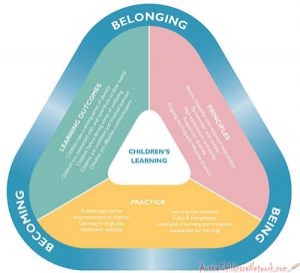 The EYLF is a guide which consists of Principles, Practices and 5 main Learning Outcomes along with each of their sub outcomes, based on identity,… Read More
 This is a guide on How to Write a Learning Story. It provides information on What Is A Learning Story, Writing A Learning Story, Sample… Read More
 One of the most important types of documentation methods that educators needs to be familiar with are “observations”. Observations are crucial for all early childhood… Read More
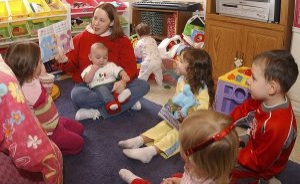 To support children achieve learning outcomes from the EYLF Framework, the following list gives educators examples of how to promote children's learning in each individual… Read More
 Reflective practice is learning from everyday situations and issues and concerns that arise which form part of our daily routine while working in an early… Read More
 When observing children, it's important that we use a range of different observation methods from running records, learning stories to photographs and work samples. Using… Read More
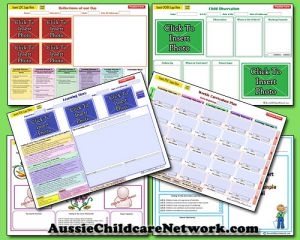 Within Australia, Programming and Planning is reflected and supported by the Early Years Learning Framework. Educators within early childhood settings, use the EYLF to guide… Read More
 This is a guide for educators on what to observe under each sub learning outcome from the EYLF Framework, when a child is engaged in… Read More
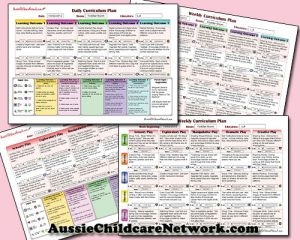 The Early Years Learning Framework describes the curriculum as “all the interactions, experiences, activities, routines and events, planned and unplanned, that occur in an environment… Read More
The following is a cheat sheet for Quality Area 2. Quality Area 2 of the...
See more...
Halloween is more than costumes and candy; it's a cultural moment that invites play, storytelling...
See more...
Child wellbeing. It’s a phrase we use daily—but how often do we pause to ask...
See more...