



Connecting with local Aboriginal and Torres Strait Islander (ATSI) communities can be a rewarding and enriching experience. The following article provides information on Steps To Seek Support and Build Relationships With ATSI Communities, Ensuring Involvement Is Respectful To ATSI Communities, How To Seek Permission To Use Or Share ATSI Stories Or Materials, Seeking Permission In NSW, Getting Involved With Local ATSI Organisations and more.
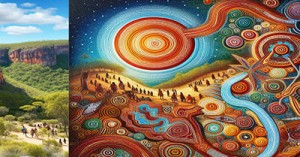
Embedding Aboriginal and Torres Strait Islander (ATSI) perspectives and pedagogies in Early Years education environments is essential for several reasons. The following article provides infromation on the Importance Of Embedding ATSI Perspectives And Pedagogies In The Early Years Education Environments, Incorporating ATSI Perspectives Into Your Practice, Incorporating ATSI Histories and Cultures in EYLF Curriculum, Examples Of Effective Activities, EYLF and ATSI Perspectives and more.
Dreamy is a collection of FREE mindful audio stories from the First Storytellers – Aboriginal and Torres Strait Islander people.
Possum Skin Pedagogy is an educational framework designed for early childhood practitioners to embed Aboriginal perspectives into their teaching. The following article provides information on the seven narratives that explore Aboriginal culture and aspects of implementing possum skin pedagogy.
The Aboriginal Cultural Safety Framework is designed to create culturally responsive, safe, and welcoming environments for Aboriginal children and their families within the early childhood education and care sector.
The Indigenous Literacy Foundation proudly presents Indigenous Literacy Day on Wednesday 6th September, celebrating Stories, Cultures and Languages. Take part in a free virtual event including a 15-minute film premiere, followed by a 45-minute live stream from the Sydney Opera House with storytelling and songs.
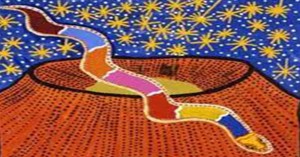
Creation stories are mythological tales that describe a cultural or religious group’s beliefs about how the universe including its elements and beings was created. The following article provides information on What Are Creation Stories, the Importance Of The Rainbow Serpent and Tiddalik, the Benefits of Creation Stories and How They Can Be Incorporated Into Everyday Learning.
Play School has collaborated with SNAICC, Koori Curriculum, Reconciliation Australia and the South West Aboriginal Land and Sea Council to create ‘Play School’s Yarning and Dreaming’ available to watch on Thursday 4th August at 9 am.
National Aboriginal and Torres Strait Islander Children’s Day (Children’s Day) is our national day dedicated to celebrating our children and is celebrated across the country each year on 4 August.
Australia Post is the principal partner of the Indigenous Literacy Foundation. They have created the Pen Pal Club teacher guide encouraging children to investigate and share First Nations stories and culture through letter writing.
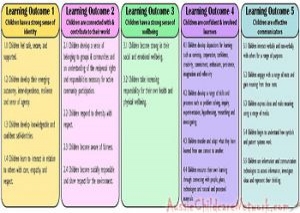 Here is the list of the EYLF Learning Outcomes that you can use as a guide or reference for your documentation and planning. The EYLF… Read More
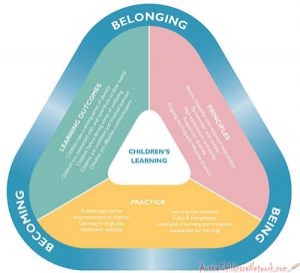 The EYLF is a guide which consists of Principles, Practices and 5 main Learning Outcomes along with each of their sub outcomes, based on identity,… Read More
 This is a guide on How to Write a Learning Story. It provides information on What Is A Learning Story, Writing A Learning Story, Sample… Read More
 One of the most important types of documentation methods that educators needs to be familiar with are “observations”. Observations are crucial for all early childhood… Read More
 To support children achieve learning outcomes from the EYLF Framework, the following list gives educators examples of how to promote children's learning in each individual… Read More
 Reflective practice is learning from everyday situations and issues and concerns that arise which form part of our daily routine while working in an early… Read More
 When observing children, it's important that we use a range of different observation methods from running records, learning stories to photographs and work samples. Using… Read More
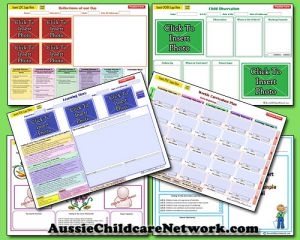 Within Australia, Programming and Planning is reflected and supported by the Early Years Learning Framework. Educators within early childhood settings, use the EYLF to guide… Read More
 This is a guide for educators on what to observe under each sub learning outcome from the EYLF Framework, when a child is engaged in… Read More
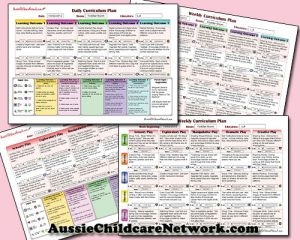 The Early Years Learning Framework describes the curriculum as “all the interactions, experiences, activities, routines and events, planned and unplanned, that occur in an environment… Read More
When Parents are sending food from home, it's important that they understand they need to...
See more...
Quality Area 5 - Relationships With Children provides a sense of connection to support children...
See more...
Wassily Kandinsky was a Russian artist, printmaker and art theorist whose works were among the...
See more...