


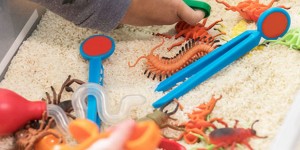
Early childhood is a busy time – there are so many new objects to look at and touch, sensations to experience and activities to explore. Not surprisingly then, it is common for children to occasionally have trouble paying attention. However, adding a sensory component or enhancing the existing sensory features of an activity can help promote attention and engagement. The following article provides strategies and activity ideas for auditory, visual, tactile, oral, and movement sensory stimulation.

NAIDOC Week 2022 starts from 3 July to 10 July. NAIDOC Week celebrations are held across Australia to celebrate the history, culture and achievements of Aboriginal and Torres Strait Islander peoples. The following provides Activities, Crafts, Songs and Resources to celebrate NAIDOC Week and incorporate ATSI Communities into your Early Childhood Service.
A co-listening podcast for preschoolers is called Little Yarns. Little Yarns is all about the various languages, tales, and countries of Indigenous Australia and is a great listening resource in early learning services.

Saying sorry is among the earliest lessons in interpersonal behaviour that children learn when growing up. There are indeed many benefits of an apology but sometimes we forget that almost always they depend on both sides genuine feeling the emotions rather than being forced to go through the motions. The following article provides information on the Importance Of Apologising and Strategies To Support Children In Saying Sorry.
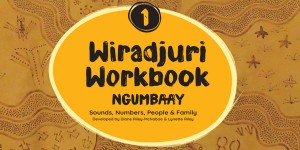
The following free workbooks are designed to allow the best opportunities to learn the Wiradjuri language and culture through games and other learning activities. Wiradjuri is one of many Aboriginal languages on the East Coast of Australia.
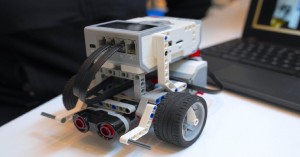
STEM, the word stands for Science, Technology, Engineering, and Mathematics. It is a way of education where the subjects that are mentioned above are taught in coherence with each other instead of in isolation. It focuses to make a bridge between the learning gap and experience through child-centric materials with the aim of making children active learners. The following article provides information on STEM Education, Incorporating STEM Education In Different Ways, Learning Environment and STEM and more!

Pre-writing skills are the techniques that will make a child ready for writing. It is just like you have to walk first before you run likewise pre-writing skills will help children develop fine motor skills such as hand-eye coordination which will strengthen the hand muscles. The following article provides information on Pre-Writing Skills Activities, Benefits Of Pre-Writing Skills and more.

As the words indicate, Open-ended questions have no right or wrong answers and thus cannot be answered with a simple, ‘yes’ or ‘no’. Open-ended questions figure in several of the pedagogical practices outlined in the EYLF, like ‘being responsive to children, ‘learning through play and most of all, ‘intentional teaching’. The following article provides the major benefits of using open-ended questions in the early childhood education context.

Tremendous advances in brain imaging technology over the last ten years have led to a quantum leap in brain research. Among the research areas most studied by scientists is the effect of musical experiences on the brain development of children. The following article provides information on How Music Enriches Brain Development In Children, Playing Music Vs Listening To Music, Benefits Of Music and more.

Writing ability is one of the more complex literacy skills as it depends on a host of physiological, cognitive and communication developments. The following article provides information on the role of drawing and talking in early writing development.
 The Children’s Services Award introduces a streamlined classification system and updated pay rates designed to better recognise the skills, qualifications, and responsibilities of early childhood… Read More
 The Children’s Services Award has 8 clear levels. These levels make it easier to understand where you fit, based on your experience, qualifications, and responsibilities.… Read More
 When working as a qualified early childhood teacher (with a university degree) within a service, your rate of pay will come from the Educational Services… Read More
 Diploma-qualified educators play a vital role in early childhood services, taking on responsibilities that range from supporting children’s learning and development to leading rooms and… Read More
 Certificate III qualified educators form the backbone of early childhood services, providing essential care and learning support for children across all settings. Their wages under… Read More
 Early Childhood Teachers (ECTs) play a vital role in leading curriculum and pedagogy in early learning settings. Regulation 272 of the Education and Care Services… Read More
 Children need safe and positive environments to learn and grow. To ensure this, services and educators need to ensure effective supervision at all times. The… Read More
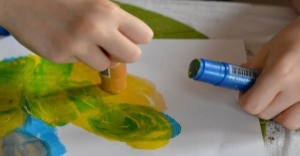 Floorbook is a documentation approach that uses a large book with blank pages for children to record different aspects of their learning in small groups… Read More
 In Norway and most other Scandinavian countries, children nap in the outdoors. According, to research outdoor sleeping not only promotes better daytime sleeping, but it… Read More
 From 2026, every educator covered by the Children’s Services Award will move into a new, simplified classification structure. Instead of navigating 30 different levels, educators… Read More

Both the Principles and Practices of EYLF place great significance on the nature of child-educator...
See more...
Early childhood work is fast‑paced, relational, and constantly shifting. Good time management isn’t about squeezing...
See more...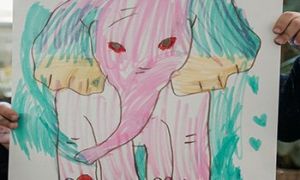
A work sample observation in early childhood education is a method used by educators to...
See more...