



Here's a quick cheat sheet for Quality Area 4: Staffing Arrangements under the National Quality Standard (NQS) in Australian early childhood education. This area focuses on ensuring that staffing promotes children's learning and development.
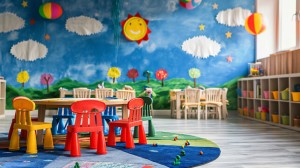
The following is a cheat sheet for Quality Area 3: Physical Environment. This quality area is designed to support educators in creating safe, inclusive, and engaging spaces that nurture well-being and learning. This version emphasizes design principles, sustainability, and trauma-informed spatial choices, with cues for induction, audit prep, and daily reflection.

The following is a cheat sheet for Quality Area 2. Quality Area 2 of the National Quality Standard (NQS) is the heartbeat of safe, responsive, and nurturing early childhood environments. It affirms that every child has the right to feel safe, be healthy, and thrive—physically, emotionally, and developmentally.

Quality Area 3 of the National Quality Standard (NQS) focuses on the physical environment—its design, safety, inclusivity, and how it supports children’s learning, wellbeing, and agency. Here’s a breakdown of practical, workplace-ready examples tailored to your advocacy and leadership lens.

The following is a concise yet powerful cheat sheet for Quality Area 1: Educational Program and Practice, tailored for your advocacy and sector leadership lens. This distills the core elements, documentation strategies, and reflective prompts to support both compliance and authentic pedagogy.

Quality Area 1 of the National Quality Standard focuses on Educational Program and Practice, ensuring that learning experiences are child-centered, stimulating, and engaging. Here are some practical examples of how this can be implemented in the workplace.
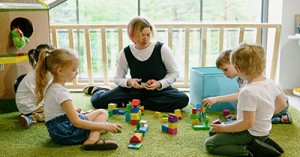
Quality Area 5 of the National Quality Standard focuses on relationships with children. The following article provides a structured list of critical reflection questions for NQS Quality Area 5—Relationships with Children. These questions are designed to help you examine, evaluate, and enhance the ways in which your service fosters secure, respectful, and responsive relationships with children.

Quality Area 4 focuses on staffing arrangements. The following questions are designed to help you critically evaluate how your service recruits, supports, retains, and empowers its educators to deliver high-quality, intentional interactions with children.

This template is a multiple-choice reflective question template for NQS Quality Area 1: Educational Program and Practice.

Quality Area 5: Relationships with Children is fundamental in early childhood education as it lays the groundwork for a nurturing and supportive learning environment. Here are some key terms and concepts central to this quality area.
 The Children’s Services Award introduces a streamlined classification system and updated pay rates designed to better recognise the skills, qualifications, and responsibilities of early childhood… Read More
 The Children’s Services Award has 8 clear levels. These levels make it easier to understand where you fit, based on your experience, qualifications, and responsibilities.… Read More
 When working as a qualified early childhood teacher (with a university degree) within a service, your rate of pay will come from the Educational Services… Read More
 Diploma-qualified educators play a vital role in early childhood services, taking on responsibilities that range from supporting children’s learning and development to leading rooms and… Read More
 Certificate III qualified educators form the backbone of early childhood services, providing essential care and learning support for children across all settings. Their wages under… Read More
 Early Childhood Teachers (ECTs) play a vital role in leading curriculum and pedagogy in early learning settings. Regulation 272 of the Education and Care Services… Read More
 Discover how school readiness programs support children’s independence, confidence, and skills for a successful transition into primary school.
Read More
Discover how school readiness programs support children’s independence, confidence, and skills for a successful transition into primary school.
Read More
 When an Educator is not performing their tasks or responsibilities at best practice, these issues need to be addressed for the Educator to understand where… Read More
 Educators can maximise tax deductions by claiming classroom supplies, training, union fees, and home office costs this financial year.
Read More
Educators can maximise tax deductions by claiming classroom supplies, training, union fees, and home office costs this financial year.
Read More
 A staff appraisal is a formal, systematic process of determining and reviewing the performance of early childhood educators over a period of time, usually a… Read More

Resilience is the ability to ‘bounce back’ after facing challenges and tough times. For children, this includes experiences like...
See more...
When educators aren’t OK, respond with empathy, provide practical relief, and connect them to clear...
See more...
Creative arts offer children - through dance, crafts, music, art or drama – some of...
See more...