


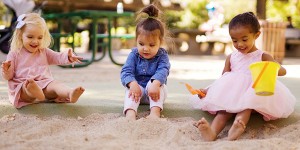
When children move into early childhood settings they broaden their experiences as participants in different relationships and communities. When educators create environments in which children experience mutually enjoyable, caring and respectful relationships with people and the environment, children respond accordingly. The following article provides activities to promote each of the sub outcomes of EYLF Outcome 2: Children Are Connected With And Contribute To Their World.

When children feel safe, secure and supported they grow in confidence to explore and learn. In early childhood settings children develop a sense of belonging when they feel accepted, develop attachments and trust those that care for them. As children are developing their sense of identity, they explore different aspects of it (physical, social, emotional, spiritual, and cognitive), through their play and their relationships. The following article provides activities to promote each of the sub outcomes of EYLF Outcome 1: Children Have A Strong Sense Of Identity.

The Early Years Learning Framework outlines five principles that reflect contemporary theories and research evidence concerning children’s learning and early childhood pedagogy. These principles are meant to underpin practice so that all children are supported to make progress in relation to the Learning Outcomes. The following article provides information on each of the 5 Principles and examples of strategies of how to implement the eylf principles into your service.

According to the Educators’ Guide to the Early Years Learning Framework, documentation is the practice of recording and creating evidence of learning and the learning progress, helping make it visible. Though documentation is mandated to meet regulatory and pedagogical purposes, there are no prescriptive rules about how it may be done. The following article provides strategies for documenting in an early childhood setting.
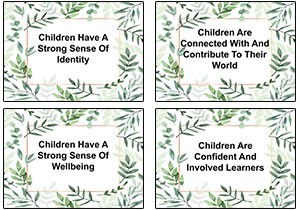
The EYLF Main Outcome Posters includes each of the main outcomes of the early years learning framework. These can be used as a display around the room to show how children achieve each outcome.
When writing Summative Assessments it provides you an opportunity to summarise all the documentation you have collected on each child's learning and development and "sum" up to emphasize children's strengths and make learning visible.
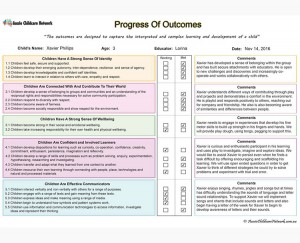
The template is used to record the outcomes the child has met throughout the year based on the EYLF outcomes.

When observing children, it's important that we use a range of different observation methods from running records, learning stories to photographs and work samples. Using a variety of different observation methods can assist you in observing a child's interest, skills, abilities, and needs. It provides a foundation for a child's individual assessment and planning. Collecting a series of observations before interpreting and planning will provide a well rounded and holistic picture of the child.
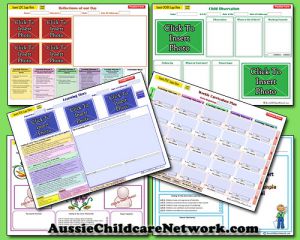
Within Australia, Programming and Planning is reflected and supported by the Early Years Learning Framework. Educators within early childhood settings, use the EYLF to guide their decisions to interpret and assess children’s learning and development.
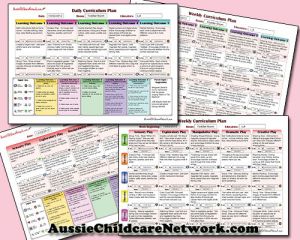
The Early Years Learning Framework describes the curriculum as “all the interactions, experiences, activities, routines and events, planned and unplanned, that occur in an environment designed to foster children’s learning and development”.
 The Children’s Services Award introduces a streamlined classification system and updated pay rates designed to better recognise the skills, qualifications, and responsibilities of early childhood… Read More
 The Children’s Services Award has 8 clear levels. These levels make it easier to understand where you fit, based on your experience, qualifications, and responsibilities.… Read More
 When working as a qualified early childhood teacher (with a university degree) within a service, your rate of pay will come from the Educational Services… Read More
 Diploma-qualified educators play a vital role in early childhood services, taking on responsibilities that range from supporting children’s learning and development to leading rooms and… Read More
 Certificate III qualified educators form the backbone of early childhood services, providing essential care and learning support for children across all settings. Their wages under… Read More
 Early Childhood Teachers (ECTs) play a vital role in leading curriculum and pedagogy in early learning settings. Regulation 272 of the Education and Care Services… Read More
 Children need safe and positive environments to learn and grow. To ensure this, services and educators need to ensure effective supervision at all times. The… Read More
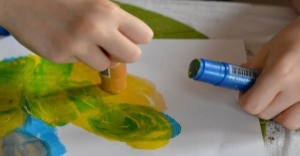 Floorbook is a documentation approach that uses a large book with blank pages for children to record different aspects of their learning in small groups… Read More
 When an Educator is not performing their tasks or responsibilities at best practice, these issues need to be addressed for the Educator to understand where… Read More
 Educators can maximise tax deductions by claiming classroom supplies, training, union fees, and home office costs this financial year.
Read More
Educators can maximise tax deductions by claiming classroom supplies, training, union fees, and home office costs this financial year.
Read More
The following lists the sub outcomes, examples of evidence when children can achieve each sub...
See more...
Celebrating New Year with young children can be a delightful experience filled with fun activities...
See more...
The following provides a list of activity ideas for each sub-outcome of MTOP Outcome 2:...
See more...