



Recognition of Prior Learning allows educators to gain qualifications by valuing existing skills, knowledge, and experience.

New national data reveals a drop in the proportion of qualified staff working in early childhood education and care services.

Educational leadership made simple: expectations, guidance, and practical strategies to inspire teams, ensure compliance, and nurture children.

Beginning your journey as a diploma-qualified educator is both exciting and challenging. You are stepping into a role that requires leadership, reflective practice, and a deeper understanding of compliance and curriculum design. This article outlines the expectations, guidance, and practical tips to help you thrive in your new position.

The beginning of the year often brings fresh opportunities for both educators and services. For managers, this is a critical time to recruit new staff who will shape the culture and quality of care for the months ahead. Interviewing for a Cert III position requires more than checking qualifications; it demands a thoughtful approach that balances compliance, creativity, and a child-centered philosophy.
This article provides managers with practical strategies, sample questions, and example responses to ensure interviews uncover the qualities that matter most in early childhood education.

In today’s competitive early childhood sector, resumes must do more than list qualifications—they should reflect the educator’s philosophy, regulatory expertise, and creative contributions to children’s learning. A well-crafted resume can communicate not only your compliance knowledge but also your ability to design joyful, inclusive, and child-centered experiences.

Over the next five years, educators across the sector will see steady, structured wage increases designed to lift pay to the new benchmark rates for each qualification level. These increases begin with a 5% rise in March 2026, followed by annual increases each 30 June, and finish with a small top‑up adjustment in the final year to ensure every educator reaches their correct new classification rate.

The Diploma of Early Childhood Education and Care gives you an opportunity to explore more career options. From creative resource design to inclusion support, leadership, or advocacy, it offers a rich landscape of opportunities beyond the traditional role of working as an educator in an early learning setting. The following article provides examples of different career pathways for your Diploma qualification.
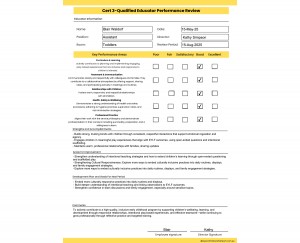
This template can be used for a cert 3 educator in an assitant position to review their performance.
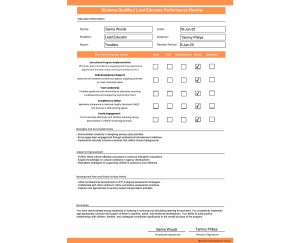
This template can be used for a diploma educator in a room leader position to review their performance.
 The Children’s Services Award introduces a streamlined classification system and updated pay rates designed to better recognise the skills, qualifications, and responsibilities of early childhood… Read More
 The Children’s Services Award has 8 clear levels. These levels make it easier to understand where you fit, based on your experience, qualifications, and responsibilities.… Read More
 When working as a qualified early childhood teacher (with a university degree) within a service, your rate of pay will come from the Educational Services… Read More
 Diploma-qualified educators play a vital role in early childhood services, taking on responsibilities that range from supporting children’s learning and development to leading rooms and… Read More
 Certificate III qualified educators form the backbone of early childhood services, providing essential care and learning support for children across all settings. Their wages under… Read More
 Early Childhood Teachers (ECTs) play a vital role in leading curriculum and pedagogy in early learning settings. Regulation 272 of the Education and Care Services… Read More
 Discover how school readiness programs support children’s independence, confidence, and skills for a successful transition into primary school.
Read More
Discover how school readiness programs support children’s independence, confidence, and skills for a successful transition into primary school.
Read More
 When an Educator is not performing their tasks or responsibilities at best practice, these issues need to be addressed for the Educator to understand where… Read More
 Educators can maximise tax deductions by claiming classroom supplies, training, union fees, and home office costs this financial year.
Read More
Educators can maximise tax deductions by claiming classroom supplies, training, union fees, and home office costs this financial year.
Read More
 A staff appraisal is a formal, systematic process of determining and reviewing the performance of early childhood educators over a period of time, usually a… Read More

Designing engaging outdoor learning spaces offers stimulating resources and rich play-based learning opportunities that cater...
See more...
When playing with things, children are usually attracted to those that are colourful, easily handled...
See more...
This is a guide on How to Write a Learning Story. It provides information on...
See more...