


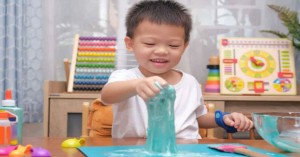
Sensory Play is an early childhood educational approach that allows children to use all their senses when exploring their learning environment. The following article provides the benefits of sensory play and how you can incorporate it into the learning environment.
Project-based learning is an educational approach in which students acquire knowledge and skills by working for an extended time on a project or task. The following article provides information on What Is Project Based Learning, the Key Elements of Project Based Learning and the fundamentals of project-based learning and how you can use it in the learning environment.

Activities and experiences both play crucial roles in early childhood education, but they have distinct characteristics. The following article provides information on What Are Activities, What Are Experiences, Examples Of Experiences, Examples Of Activities, Integrating Both in Early Childhood Education and more.
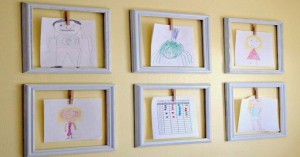
Some of the most significant early childhood learning takes place through art and craft activities. Thus children’s artwork is considered among the major forms of pedagogical documentation. The following article provides information on the importance and strategies of displaying children’s artwork.
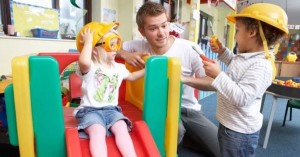
The first few years in a child’s life are when values, ideas and attitudes take shape as the result of their experiences, adult responses and wider cultural influences. This is the time when positive role models can convey powerful lessons on gender equality and interpersonal behaviour which have the potential to impact adult life choices. For such reasons, the following article provides information on Traditional Bias, How Men Are Important, How To Encourage Men To Join The ECE Setting and more.

Effective communication is at the heart of every productive workplace but more so in sectors like ECE where so much depends on positive interactions between key stakeholders, like children, educators, families, management and providers. Non-verbal cues are an integral part of communication as they can complement and reinforce but also contradict and undermine verbal messages. The following article provides information on What Is Non-Verbal Communication, Why It Is Important, How To Use Non-Verbal Communication In The Workplace and more.

As part of their educational programmes, early education and care services may be situated in or travel to bush environments where it is known that snakes may be active and present. Although they are more common in the spring or summer, snakes can be found throughout the year, especially on sunny days. The following article provides information on What Attracts Snakes Into The Outdoor Area or Early Childhood Service, How Can We Snake-proof Our Service, Strategies to Implement To Minimise The Risk Of Snakes and more.

Holistic learning gives as much importance to the emotional, social and physical growth of the child as the intellectual. Among the many benefits of holistic learning is that it enhances a child's subjective sense of well-being or simply put, makes them happier. The following article provides information on Nurturing Emotional Learning, Fostering Social Skills, Facilitiatiing Physical Movement and more.
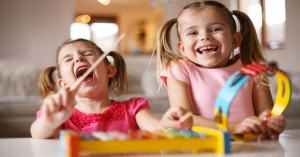
The early years are a time of dizzying changes which affect not just the physical growth of the child but also their emotions, communication, sense of self and relationships with the surrounding world. Research has found music, especially through attributes like rhythm and movement can be a great aid in helping children control their reactions, emotions and behaviour. The following article provides information on What Is Self - Regulation, the Links Between Self Regulation and Executive Function, How Music Helps Children Nurture Self Regulation and more.

Transitions are among the most significant factors that determine the well-being of young children. Their sense of ease, ability to learn and the nature of attachments are vastly impacted by how they experience transitions in the ECEC setting. The following article provides information on Theories and Transitions, Different Types Of Transitions, Benefits Of Planning Transitions With Families and Children and more.
 The Children’s Services Award introduces a streamlined classification system and updated pay rates designed to better recognise the skills, qualifications, and responsibilities of early childhood… Read More
 The Children’s Services Award has 8 clear levels. These levels make it easier to understand where you fit, based on your experience, qualifications, and responsibilities.… Read More
 When working as a qualified early childhood teacher (with a university degree) within a service, your rate of pay will come from the Educational Services… Read More
 Diploma-qualified educators play a vital role in early childhood services, taking on responsibilities that range from supporting children’s learning and development to leading rooms and… Read More
 Certificate III qualified educators form the backbone of early childhood services, providing essential care and learning support for children across all settings. Their wages under… Read More
 Early Childhood Teachers (ECTs) play a vital role in leading curriculum and pedagogy in early learning settings. Regulation 272 of the Education and Care Services… Read More
 Discover how school readiness programs support children’s independence, confidence, and skills for a successful transition into primary school.
Read More
Discover how school readiness programs support children’s independence, confidence, and skills for a successful transition into primary school.
Read More
 When an Educator is not performing their tasks or responsibilities at best practice, these issues need to be addressed for the Educator to understand where… Read More
 Educators can maximise tax deductions by claiming classroom supplies, training, union fees, and home office costs this financial year.
Read More
Educators can maximise tax deductions by claiming classroom supplies, training, union fees, and home office costs this financial year.
Read More
 A staff appraisal is a formal, systematic process of determining and reviewing the performance of early childhood educators over a period of time, usually a… Read More
The following lists the sub-outcomes, examples of evidence when children achieve each sub-outcome and how...
See more...
Building secure, trusting relationships is the heart of early childhood education, and EYLF Outcome 1.1...
See more...
The following is a cheat sheet for Quality Area 2. Quality Area 2 of the...
See more...