



Inspired by Aboriginal dot painting techniques. These posters celebrate native wildlife through symbolic patterns and earthy tones, acknowledging the cultural origins of dot art while presenting it as an educational resource.
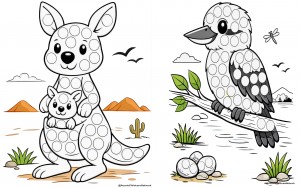
Free Australian Animals Dot Marker Worksheets to build fine motor skills & connect children with native wildlife.

Engaging Australian wildlife activities with photo ideas for educators. Inspire creativity, culture, and EYLF learning outcomes in ECEC services.


Fresh fee hikes in 2026 have pushed childcare costs to record highs, with Sydney’s inner suburbs now topping the list as the most expensive places in the country. Daily fees in some centres have surged to $220 before subsidies, leaving parents facing thousands in extra out-of-pocket costs each year. Experts warn that further increases are likely in the coming years as wages, rent, and compliance costs continue to rise.

Child health experts are raising alarms: many Australian children are falling behind in basic motor and balance skills compared with previous years. The Australian Early Development Census revealed that only 52.9% of children are on track across five developmental domains, marking a decline since 2021.
These domains include physical health & well-being, social competence, emotional maturity, language & cognitive skills, and communication & general knowledge.

The 2026–27 Federal Budget continues the government’s push toward universal early childhood education and care, with key measures including a 15% educator pay rise, expansion of paid parental leave to six months, new inclusion support funding, and consultation on a national Early Education and Care Commission. These updates directly affect educators in long day care, OOSH, and family day care by reshaping workforce conditions, compliance, and child development supports.
Australia’s largest private childcare operator, G8 Education, has announced the closure of 40 centres nationwide, leaving thousands of families and educators facing uncertainty. The closures, spanning Victoria, Western Australia, New South Wales, Queensland, and South Australia, represent nearly 10% of G8’s 395-centre network.

Australia Day offers a powerful opportunity to reflect on the rich tapestry that makes this country truly unique. From the enduring wisdom and culture of Aboriginal and Torres Strait Islander peoples to the vibrant diversity of communities across the continent, Australia is a land of many voices, stories, and landscapes. Celebrating Australia Day means acknowledging the past, embracing the present, and nurturing a future built on respect, inclusion, and shared pride.

Australia Day, observed on 26 January, is a day of celebration for some but a day of mourning for many First Nations peoples. As educators, we hold the responsibility to model respect, inclusion, and truth-telling. Reframing the day as Our Land and Community Day allows us to celebrate what is beautiful about Australia—its land, animals, foods, and cultural diversity—while acknowledging the pain this date represents.
This approach is not about division. It is about honesty, empathy, and creating a safe, inclusive space for children and families.
 The Children’s Services Award introduces a streamlined classification system and updated pay rates designed to better recognise the skills, qualifications, and responsibilities of early childhood… Read More
 The Children’s Services Award has 8 clear levels. These levels make it easier to understand where you fit, based on your experience, qualifications, and responsibilities.… Read More
 When working as a qualified early childhood teacher (with a university degree) within a service, your rate of pay will come from the Educational Services… Read More
 Diploma-qualified educators play a vital role in early childhood services, taking on responsibilities that range from supporting children’s learning and development to leading rooms and… Read More
 Certificate III qualified educators form the backbone of early childhood services, providing essential care and learning support for children across all settings. Their wages under… Read More
 Early Childhood Teachers (ECTs) play a vital role in leading curriculum and pedagogy in early learning settings. Regulation 272 of the Education and Care Services… Read More
 Discover how school readiness programs support children’s independence, confidence, and skills for a successful transition into primary school.
Read More
Discover how school readiness programs support children’s independence, confidence, and skills for a successful transition into primary school.
Read More
 When an Educator is not performing their tasks or responsibilities at best practice, these issues need to be addressed for the Educator to understand where… Read More
 Educators can maximise tax deductions by claiming classroom supplies, training, union fees, and home office costs this financial year.
Read More
Educators can maximise tax deductions by claiming classroom supplies, training, union fees, and home office costs this financial year.
Read More
 A staff appraisal is a formal, systematic process of determining and reviewing the performance of early childhood educators over a period of time, usually a… Read More

Within an early childhood setting, throughout the day, children experience many transitions such as transitions...
See more...
EYLF Outcome 4: Children Are Confident and Involved Learners, focuses on fostering children's confidence and...
See more...
Reflective practice is learning from everyday situations and issues and concerns that arise which form...
See more...