



A: Placemats are not mandatory, but they can be a useful tool when implemented thoughtfully.

Educators often wonder whether the number of days a child attends care should influence how many observations they complete. Some services believe that children attending 4–5 days a week require more documentation, while others maintain that quality matters more than quantity. This Q&A explores what the regulations actually require, how the exceeding services approach documentation, and practical strategies for balancing the planning cycle with meaningful practice.

At present, “under the roof” ratios are not yet formally abolished in law, but Education Ministers announced in February 2026 that they intend to remove this practice. ACECQA has flagged that ratios will soon be required per room, with educators counted only when physically present and supervising children.
Until the National Law and Regulations are officially amended and ACECQA issues binding guidance, services using service‑wide calculations are not breaching current regulations, provided they maintain adequate supervision.

Birthdays are joyful milestones in a child’s life, and early childhood settings often look for ways to mark these occasions in meaningful ways. However, the question of whether teachers should buy birthday presents for children sparks debate across the sector.
While some see gift-giving as a kind gesture, others raise concerns about professional boundaries, equity, and sustainability. This article explores the perspectives shared by educators and leaders, highlighting both the risks and alternatives to ensure birthday celebrations remain inclusive, ethical, and child-focused.

A: Something as simple as a child asking to braid an educator’s hair—or children braiding each other’s can spark important questions about connection, trust, and professional boundaries. For many, braiding is more than a playful activity; it is a gesture of closeness, a way of forming relationships, and in some cultures, a practice rich with tradition and identity.
At the same time, educators must balance these relational opportunities with health, hygiene, and safety considerations, ensuring that practices in the service align with professional standards and family expectations. This tension—between fostering connection and maintaining boundaries—makes hair braiding a valuable topic for reflection in early learning settings.

A: Yes, Transition to School Statements are highly beneficial and increasingly considered necessary in Australia. While not legally mandated nationwide, they are strongly encouraged by state education departments to support continuity of learning and emotional well-being during the move from early childhood education to school.

A: No, you don’t have to include theorists in every piece of documentation, but referencing them can deepen your practice, especially when aligned with EYLF V2.0 and the National Quality Standard.

A: In early childhood education, programming isn’t just about planning activities—it’s about tuning into children’s rhythms, honouring their voices, and creating emotionally safe, meaningful learning journeys. One of the most common questions is:
“Should I plan daily or weekly?"
The truth is, there’s no one-size-fits-all answer, and that’s a good thing. Your approach will depend on your service’s philosophy, your room’s energy, and the unique needs of your children and team.
This guide breaks down the difference between weekly and daily programming styles, with practical examples, reflective prompts, and flexible options to help you find your rhythm—or co-create one that evolves with your context.

A: Intentional teaching means teaching with a clear purpose. It’s about making thoughtful decisions to help children learn in meaningful ways. At its core, intentional teaching means teaching with a clear purpose. It’s the art of knowing when to step in, when to step back, and how to co-construct learning that is meaningful, inclusive, and connected to each child’s world.

Q: A strengths-based approach focuses on what children can do, rather than what they lack. It celebrates each child’s capabilities, interests, and efforts and uses these as the foundation for learning and development.
 The Children’s Services Award introduces a streamlined classification system and updated pay rates designed to better recognise the skills, qualifications, and responsibilities of early childhood… Read More
 The Children’s Services Award has 8 clear levels. These levels make it easier to understand where you fit, based on your experience, qualifications, and responsibilities.… Read More
 When working as a qualified early childhood teacher (with a university degree) within a service, your rate of pay will come from the Educational Services… Read More
 Diploma-qualified educators play a vital role in early childhood services, taking on responsibilities that range from supporting children’s learning and development to leading rooms and… Read More
 Certificate III qualified educators form the backbone of early childhood services, providing essential care and learning support for children across all settings. Their wages under… Read More
 Early Childhood Teachers (ECTs) play a vital role in leading curriculum and pedagogy in early learning settings. Regulation 272 of the Education and Care Services… Read More
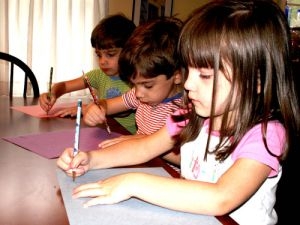 Discover how school readiness programs support children’s independence, confidence, and skills for a successful transition into primary school.
Read More
Discover how school readiness programs support children’s independence, confidence, and skills for a successful transition into primary school.
Read More
 Floorbook is a documentation approach that uses a large book with blank pages for children to record different aspects of their learning in small groups… Read More
 When an Educator is not performing their tasks or responsibilities at best practice, these issues need to be addressed for the Educator to understand where… Read More
 Educators can maximise tax deductions by claiming classroom supplies, training, union fees, and home office costs this financial year.
Read More
Educators can maximise tax deductions by claiming classroom supplies, training, union fees, and home office costs this financial year.
Read More

The following lists the sub-outcomes, examples of evidence when children can achieve each sub-outcome and...
See more...
A child-centred approach in an ECEC context involves giving children choices of learning activities, with...
See more...
Harmony Week is celebrated from the 17th to the 23rd of March 2025. The following provides free...
See more...