



Biting is typical behaviour of infants and toddlers that we often notice. As the children grow up and gain self-control and self-regulation, gradually they stop biting. The following article provides information on Common Reasons For Biting, Responding To Biting, Strategies and more.

Yes, it is necessary to teach children about ANZAC Day. Doing so helps them understand Australia’s history, values of sacrifice and service, and the importance of peace and community. By introducing children to ANZAC traditions, educators and families foster respect, remembrance, and a sense of national identity that grows deeper each year.

You have a new child starting in your room, their excited, their parents are happy and the family seems to be settling in well with the centre environment. The first day has come for the child to start, parents say goodbye and then the child starts - screaming, crying, pulling, begging their parent not to leave.
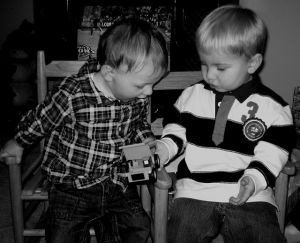
Toddlers want to do more on their own and do not like it when you begin to establish limits on their behaviour. Tantrums can become frequent when a toddler can't get what they want. This is a natural part of their social and emotional development. Toddlers are also curious about other people and will tend to stare at anyone who attracts their attention.
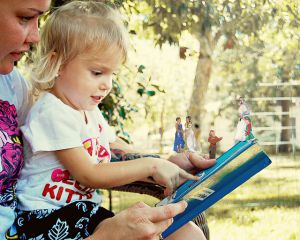
Toddlers use language in more sophisticated ways during this phase of their life. This occurs as a toddler has a better grasp of the rules of the language, through increased vocabulary and learning new skills. They are becoming increasingly familiar with the concept of conversation and through play and social interactions it strengthens and improves their verbal skills.

Toddler advance and gains new skills in Gross Motor Development milestones achieved throughout earlier years. Co-ordination and challenges that could not be performed before such as hopping, skipping and balancing are now easier to attempt. Toddlers are more agile and athletic during this stage than before.
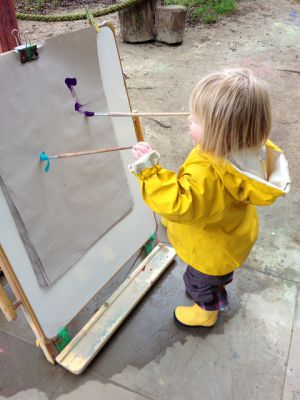
As your toddler progresses during this stage, Fine Motor Development becomes increasingly important. Not because this helps your toddler become more independent, it's because it is linked to problem solving and cognitive development & learning.
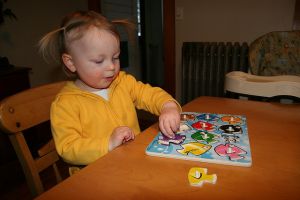
Toddlers have a greater understanding of the world around them by this stage. Their cognitive development (also known as intellectual development and thinking skills) continues to increase during this period. The ability to learn new skills, understanding of concepts, begins to make sense of current events, solve problems and use of memory steadily improves. Toddlers will begin to interpret the meanings of their experiences and they also have a vivid imagination.
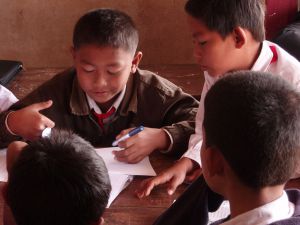
Attention deficit hyperactivity disorder (ADHD) is a psychiatric disorder of the neurodevelopmental type in which there are significant problems of attention and/or hyperactivity and acting impulsively that are not appropriate for a person's age. These symptoms must begin by age six to twelve and be present for more than six months for a diagnosis to be made. In school-aged children the lack of focus may result in poor school performance. This article gives you info on ADHD in Children.

Autism is a disorder of neural development characterized by impaired social interaction and communication, and by restricted and repetitive behaviour. These signs all begin before a child is three years old.
 Toddlers have a greater understanding of the world around them by this stage. Their cognitive development (also known as intellectual development and thinking skills) continues… Read More
 Infants begin to develop trust when parents begin to fulfil their needs. Such as changing an infant's nappy when needed, feeding on request and holding… Read More
 Beginning at birth the construction of thought processes, such as memory, problem solving, exploration of objects etc, is an important part of an infant’s cognitive… Read More
 Toddlers want to do more on their own and do not like it when you begin to establish limits on their behaviour. Tantrums can become… Read More
 Your preschooler is now able to focus their attention more accurately and is less influenced by distractions. The intensity of questions increase as your child… Read More
 John Dewey is often seen as the proponent of learning by doing – rather than learning by passively receiving. He believed that each child was active,… Read More
 Erik Erikson developed a psychosocial theory to understand how we each develop our identities through eight stages of psychosocial development from infancy to adulthood. The… Read More
 Toddler advance and gains new skills in Gross Motor Development milestones achieved throughout earlier years. Co-ordination and challenges that could not be performed before such… Read More
 At this point preschoolers begin to interact effectively with others. Play becomes more innovative and organized and “boyfriend” or “girlfriend” begins to emerge. Preschoolers have… Read More
 From now, babies begin to identify and respond to their own feelings, understanding other's feelings & needs and interact positively with others. A baby's social and… Read More

Infants begin to develop trust when parents begin to fulfil their needs. Such as changing...
See more...
The years between five and twelve are a time brimming with activity for children –...
See more...
Toddlers use language in more sophisticated ways during this phase of their life. This occurs...
See more...