


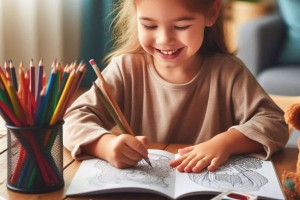
School readiness" refers to a child's preparedness to succeed in a school environment. It's not just about academic skills like reading, writing, and math, but also encompasses the development of the whole child, including their social, emotional, physical, and cognitive skills. The following article provides information on Key Aspects Of School Readiness, How To Support School Readiness and more.

Come along with Little Ted and Kiya as they prepare for their first day at primary school. This episode reflects some of the common experiences for children starting school for the first time, sharing helpful ‘tried and tested’ strategies to incorporate at home and in early learning settings.

Writing transition statements in early childhood education is an important task that helps ensure a smooth transition for children moving from early childhood settings to primary school. The following article provides information on the Purpose Of Transition Statements, Key Components Of Transition Statements, Tips For Writing Transition Statements, Examples and more.
Visual Motor Integration covers efficient and effective coordination between the eyes and the hands so that children are able to copy, draw or write what they see. Since children develop their handwriting based on what they see in a model and then imitate it in their own writing, they need to have effective Visual Motor Integration. The following article provides information on What Is Visual Motor Integration, VMI and Handwriting, Improving Visual Motor Skills and more.

Recently, Sarah Mitchell, the Minister of Education for NSW, proposed that all children enrol in school the year they turn six.

A child’s Transition Statement summarises their abilities as they start school and identifies their individual approaches to learning. Though there might be several people contributing to the information included in the Transition Statement, early childhood educators have the primary responsibility of drawing up the Transition Statement. The following article provides information on the Features Of Transition Statements and Practical Examples For Each Learning Outcome.

This template enables preschoolers heading off to Kindergarten the following year, to draw and talk about how they feel going to "big school".
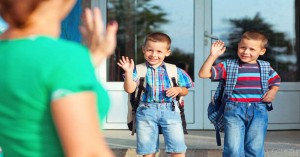
Among all the changes that impact a child’s early life, one of the most significant is the move from early education and care setting to a full-time school. The change not only involves entirely new people and places but longer schedules, a more structured environment and greater individual responsibility. The following article provides information on supporting children's transition to school including Involving Children and Families, Supporting Continuity Of Learning, Transition Programs and more.
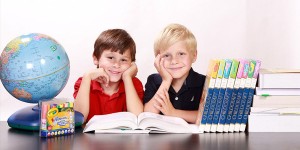
Among all the changes that impact a child’s early life, one of the most significant is the move from early education and care setting to a full-time school. The following article provides Educators with a guide on planning supportive transition practices for preschoolers going to primary school the following year including practical ideas to involve children, partnering with families, collaborating with other professionals, planning transition programs and more.
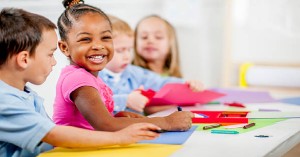
Prewriting skills build fine motor strength, coordination, and confidence, essential foundations for children’s writing success.
 Toddlers have a greater understanding of the world around them by this stage. Their cognitive development (also known as intellectual development and thinking skills) continues… Read More
 Infants begin to develop trust when parents begin to fulfil their needs. Such as changing an infant's nappy when needed, feeding on request and holding… Read More
 Beginning at birth the construction of thought processes, such as memory, problem solving, exploration of objects etc, is an important part of an infant’s cognitive… Read More
 Toddlers want to do more on their own and do not like it when you begin to establish limits on their behaviour. Tantrums can become… Read More
 Your preschooler is now able to focus their attention more accurately and is less influenced by distractions. The intensity of questions increase as your child… Read More
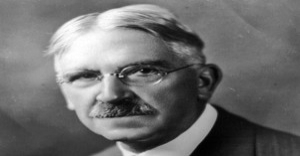 John Dewey is often seen as the proponent of learning by doing – rather than learning by passively receiving. He believed that each child was active,… Read More
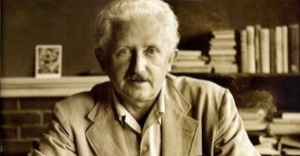 Erik Erikson developed a psychosocial theory to understand how we each develop our identities through eight stages of psychosocial development from infancy to adulthood. The… Read More
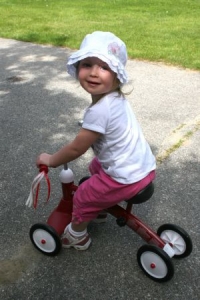 Toddler advance and gains new skills in Gross Motor Development milestones achieved throughout earlier years. Co-ordination and challenges that could not be performed before such… Read More
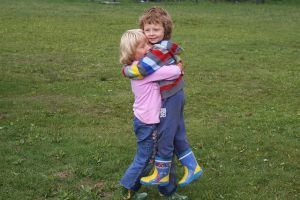 At this point preschoolers begin to interact effectively with others. Play becomes more innovative and organized and “boyfriend” or “girlfriend” begins to emerge. Preschoolers have… Read More
 From now, babies begin to identify and respond to their own feelings, understanding other's feelings & needs and interact positively with others. A baby's social and… Read More
Supporting a toddler through moments of heightened emotion requires patience and thoughtful strategies. Here are...
See more...
The following article provides information on Current and Emerging Research on brain development in babies...
See more...
Autism is a disorder of neural development characterized by impaired social interaction and communication, and...
See more...