


Harmony Week is celebrated from the 17th to the 23rd of March 2025. The following provides free Printables and Activities that will enable you to celebrate Harmony Week at your service and activities that can be implemented into the curriculum for children.

March 18th, is Global Recycling Day. It is a recycling initiative that encourages us to look at our trash in a new light and encourages us to use recycled materials in different ways. The following provides free Printables and Activities that will enable you to celebrate Global Recycling Day at your service and activities that can be implemented into the curriculum for children.

March 17th, is St Patrick's Day. St. Patrick's Day observes the death of St. Patrick, the patron saint of Ireland. The holiday has evolved into a celebration of Irish culture with parades, special foods, music, dancing, drinking and a whole lot of green. The following provides free Printables and Templates that will enable you to celebrate St Patrick's Day at your service and activities that can be implemented into the curriculum for children.

On the 14th of March, it is Holi. Holi is one of the biggest Hindu festivals that celebrates the victory of good over evil. The following provides free Printables, Activities and Template that will enable you to celebrate Holi at your service and activities that can be implemented into the curriculum for children.

On the 3rd of March, wildlife is celebrated worldwide for the UN World Wildlife Day. The following provides free Printables that will enable you to celebrate World Wildlife Day at your service and activities that can be implemented into the curriculum for children.
On 2nd March, it is Dr Seuss Day. It is a day that celebrates the birthday of Theodor Seuss Geisel – otherwise known by the pen name by which he authored children’s books: Dr Seuss. The following provides free Printables that will you celebrate Dr Seuss Day at your service and activities that can be implemented into the curriculum for children.

Auslan is the sign language of the Australian Deaf community. The following article provides a list of rhymes in Auslan. Each rhyme includes lyrics, a picture song board, key signs and a video of how to use Auslan signs to sing each rhyme.

On the 20th of February every year, it is National Love Your Pet Day. This special day honours the bond between humans and their beloved pets. The following provides Pet, Printables, Activities and Template that will help you celebrate pets at your service that can be implemented into the curriculum for children.

Valentine’s Day is a wonderful opportunity for children to celebrate friendship, kindness, and creativity. Through simple crafts and playful activities, children can express love and appreciation for the special people in their lives- whether family, friends, or classmates. These activities encourage teamwork, imagination, and reflection, while helping children understand that Valentine’s Day is about caring for others and spreading joy.

The 11th of February is International Day of Women and Girls in Science. It enables us to honour women’s significant achievements in science and place a much-needed focus on girls entering Science, Technology, Engineering, and Mathematics (STEM) careers.
 Working as a childcare professional can be a challenge especially when dealing with behavioural problems which may arise. The techniques we use when dealing with… Read More
 There are different types of behaviour that children can display and sometimes it can be hard to manage, especially if a child is having behavioural… Read More
 As Educators, there will be many instances where you will need to write about a child's behaviour. For a behaviour management plan, assessments, half-yearly or… Read More
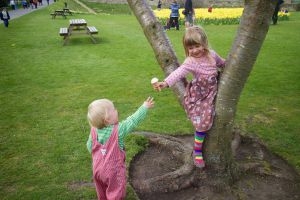 As a parent, your behavioural expectations of your child can be higher than what is actually developmentally appropriate for your child's age.
Read More
As a parent, your behavioural expectations of your child can be higher than what is actually developmentally appropriate for your child's age.
Read More
 As Educators when communicating with Parents (through verbal or non-verbal communication), there will be times where we need to discuss issues or concerns that may… Read More
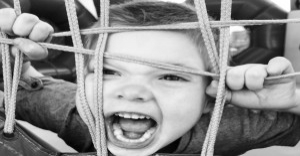 Challenging Behaviour is when a child does something that hurts themselves and/or other people.
Read More
Challenging Behaviour is when a child does something that hurts themselves and/or other people.
Read More
 It's always difficult to bring up behavioural issues with parents, it can be nerve wrecking to tell a parent that their child misbehaves but that… Read More
 As part of your child's development it is normal for your child to have anxiety and fears. A baby commonly shows a fearful sign to… Read More
 All children deal with anger on a daily basis. Thinking about it as a child, there is a lot to be angry about. Elder people… Read More
 It is important to understand that your child behaviour problems could not just be from attention seeking. There are many factors to take into consideration… Read More

Alison Gopnik (born June 16, 1955) is a leading developmental psychologist and philosopher at the...
See more...
Shyness is a feeling and a behaviour towards others. It is a personality trait, an...
See more...
Howard Gardner’s Multiple Intelligences is explained simply for educators with examples and EYLF links.
See more...