


Children thrive when they can do—exploring, tinkering, and experimenting. Science activities in OSHC settings not only engage curious minds but also build teamwork, problem‑solving, and resilience. Best of all, many experiments can be done with everyday materials, keeping costs low while maximising fun.

Children are naturally drawn to bright, vivid colours, which makes rainbow-themed science experiments instantly engaging and relatable. Because colours are part of their everyday world—seen in toys, clothes, art, and nature—rainbow experiments provide a familiar entry point into scientific exploration.
These activities spark curiosity and wonder by showing how ordinary materials can transform into extraordinary displays of colour. Whether it’s watching water “walk” across paper towels, seeing milk swirl into rainbow patterns, or layering liquids into a colourful tower, children experience science as something magical yet understandable.

The following is a collection of science-themed “potion recipes” that blend sensory exploration, symbolic meaning, and safe chemical reactions—perfect for World Science Day or any inquiry-based learning moment. Each potion includes: A symbolic name (linked to emotional literacy or global values), a child-safe recipe using common ingredients, and a meaningful intention to spark reflection and storytelling.

Here’s a themed EYLF-aligned guide to 30 preschool science experiments, complete with materials, instructions, science concepts, and EYLF learning outcomes. This is designed for educators who want to embed intentionality, inquiry, and curriculum links into hands-on science.

Here’s a roundup of 20 super simple science experiments for toddlers in early learning settings. These activities are sensory-rich, safe, and designed to spark curiosity while introducing foundational science concepts.

With National Science Week on from 9th to 17th August 2025, this is a great opportunity to introduce science to babies. For babies it’s less about formal experiments and more about sensory exploration, pattern recognition, and curiosity-driven play—all foundational to scientific thinking and nurturing their natural curiosity and helping them explore the world through sensory-rich, playful experiences.
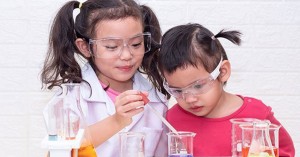
Introducing children to science at a young age assists in their brain development. Science experiments can be performed on young children. Using materials in experiments that children like to play with helps them to grow big ideas and understand fundamental concepts. The following lists easy science experiments for toddlers and preschoolers to introduce them to the world of science.
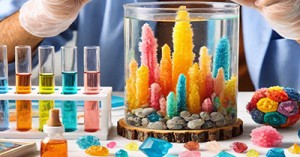
A stalactite is a type of mineral formation that hangs from the ceiling of caves. Watching the slow formation of stalactites teaches patience and keen observation skills. This science project provides hands-on learning about geological processes and the formation of stalactites and stalagmites. The following article provides information on What Is A Stalactite, The Experiment, and more.
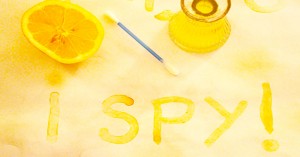
Invisible Ink is a great science experiment that enables children to create invisible art and make it magically appear using lemon juice!
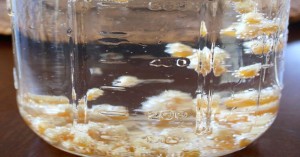
Dancing corn is a fun sceince experiment to do with toddlers and preschoolers. Watch corn dance with a little kitchen chemistry.
 Open ended questions cannot be responded to with one word answers such as yes or no. These types of questions enables a child to provide… Read More
 During your child’s preschool years, an important milestone begins to emerge. This is the development of pre-writing skills. Pre-writing skills are used to encourage, develop… Read More
 An Acknowledgment of the Country is a way of showing respect for the Traditional Owners and can be given by both non-Indigenous people and Aboriginal… Read More
 Open ended materials enables children to play freely. They are objects that have no rules to follow, use or function. Raw materials that can be… Read More
 Language plays an important role in a child’s development. It enables a child to communicate effectively with their family, learn at school, socialize with friends,… Read More
 Like adults, children have to deal with their own stress in life. Moving house, starting a new school, preparing for a new sibling - these are… Read More
 Playdough is such a versatile material. It provides numerous benefits to children as they manipulate it, it is safe and soothing and provides children with… Read More
 Teaching children about sustainability enables them to appreciate and respect the natural environment. Early childhood services can provide meaningful hand on learning experiences in order… Read More
 Recycling is an important concept that teaches children to care for the environment. It encourages children to be responsible and show a growing appreciating for… Read More
 Incursions provide children with the opportunity to explore meaningful learning experiences in the comfort of their early childhood service. The following provides a directory of… Read More
Edible Sensory Experiences is an interactive experience with food that enables children to engage, express...
See more...
The relationship between families and educators forms the backbone of a supportive environment for children’s...
See more...
Most of our Premium and Free Templates are available in MS Word version. This is...
See more...