
NAIDOC Week is a time to celebrate and learn about the rich histories, cultures, and achievements of Aboriginal and Torres Strait Islander peoples. For OOSH children, it’s an opportunity to engage in meaningful activities that go beyond fun, encouraging respect, curiosity, and creativity while deepening their understanding of First Nations stories, art, and traditions. By weaving together hands-on projects, storytelling, and reflection, educators can help children connect with the spirit of NAIDOC Week in ways that are both age-appropriate and inspiring.
Creative & Artistic Projects
- Collaborative mural: Children design a large mural inspired by NAIDOC’s annual theme, using Aboriginal colours and symbols.
- Advanced dot painting: Older kids can create detailed dot art on canvas boards, exploring symmetry and storytelling.
- Symbol design workshop: Teach Aboriginal symbols and have children invent their own to represent personal stories.
- Recycled art projects: Use recycled materials to create sculptures inspired by native animals or Dreamtime stories.
Storytelling & Literacy
- Dreamtime retelling: After reading a Dreamtime story, children rewrite or act out the story with a modern twist.
- Book club discussions: Use age-appropriate Indigenous picture books and encourage group reflection on themes of Country, community, and respect.
- Story mapping: Children draw maps showing the journey of characters in Dreamtime stories, linking geography and narrative.
Music, Dance & Drama
- Clapstick rhythm challenge: Children learn traditional rhythms and create their own sequences.
- Dance interpretation: Play Aboriginal music and let children choreograph short group dances.
- Drama skits: Small groups create short plays inspired by NAIDOC themes like “Keep the Fire Burning.”
Outdoor & STEM Activities
- Bush tucker garden: Plant native herbs or vegetables and discuss their traditional uses.
- Animal track investigation: Create plaster casts of animal tracks or use clay to model them, linking science and culture.
- Mapping Country: Children draw maps of their local area, marking places of significance and learning about Aboriginal land connections.
Educator Tips
- Encourage critical thinking: Ask children to reflect on why NAIDOC Week is important.
- Provide choice and autonomy: Let them pick between art, drama, or STEM-based projects.
- Use discussion circles: Older children enjoy sharing opinions and debating respectfully.
- Connect activities to real-world issues: Talk about caring for Country, community, and respect for culture.
Further Reading
Sea of Fish Challenge For NAIDOC Week
NAIDOC Week Art and Craft Activities
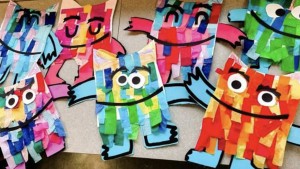


 Open ended questions cannot be responded to with one word answers such as yes or no. These types of questions enables a child to provide
 During your child’s preschool years, an important milestone begins to emerge. This is the development of pre-writing skills. Pre-writing skills are used to encourage, develop
 An Acknowledgment of the Country is a way of showing respect for the Traditional Owners and can be given by both non-Indigenous people and Aboriginal
 Open ended materials enables children to play freely. They are objects that have no rules to follow, use or function. Raw materials that can be
 Language plays an important role in a child’s development. It enables a child to communicate effectively with their family, learn at school, socialize with friends,
 Like adults, children have to deal with their own stress in life. Moving house, starting a new school, preparing for a new sibling - these are
 Playdough is such a versatile material. It provides numerous benefits to children as they manipulate it, it is safe and soothing and provides children with
 Teaching children about sustainability enables them to appreciate and respect the natural environment. Early childhood services can provide meaningful hand on learning experiences in order
 Recycling is an important concept that teaches children to care for the environment. It encourages children to be responsible and show a growing appreciating for
 Incursions provide children with the opportunity to explore meaningful learning experiences in the comfort of their early childhood service. The following provides a directory of