Engaging Australian wildlife activities with photo ideas for educators. Inspire creativity, culture, and EYLF learning outcomes in ECEC services.
Hands‑on wildlife art activities give children opportunities to explore culture, environment, and creativity. These projects encourage fine motor skills, imagination, and appreciation of biodiversity while supporting EYLF outcomes such as Outcome 2: Children are connected with and contribute to their world and Outcome 4: Children are confident and involved learners.
Aboriginal Dot Painting Lizards
Children paint lizard silhouettes against colorful dotted backgrounds inspired by Aboriginal art.
Strategies for Educators
- Introduce Aboriginal art traditions respectfully, discussing symbolism and storytelling.
- Model dot painting techniques before children begin.
- Encourage children to create their own patterns rather than copying.
- Link the activity to discussions about reptiles in the local environment.
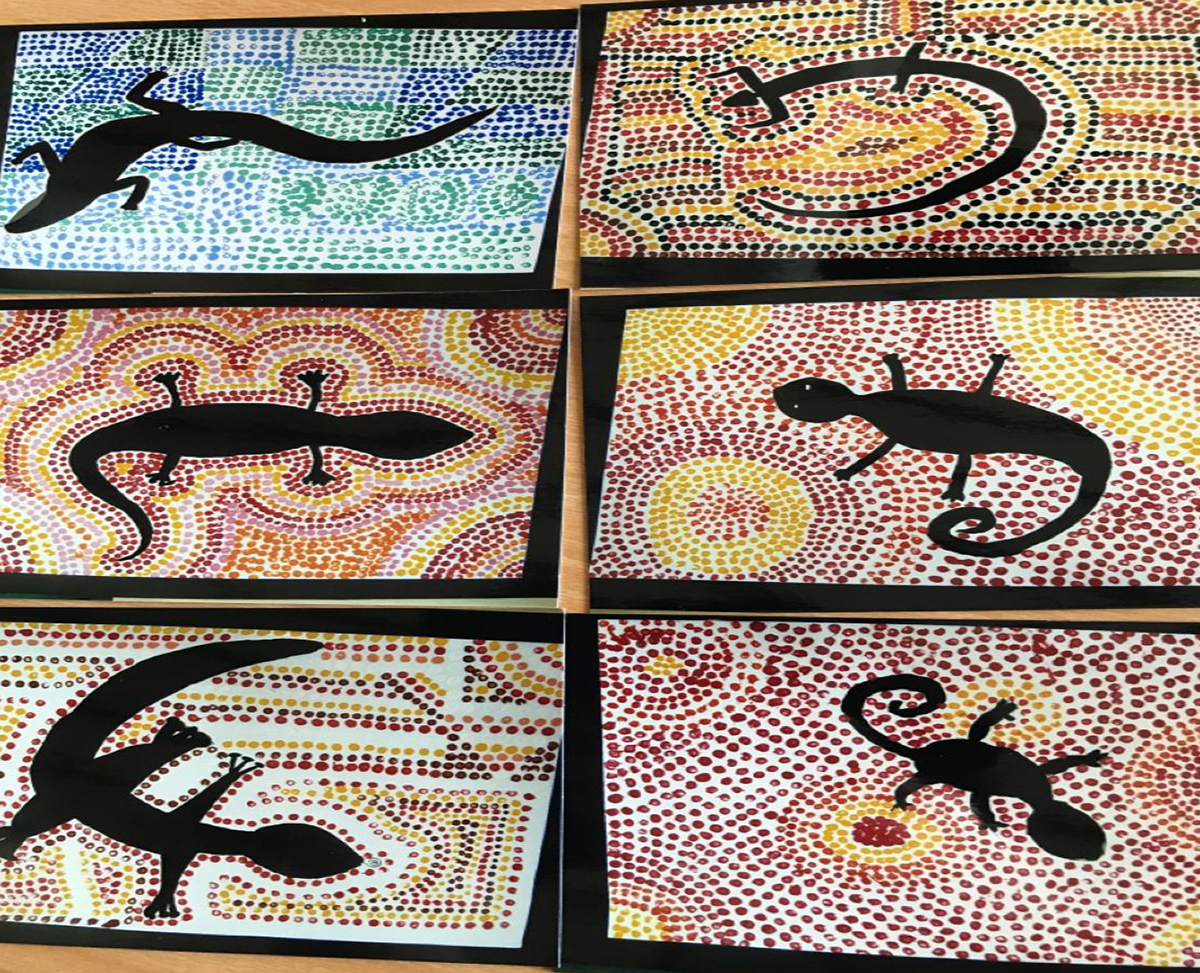
Image Reference: Pinterest
Echidna Nature Collage
Using leaves, bark, seed pods, and flowers, children create collages shaped like echidnas.
Strategies for Educators
- Take children outdoors to collect natural materials, promoting environmental awareness.
- Discuss echidna features (spines, snout) and how materials represent them.
- Encourage sensory exploration by touching and describing textures.
- Extend learning with books or videos about echidnas.
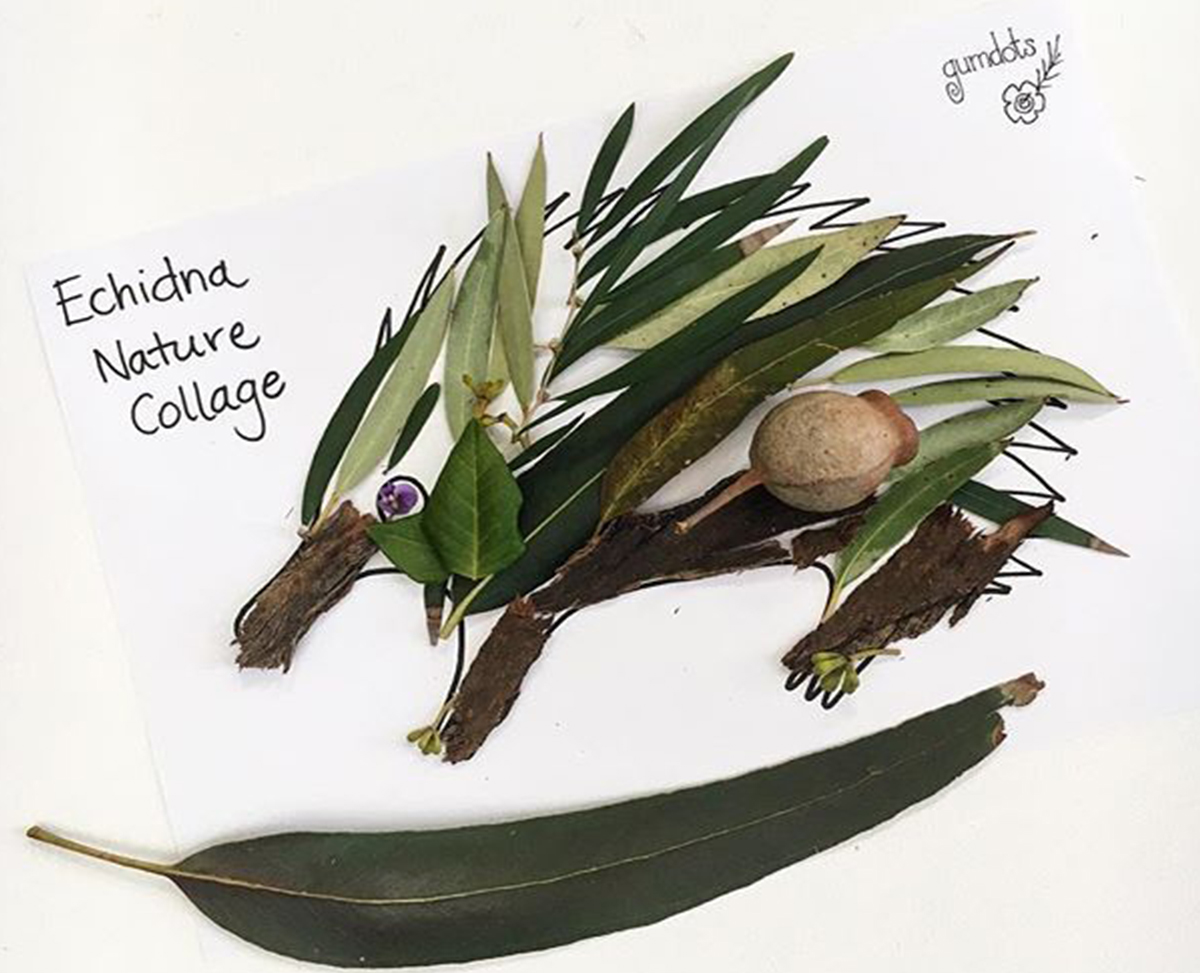
Image Reference: Pinterest
Bottlebrush Painting Station
Children paint their own versions of native bottlebrush flowers using watercolors.
Strategies for Educators
- Place real bottlebrush flowers on the table for close observation.
- Prompt children to notice shapes, colors, and textures before painting.
- Use descriptive language (“spiky,” “bright red”) to build vocabulary.
- Display finished artworks alongside the real flowers for comparison.

Image Reference: Rebecca Gibbons, Pinterest
Koala Painting Activity
Children paint their own interpretation of a koala using a reference image.
Strategies for Educators
- Provide reference images but encourage children to add their own creative touches.
- Discuss koala habitats and diets while painting.
- Scaffold fine motor skills by guiding brush strokes for younger children.
- Use the artwork as a springboard for conversations about conservation.
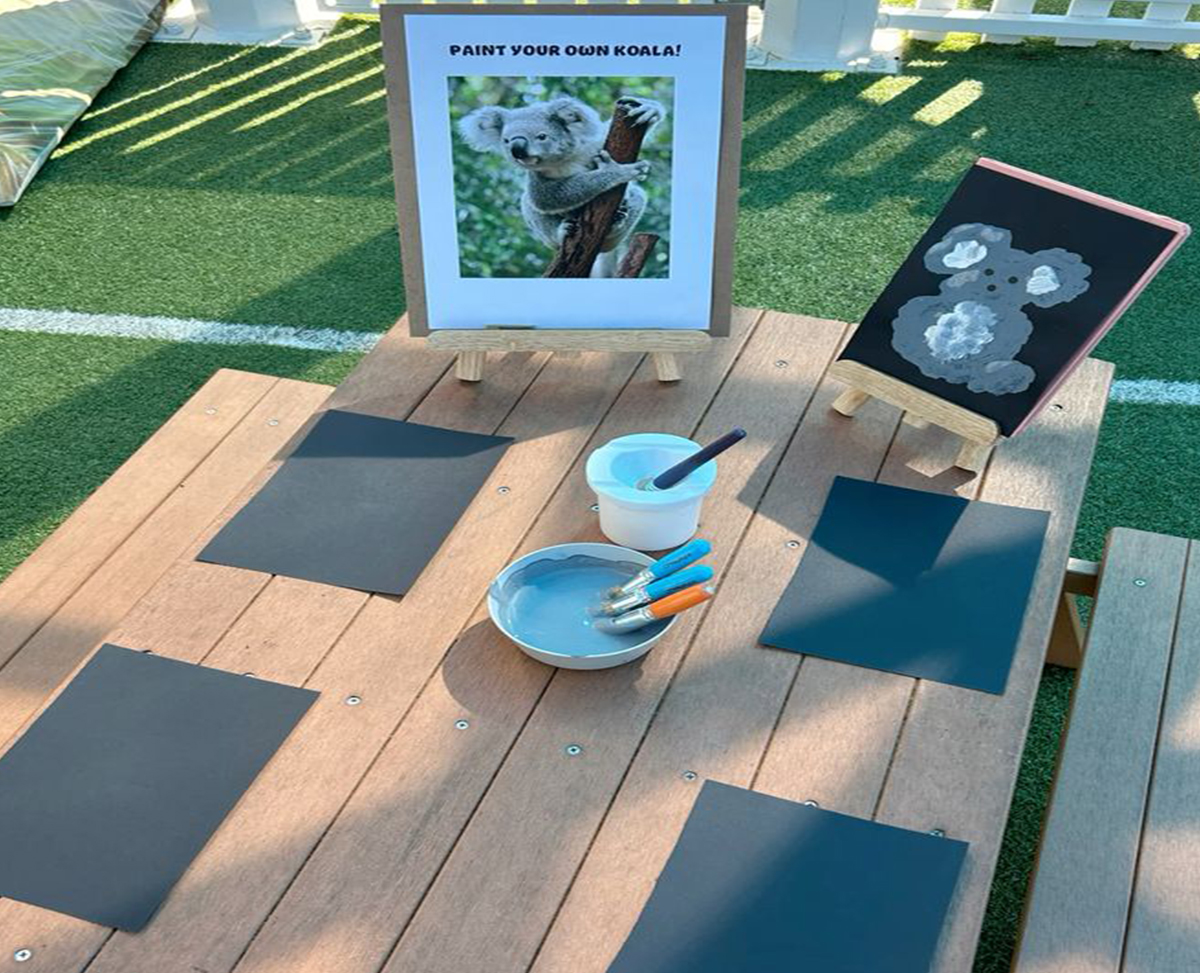
Image Reference: Miss Liz, Pinterest
Spider Rock Craft
Children make spiders from painted rocks, pipe cleaners, and googly eyes, attaching them to branches with string webs.
Strategies for Educators
- Talk about spiders’ role in ecosystems before crafting.
- Support children in manipulating pipe cleaners and string to strengthen dexterity.
- Encourage imaginative storytelling about where their spiders live.
- Link the activity to Halloween or nature themes for added relevance.

Image Reference: Pinterest
Clay Hedgehogs
Children create hedgehog models using clay, toothpicks, and beads.
Strategies for Educators
- Demonstrate how to insert toothpicks safely into clay.
- Discuss hedgehog adaptations (spines for protection).
- Encourage children to count toothpicks, integrating numeracy.
- Extend learning by comparing hedgehogs to Australian spiny animals like echidnas.

Image Reference: Anya, Pinterest
Australian Wildlife Sand Tray
Children build a miniature Australian landscape with sand, animal figurines, and plants.
Strategies for Educators
- Guide children in placing animals in appropriate habitats within the diorama.
- Use small group collaboration to foster teamwork.
- Encourage storytelling: “What is your kangaroo doing?”
- Connect the diorama to maps of Australia, reinforcing geography
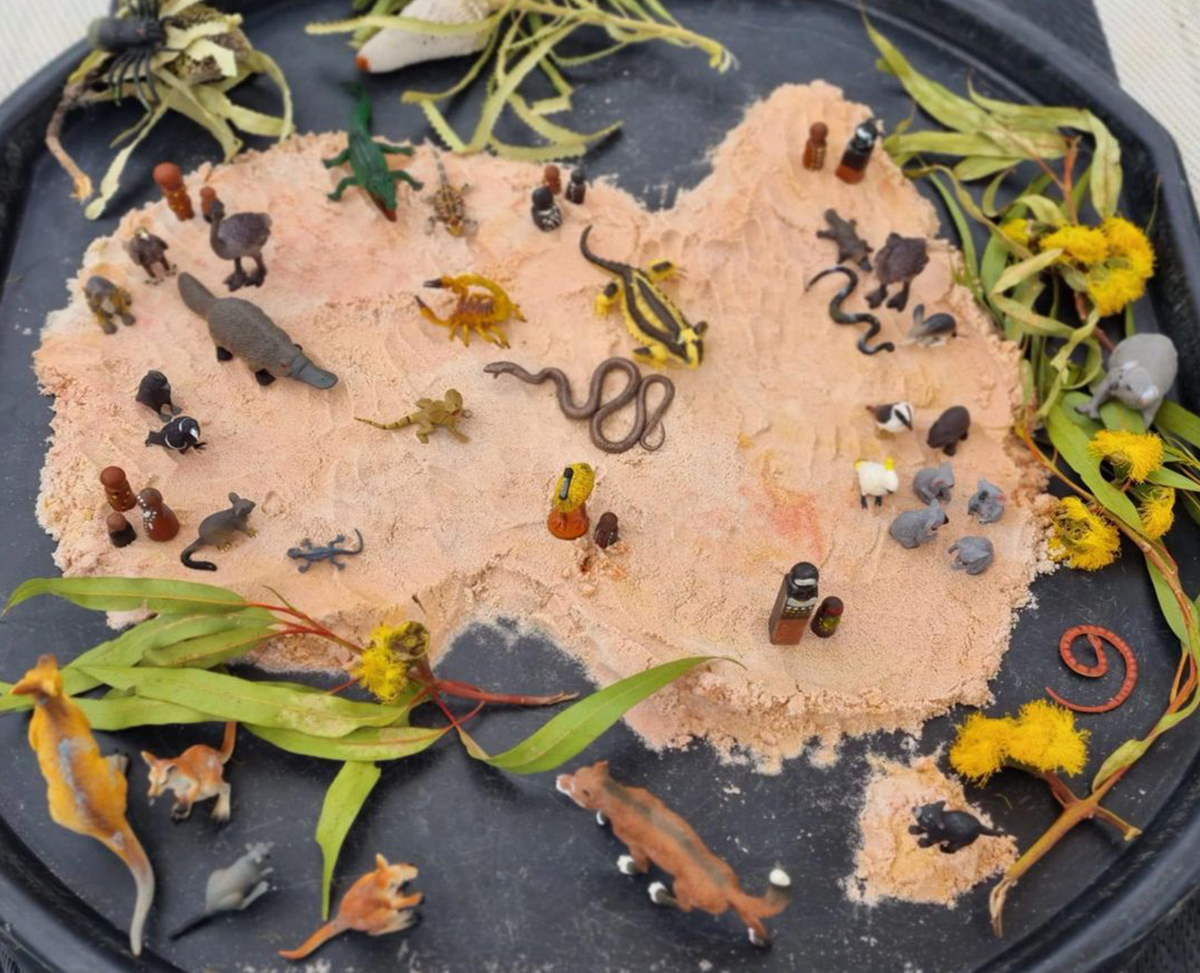
Image Reference: Pinterest
Practical Strategies For Educators
- Display children’s artwork in the classroom to celebrate creativity.
- Link each activity to EYLF outcomes for documentation.
- Encourage reflection by asking children to describe their creations.
Further Reading
Teaching Children About Native Australian Animals
Australian Animal Information Posters
Tracing Words - Australian Animals
Australian Animals Flashcards
 Open ended questions cannot be responded to with one word answers such as yes or no. These types of questions enables a child to provide
 During your child’s preschool years, an important milestone begins to emerge. This is the development of pre-writing skills. Pre-writing skills are used to encourage, develop
 An Acknowledgment of the Country is a way of showing respect for the Traditional Owners and can be given by both non-Indigenous people and Aboriginal
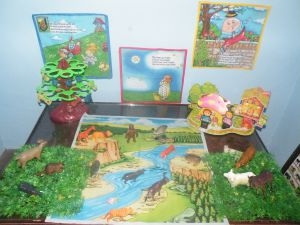 Open ended materials enables children to play freely. They are objects that have no rules to follow, use or function. Raw materials that can be
 Language plays an important role in a child’s development. It enables a child to communicate effectively with their family, learn at school, socialize with friends,
 Like adults, children have to deal with their own stress in life. Moving house, starting a new school, preparing for a new sibling - these are
 Playdough is such a versatile material. It provides numerous benefits to children as they manipulate it, it is safe and soothing and provides children with
 Teaching children about sustainability enables them to appreciate and respect the natural environment. Early childhood services can provide meaningful hand on learning experiences in order
 Recycling is an important concept that teaches children to care for the environment. It encourages children to be responsible and show a growing appreciating for
 Incursions provide children with the opportunity to explore meaningful learning experiences in the comfort of their early childhood service. The following provides a directory of