


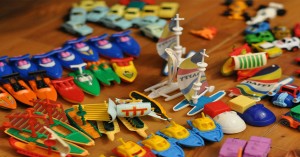
On April 22 is Earth Day. This year's campaign is to End Plastic Pollution. As Educators, we spend our days setting up experiences for children to be engaged in by using a variety of resources and materials including the use of plastic.

As educators, we need to incorporate cultural celebrations within the setting in a sensitive and respectful manner by avoiding cultural tokenism - which is the act of making a small minimal effort towards something.
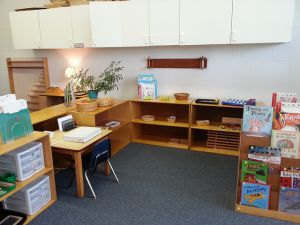
Within the physical environment, Interest Areas are prepared and maintained to encourage children in their learning. These areas are well planned and are purposefully created to enable children to experiment, discover, explore and create.
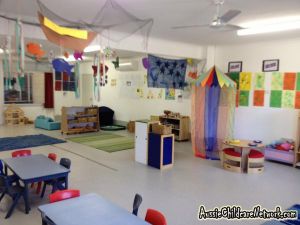
The physical environment in an early childhood setting creates an atmosphere that is welcoming, inviting and engaging. For the children it is an atmosphere where they can develop their skills and interests and become independent and confident learners. The overall learning environment creates a feeling of safety and comfort- a place where all children belong.
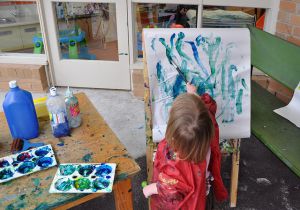
Creating interest areas within an early childhood settings are beneficial to both children and educators. For children, interest areas guide play, exploration and discovery which are all used to foster children’s holistic development. Interest areas enable educators to think intentionally about how to organize the space and involve the children to provide accessible materials that engage children and enhance their play experiences.
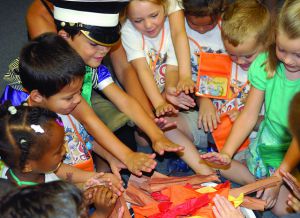
Within early childhood settings and as part of the daily routine, group time has become a teaching strategy in order to gather children together to have discussions, read stories, sing songs etc. The following article provides information on What Is Group Time, When To Have Group Time, What To Do During Group Time, Managing group Time and more.
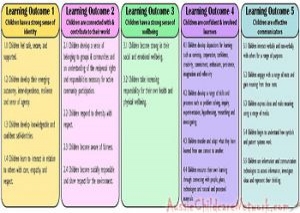 Here is the list of the EYLF Learning Outcomes that you can use as a guide or reference for your documentation and planning. The EYLF… Read More
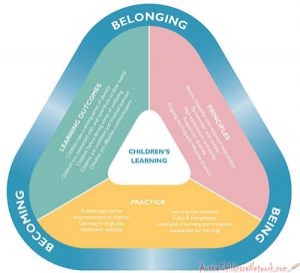 The EYLF is a guide which consists of Principles, Practices and 5 main Learning Outcomes along with each of their sub outcomes, based on identity,… Read More
 This is a guide on How to Write a Learning Story. It provides information on What Is A Learning Story, Writing A Learning Story, Sample… Read More
 One of the most important types of documentation methods that educators needs to be familiar with are “observations”. Observations are crucial for all early childhood… Read More
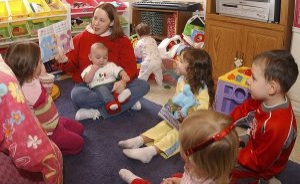 To support children achieve learning outcomes from the EYLF Framework, the following list gives educators examples of how to promote children's learning in each individual… Read More
 Reflective practice is learning from everyday situations and issues and concerns that arise which form part of our daily routine while working in an early… Read More
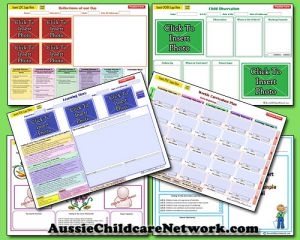 Within Australia, Programming and Planning is reflected and supported by the Early Years Learning Framework. Educators within early childhood settings, use the EYLF to guide… Read More
 When observing children, it's important that we use a range of different observation methods from running records, learning stories to photographs and work samples. Using… Read More
 This is a guide for educators on what to observe under each sub learning outcome from the EYLF Framework, when a child is engaged in… Read More
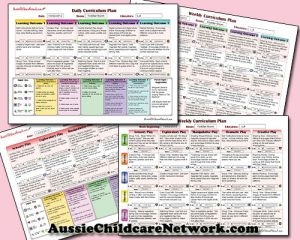 The Early Years Learning Framework describes the curriculum as “all the interactions, experiences, activities, routines and events, planned and unplanned, that occur in an environment… Read More

Reflections are powerful tools for growth, learning, and connection. Whether used in education, professional practice...
See more...
Celebrating International Cookie Day on the 4th December, in early childhood settings can be a...
See more...
The recent tragedy is a stark reminder that compliance alone is not enough. Despite holding...
See more...