Portfolios in childcare are living records of children’s learning journeys. They capture growth, creativity, and identity while serving as evidence for compliance with the EYLF and NQS. More than folders of artwork, they are storytelling tools that celebrate belonging, being, and becoming.
- For educators: Portfolios provide authentic documentation, support reflection, and demonstrate outcomes.
- For families: They strengthen home–service connections and celebrate milestones.
- For children: They foster agency, pride, and ownership of their learning story.
What Portfolios Contain
A well‑rounded portfolio includes:
- Observations: Running records, photo observations, and developmental checklists.
- Learning stories: Narratives linking experiences to EYLF outcomes.
- Work samples: Artwork, writing, and construction projects.
- Family input: Feedback forms, cultural celebrations, home photos.
- Reports: Half‑yearly and yearly summaries.
- Reflections: Educator notes, child quotes, and analysis of progress.
How to Create Portfolios
Educators can choose formats that suit their context:
-
Physical binders: Three-ring binders, scrapbooks, accordion files.
-
Digital portfolios: PDFs, Appsessment, Templates
-
Hybrid models: Printed samples combined with online sharing.
Tips for organization:
-
Categorize by months (Jan–Dec) or by document type (Observations, Learning Stories, Reports).
-
Use a portfolio checklist to track entries for each child.
-
Store portfolios in accessible areas so families and children can view them regularly.
Organising Portfolios by Age Group
Babies (0–2 years)
- Focus: relationships, routines, sensory exploration, milestones.
- Sections: About Me, Milestones, Sensory Play, Family Voice.
- Organisation: monthly tabs with 1–2 key observations and milestone notes.
Toddlers (2–3 years)
- Focus: autonomy, language burst, social play, curiosity.
- Sections: About Me, Learning Stories, Art & Expression, Family Contributions.
- Organisation: quarterly sections with 2–3 learning stories per term.
Preschoolers (3–5 years)
- Focus: identity, collaboration, school readiness, complex thinking.
- Sections: About Me, Projects, Art Gallery, Reflections, Family Engagement, Goals & Next Steps.
- Organisation: outcome‑based sections (Belonging, Being, Becoming). Preschoolers can help select and caption work.
Pros and Cons of Portfolios
| Aspect | Pros | Cons |
|---|---|---|
| Documentation | Authentic evidence of learning | Time‑consuming to maintain |
| Family Engagement | Strengthens home–service connection | Digital access barriers |
| Child Agency | Voice and identity celebrated | Inconsistent educator practice |
| Assessment | Holistic developmental view | Risk of overload/clutter |
| Compliance | Evidence for EYLF/NQS | Stress if seen as paperwork |
| Memory Value | Keepsake for families | Privacy concerns |
Takeaway: Portfolios are most effective when streamlined, purposeful, and inclusive of family and child voice.
How Often to Update Portfolios
Consistency is key. Updates should be little and often rather than bulk entries at the end of the term.
- Babies: weekly notes/photos, monthly milestone summaries.
- Toddlers: fortnightly learning stories, quarterly reflections.
- Preschoolers: weekly samples, monthly reflections, termly reports.
Workflow tips:
- Work on 2–3 portfolios per day.
- Pair updates with observations.
- Use checklists to track equity.
- Invite family contributions monthly.
Managing Portfolios
- Format: binders, scrapbooks, digital platforms (Storypark, Canva).
- Visual cues: icons or color codes for EYLF outcomes.
- Accessibility: store portfolios where families and children can view them.
- Streamlining: treat portfolios as celebrations of learning, not paperwork.
Portfolios in childcare are powerful documentation tools that celebrate children’s growth, strengthen family partnerships, and provide evidence for compliance. When organised by age group, updated regularly, and balanced with reflective practice, they become more than records—they are stories of belonging, being, and becoming.
Further Reading
Portfolios In Childcare
Portfolios Template



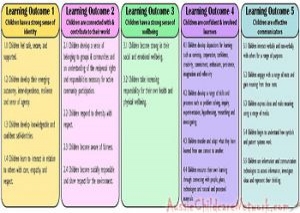 Here is the list of the EYLF Learning Outcomes that you can use as a guide or reference for your documentation and planning. The EYLF
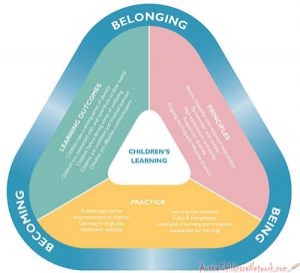 The EYLF is a guide which consists of Principles, Practices and 5 main Learning Outcomes along with each of their sub outcomes, based on identity,
 This is a guide on How to Write a Learning Story. It provides information on What Is A Learning Story, Writing A Learning Story, Sample
 One of the most important types of documentation methods that educators needs to be familiar with are “observations”. Observations are crucial for all early childhood
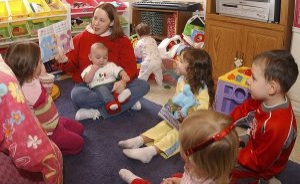 To support children achieve learning outcomes from the EYLF Framework, the following list gives educators examples of how to promote children's learning in each individual
 Reflective practice is learning from everyday situations and issues and concerns that arise which form part of our daily routine while working in an early
 When observing children, it's important that we use a range of different observation methods from running records, learning stories to photographs and work samples. Using
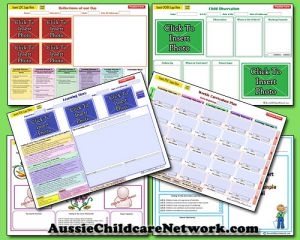 Within Australia, Programming and Planning is reflected and supported by the Early Years Learning Framework. Educators within early childhood settings, use the EYLF to guide
 This is a guide for educators on what to observe under each sub learning outcome from the EYLF Framework, when a child is engaged in
 The Early Years Learning Framework describes the curriculum as “all the interactions, experiences, activities, routines and events, planned and unplanned, that occur in an environment