Children’s questions are the heartbeat of inquiry-based learning. A simple “I wonder…” can ignite a journey of discovery that stretches across science, art, literacy, and community engagement. As educators, our role is to notice these sparks, nurture them, and scaffold them into meaningful projects.
Why Inquiry Sparks Matter
When children’s curiosity drives the learning, engagement deepens. Projects born from their questions build confidence, foster collaboration, and connect learning to real-world contexts.
Practical Strategies for Using Inquiry Sparks
1. Capture the Spark
- Document children’s questions on sticky notes, tracing cards, or Wonder Walls.
- Use photos or drawings to anchor the inquiry visually.
- Celebrate the question as the starting point, not just the answer.
Example:
A child asks, “Why do shadows move?” → Educator writes it on a Wonder Wall card, adds a photo of the child pointing at their shadow, and places it on the inquiry board.
2. Expand Through Brainstorming
- Invite children to share what they already know.
- Record their ideas in group mind maps.
- Encourage “What else do we wonder?” to broaden the inquiry.
Example:
Children wonder, “Where does rain come from?” → Group brainstorm includes clouds, taps, and “the sky crying.” Educator records these ideas and prompts further questions like “How do clouds hold water?”
3. Plan Mini-Investigations
- Turn questions into small projects.
- Use multi-sensory approaches—art, movement, experiments—to keep learning playful.
Examples:
- “Why do bees make honey?” → Taste-testing honey, drawing bee life cycles, reading picture books, inviting a beekeeper.
- “What makes a rainbow?” → Prism experiments, painting rainbows, outdoor water spray play.
- “How do boats float?” → Building foil boats, testing buoyancy with different objects, storytelling about sea journeys.
4. Connect to Families and Community
- Ask families to contribute knowledge, artifacts, or cultural perspectives.
- Organize excursions or invite guest speakers.
- Share inquiry journals or photos with families to extend learning at home.
Examples:
- A child wonders, “How do we make bread?” → Invite a parent who bakes, visit a local bakery, or share family recipes.
- “Why do birds sing?” → A grandparent shares cultural stories about birds, while a local birdwatcher demonstrates bird calls.
5. Document the Journey
- Create inquiry panels with photos, children’s words, and traced questions.
- Use digital platforms to record reflections and discoveries.
- Encourage children to revisit and add new layers to their inquiry.
Example:
An inquiry into “Where do stars go in the daytime?” is documented with children’s drawings, telescope photos, and quotes like “They hide behind the sun.”
6. Celebrate the Outcomes
- Showcase projects in exhibitions, portfolios, or storytelling sessions.
- Highlight the process as much as the product—children’s voices, questions, and reflections.
- Link back to EYLF/MTOP outcomes to demonstrate learning progression.
Examples:
- Host a “Wonder Fair” where children present their projects.
- Create a digital slideshow of inquiry sparks and outcomes for families.
- Celebrate with storytelling circles where children narrate their discoveries.
Educator Reflection Prompts
- How do I notice and capture children’s questions in the moment?
- Am I scaffolding inquiry in ways that remain child-led?
- How do I balance open-ended exploration with curriculum outcomes?
Inquiry sparks remind us that children’s curiosity is the most powerful curriculum. By following their questions, educators create learning that is authentic, joyful, and deeply connected to the vision of confident, involved learners and effective communicators.



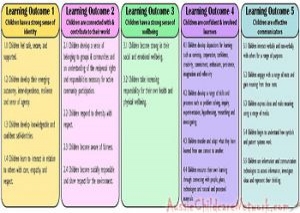 Here is the list of the EYLF Learning Outcomes that you can use as a guide or reference for your documentation and planning. The EYLF
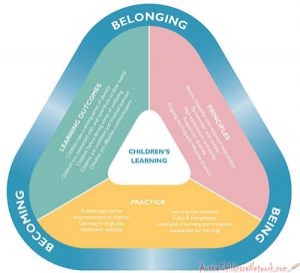 The EYLF is a guide which consists of Principles, Practices and 5 main Learning Outcomes along with each of their sub outcomes, based on identity,
 This is a guide on How to Write a Learning Story. It provides information on What Is A Learning Story, Writing A Learning Story, Sample
 One of the most important types of documentation methods that educators needs to be familiar with are “observations”. Observations are crucial for all early childhood
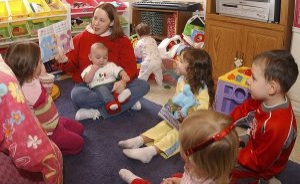 To support children achieve learning outcomes from the EYLF Framework, the following list gives educators examples of how to promote children's learning in each individual
 Reflective practice is learning from everyday situations and issues and concerns that arise which form part of our daily routine while working in an early
 When observing children, it's important that we use a range of different observation methods from running records, learning stories to photographs and work samples. Using
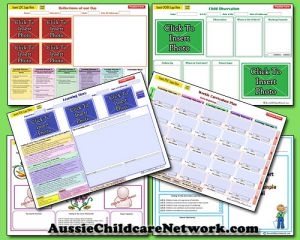 Within Australia, Programming and Planning is reflected and supported by the Early Years Learning Framework. Educators within early childhood settings, use the EYLF to guide
 This is a guide for educators on what to observe under each sub learning outcome from the EYLF Framework, when a child is engaged in
 The Early Years Learning Framework describes the curriculum as “all the interactions, experiences, activities, routines and events, planned and unplanned, that occur in an environment