
Childcare phrases made simple: easy words for toys, routines, parent chats & co‑worker small talk to support non‑native English educators.
Working in childcare can be tricky when English isn’t your first language, especially with all the little everyday words and quick chats that happen with kids, parents, and co‑workers. The good news is you don’t need fancy language; short, simple phrases work best and sound natural. Here are some useful childcare phrases you can keep in mind to make describing activities and small talk easier.
Toy and Activity Phrases
- “Let’s build with the blocks.”
- “Do you want to play in the home corner?”
- “It’s time for story time.”
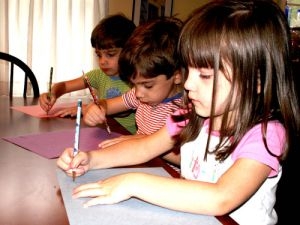
- “We’re painting with brushes today.”
- “Let’s sing a song together.”
- “Let’s do a puzzle.”
- “Do you want to draw with crayons?”
- “Let’s build a tower together.”
- “Would you like to play with playdough?”
- “Let’s race the toy cars.”
Daily Routine Phrases
- “Wash your hands before snack.”
- “It’s tidy‑up time.”
- “Let’s sit on the mat.”
- “Time to line up.”
- “We’re going outside to play.”
- “Put your shoes on, please.”
- “It’s time to pack away the toys.”
- “Let’s get ready for lunch.”
- “Please use your quiet voice inside.”
- “We’re waiting for everyone to be ready.”
Small Talk with Parents
- “She had a busy day playing with the blocks.”
- “He really enjoyed painting today.”
- “She was a bit tired after lunch but settled well.”
- “He loved story time—sat and listened beautifully.”
- “She’s making lots of friends in the group.”
- “He was very proud of his drawing today.”
- “She joined in the singing with lots of enthusiasm.”
- “He needed a little help with the puzzle but kept trying.”
- “She enjoyed playing outside and running with friends.”
- “He was gentle and kind with the younger children.”
Small Talk with Co‑Workers
- “Wow, the kids were full of energy today.”
- “That activity worked really well; they loved it.”
- “It’s been a busy morning, hasn’t it?”
- “Snack time went smoothly today.”
- “The toddlers were so curious during outdoor play.”
- “The kids really concentrated during puzzle time.”
- “Outdoor play was lively but well managed.”
- “Circle time felt calmer today.”
- “They were fascinated by the storybook pictures.”
- “Snack time was quick and easy today.”
Further Reading
Navigating Multilingual Teams in Early Childhood Settings
Creating A Multicultural Environment In An Early Childhood Setting
Examples Of How Diverse Cultures Can Be Incorporated
Cultural Competence In Early Childhood Settings
Celebrating Multiculturalism in Childcare




 The Children’s Services Award introduces a streamlined classification system and updated pay rates designed to better recognise the skills, qualifications, and responsibilities of early childhood
 The Children’s Services Award has 8 clear levels. These levels make it easier to understand where you fit, based on your experience, qualifications, and responsibilities.
 When working as a qualified early childhood teacher (with a university degree) within a service, your rate of pay will come from the Educational Services
 Diploma-qualified educators play a vital role in early childhood services, taking on responsibilities that range from supporting children’s learning and development to leading rooms and
 Certificate III qualified educators form the backbone of early childhood services, providing essential care and learning support for children across all settings. Their wages under
 Early Childhood Teachers (ECTs) play a vital role in leading curriculum and pedagogy in early learning settings. Regulation 272 of the Education and Care Services
 Discover how school readiness programs support children’s independence, confidence, and skills for a successful transition into primary school.
 When an Educator is not performing their tasks or responsibilities at best practice, these issues need to be addressed for the Educator to understand where
 Educators can maximise tax deductions by claiming classroom supplies, training, union fees, and home office costs this financial year.
 A staff appraisal is a formal, systematic process of determining and reviewing the performance of early childhood educators over a period of time, usually a