



The Australian Skills Quality Authority has reaffirmed its commitment to protecting the integrity of vocational education and training. Following a recent Tribunal decision, the cancellation of qualifications issued by Gills College was upheld. This ruling highlights the regulator’s determination to safeguard students, employers, and the wider community from non-genuine training providers.

In 2025, several Australian training providers had their registrations cancelled by ASQA, leading to the invalidation of qualifications such as the Certificate III and Diploma in Early Childhood Education and Care. These cancellations highlight serious compliance failures and affect many students who must now seek legitimate pathways to requalify.

New national data reveals a drop in the proportion of qualified staff working in early childhood education and care services.

Recent alerts from TEQSA (Tertiary Education Quality and Standards Agency) and ASQA (Australian Skills Quality Authority) have raised concerns about students being funnelled into childcare courses without genuine interest or adequate preparation. Migration agents and private colleges offering fast-tracked qualifications are contributing to a surge of students entering placements without mandatory checks or sufficient training.

Regulatory authorities across Australia have identified staffing as a priority area, with a strong focus on ensuring educators hold valid, authentic qualifications. Unfortunately, fraudulent certificates continue to circulate, and some are sophisticated enough to fool even experienced leaders.

In early childhood education, qualifications are often seen as the benchmark of quality. Diplomas, degrees, and certificates line the walls of centres, signaling compliance and professional achievement. Yet research consistently shows that what truly shapes a child’s well-being and learning is not the paper on the wall, but the warmth, trust, and attunement in the relationships they experience every day.

Under ACECQA’s National Quality Framework, educators are deemed “qualified” if they hold a Certificate III, Diploma, or approved university degree. But qualification does not equal competence. The current system allows individuals with unrelated undergraduate degrees to complete a one-year postgraduate course and enter classrooms, often with minimal practical experience or emotional readiness. The result? A workforce flooded with technically qualified but emotionally disconnected practitioners some of whom openly admit they “don’t like kids” and entered the profession for visa access or job security.

The Diploma of Early Childhood Education and Care gives you an opportunity to explore more career options. From creative resource design to inclusion support, leadership, or advocacy, it offers a rich landscape of opportunities beyond the traditional role of working as an educator in an early learning setting. The following article provides examples of different career pathways for your Diploma qualification.

In recent years, the early childhood education and care sector has faced a troubling rise in fraudulent qualifications, a threat not only to professional integrity but also to the safety and wellbeing of children. From forged certificates to unaccredited training providers, the issue has triggered national investigations and sweeping reforms.
The Australian Skills Quality Authority, in collaboration with HumanAbility and sector partners, has released updated guidance to strengthen how early childhood education and care students are assessed during workplace placements. This article unpacks the key elements of the guidance, highlights unacceptable practices, and offers best-practice recommendations for registered training organisations and ECEC services.
 The Children’s Services Award introduces a streamlined classification system and updated pay rates designed to better recognise the skills, qualifications, and responsibilities of early childhood… Read More
 The Children’s Services Award has 8 clear levels. These levels make it easier to understand where you fit, based on your experience, qualifications, and responsibilities.… Read More
 When working as a qualified early childhood teacher (with a university degree) within a service, your rate of pay will come from the Educational Services… Read More
 Diploma-qualified educators play a vital role in early childhood services, taking on responsibilities that range from supporting children’s learning and development to leading rooms and… Read More
 Certificate III qualified educators form the backbone of early childhood services, providing essential care and learning support for children across all settings. Their wages under… Read More
 Early Childhood Teachers (ECTs) play a vital role in leading curriculum and pedagogy in early learning settings. Regulation 272 of the Education and Care Services… Read More
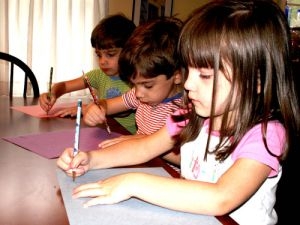 Discover how school readiness programs support children’s independence, confidence, and skills for a successful transition into primary school.
Read More
Discover how school readiness programs support children’s independence, confidence, and skills for a successful transition into primary school.
Read More
 When an Educator is not performing their tasks or responsibilities at best practice, these issues need to be addressed for the Educator to understand where… Read More
 Educators can maximise tax deductions by claiming classroom supplies, training, union fees, and home office costs this financial year.
Read More
Educators can maximise tax deductions by claiming classroom supplies, training, union fees, and home office costs this financial year.
Read More
 A staff appraisal is a formal, systematic process of determining and reviewing the performance of early childhood educators over a period of time, usually a… Read More

Here’s a thoughtfully curated list of 20 autism-friendly activities that align beautifully with inclusive early...
See more...
Here's a practical educator cheat sheet tailored for writing summative assessments in early childhood settings—designed...
See more...
Children of all ages are fascinated by dinosaurs. Children's imaginations and curiosities are sparked by...
See more...