


In early childhood, literacy learning is most powerful when it grows from children’s natural curiosity. While handwriting and tracing are often seen as “formal” skills, they can be introduced in ways that honour children’s interests, build fine motor strength, and connect meaningfully to the EYLF outcomes.

Mark-making refers to the earliest forms of visual expression—scribbles, lines, dots, and patterns—that children create to explore ideas, communicate meaning, and experiment with representation. Within the Reggio Emilia approach, these marks are not seen as mere preparation for writing but as a powerful language of childhood, embodying thought, emotion, and identity.
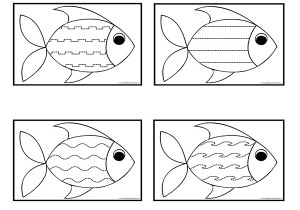
Fish Tracing Lines aims to help children in the development of pre-writing skills. It provides children the ability to use cognitive development, observations, and hand-eye coordination and encourages the child to draw in a specific direction. As a child practices tracing over these lines through copying and tracing, this will give them the confidence and ability to write letters and numbers correctly.

Prewriting patterns are fundamental shapes and strokes that help young children develop the fine motor skills and hand-eye coordination necessary for writing. They are typically introduced gradually as children develop the ability to draw basic shapes and lines. The following article provides information on Benefits Of Children Learning Prewriting Patterns, Progression Of Prewriting Patterns, What Age Do Children Usually Master These Patterns?, How Do These Patterns Relate To Future Writing Skills?, What Are Some Effective Teaching Strategies For Prewriting Patterns, What Are Alternative Teaching Strategies For Prewriting?, What Are Alternative Teaching Strategies For Prewriting? and more.

Pre-writing skills are crucial for young children as they lay the foundation for future writing success. The following article provides information on What Are Pre-writing Skills, Importance Of Pre-Writing Skill Activities To Promote Pre-Writing Skills and more.

Visual Motor Integration covers efficient and effective coordination between the eyes and the hands so that children are able to copy, draw or write what they see. Since children develop their handwriting based on what they see in a model and then imitate it in their own writing, they need to have effective Visual Motor Integration. The following article provides information on What Is Visual Motor Integration, VMI and Handwriting, Improving Visual Motor Skills and more.
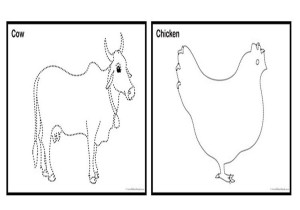
Farm Animals Picture Tracing enables children to trace over the lines to create a picture of a farm animal. These also can be laminated to be reused.
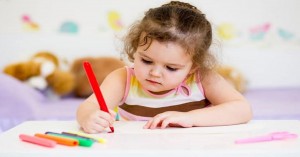
The development of writing skills depends on a variety of physiological and environmental factors. Children have to develop fine motor skills as well as hand-eye coordination to be able to write. Also, their awareness of sounds and prints in the environment influences how ready they are to write. In the following article, it provides the stages children progress through of acquiring writing skills.
 The Children’s Services Award introduces a streamlined classification system and updated pay rates designed to better recognise the skills, qualifications, and responsibilities of early childhood… Read More
 The Children’s Services Award has 8 clear levels. These levels make it easier to understand where you fit, based on your experience, qualifications, and responsibilities.… Read More
 When working as a qualified early childhood teacher (with a university degree) within a service, your rate of pay will come from the Educational Services… Read More
 Diploma-qualified educators play a vital role in early childhood services, taking on responsibilities that range from supporting children’s learning and development to leading rooms and… Read More
 Certificate III qualified educators form the backbone of early childhood services, providing essential care and learning support for children across all settings. Their wages under… Read More
 Early Childhood Teachers (ECTs) play a vital role in leading curriculum and pedagogy in early learning settings. Regulation 272 of the Education and Care Services… Read More
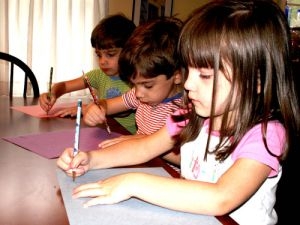 Discover how school readiness programs support children’s independence, confidence, and skills for a successful transition into primary school.
Read More
Discover how school readiness programs support children’s independence, confidence, and skills for a successful transition into primary school.
Read More
 When an Educator is not performing their tasks or responsibilities at best practice, these issues need to be addressed for the Educator to understand where… Read More
 Educators can maximise tax deductions by claiming classroom supplies, training, union fees, and home office costs this financial year.
Read More
Educators can maximise tax deductions by claiming classroom supplies, training, union fees, and home office costs this financial year.
Read More
 A staff appraisal is a formal, systematic process of determining and reviewing the performance of early childhood educators over a period of time, usually a… Read More

Easter is coming closer to us. So, to continue the tradition of dyeing Easter eggs...
See more...
Anti-bias experiences are about guiding children to be able to think about and have words...
See more...
Positive phrases play a crucial role in children's growth because they help nurture their emotional...
See more...