



Rethink group time: flexible, child‑led alternatives that foster connection, inclusion, and meaningful shared learning without the circle.

Morning group time sets the tone for the day in early childhood settings. For children aged 3–5, this is a golden opportunity to build belonging, strengthen language, nurture rhythm, and ease transitions into play and learning. A well‑designed group time moves calmly from centering rituals into energising activities, balancing structure with child‑led moments. Below are engaging strategies and examples that educators can adapt to their own classrooms, ensuring mornings feel joyful, connected, and purposeful.

A: Group time is not strictly necessary, but when thoughtfully designed, it can be a powerful tool for fostering connection, communication, and community in early childhood settings.

A Sailor Went to Sea is a fun action song that encourages rhythm and coordination. It encourages children to learn different body parts through each verse of the song accompanied by different actions.
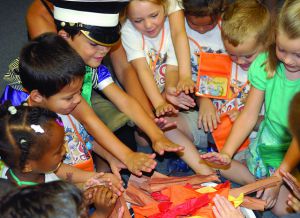
Within early childhood settings and as part of the daily routine, group time has become a teaching strategy in order to gather children together to have discussions, read stories, sing songs, etc. The following article provides information on What Is Group Time, When To Have Group Time, What To Do During Group Time, Managing group Time and more.
 The Children’s Services Award introduces a streamlined classification system and updated pay rates designed to better recognise the skills, qualifications, and responsibilities of early childhood… Read More
 The Children’s Services Award has 8 clear levels. These levels make it easier to understand where you fit, based on your experience, qualifications, and responsibilities.… Read More
 When working as a qualified early childhood teacher (with a university degree) within a service, your rate of pay will come from the Educational Services… Read More
 Diploma-qualified educators play a vital role in early childhood services, taking on responsibilities that range from supporting children’s learning and development to leading rooms and… Read More
 Certificate III qualified educators form the backbone of early childhood services, providing essential care and learning support for children across all settings. Their wages under… Read More
 Early Childhood Teachers (ECTs) play a vital role in leading curriculum and pedagogy in early learning settings. Regulation 272 of the Education and Care Services… Read More
 Discover how school readiness programs support children’s independence, confidence, and skills for a successful transition into primary school.
Read More
Discover how school readiness programs support children’s independence, confidence, and skills for a successful transition into primary school.
Read More
 When an Educator is not performing their tasks or responsibilities at best practice, these issues need to be addressed for the Educator to understand where… Read More
 Educators can maximise tax deductions by claiming classroom supplies, training, union fees, and home office costs this financial year.
Read More
Educators can maximise tax deductions by claiming classroom supplies, training, union fees, and home office costs this financial year.
Read More
 A staff appraisal is a formal, systematic process of determining and reviewing the performance of early childhood educators over a period of time, usually a… Read More

Engaging parents in early childhood activities is a wonderful way to build a strong community...
See more...
Motivating well-qualified staff to remain at your service is not only important to cut down...
See more...
Early childhood educators are being unfairly targeted by fear-driven narratives and reactive policy changes, despite...
See more...