


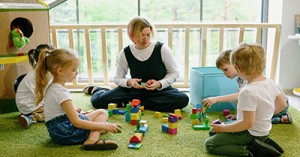
Quality Area 5 of the National Quality Standard focuses on relationships with children. The following article provides a structured list of critical reflection questions for NQS Quality Area 5—Relationships with Children. These questions are designed to help you examine, evaluate, and enhance the ways in which your service fosters secure, respectful, and responsive relationships with children.

Quality Area 4 focuses on staffing arrangements. The following questions are designed to help you critically evaluate how your service recruits, supports, retains, and empowers its educators to deliver high-quality, intentional interactions with children.

Quality Area 3 of the National Quality Standard focuses on the Physical Environment. It focuses on creating physical environments in early childhood settings that are safe, suitable, and enriching for children's learning and development. The following article provides a list of critical reflection questions to guide thinking and practice for QA3.

Writing critical reflections for the National Quality Standards (NQS) in early childhood education involves a thoughtful and systematic approach to evaluating and improving your teaching practices. The following articlr provides information on Steps to Write Critical Reflections For The NQS, Critical Reflection Examples for Quality Area 1 To Quality Area 7 and more.


Writing a critical reflection in early childhood education involves a thoughtful examination of your experiences, thoughts, and feelings to gain insights and improve your teaching practice. The following article provides a Step-by-Step Guide, Example Outline and Example Reflection, Topics To Critically Reflect On In Early Childhood and more.

Reflection is a valuable tool for personal growth and learning; critical reflection takes it a step further by promoting deeper analysis and transformative change. The following article provides information on What Is Reflection, What Is Critical Reflection, Differences Between Reflection and Critical Reflection, When To Use Reflections, When To Use Critical Reflections, Sharing Reflections and Critical Reflections With Families, Linking To The EYLF and more.

Quality Area 2 of the National Quality Standard focuses on children's health and safety. This area is to safeguard and promote children’s health and safety, minimise risks, and protect children from harm, injury, and infection. The following article provides a list of critical reflection questions to guide thinking and practice for QA2.

Quality Area 1 of the National Quality Standard focuses on Educational Program and Practice. This area ensures that the educational program and practice are stimulating, engaging, and enhance children's learning and development. The following article provides a list of critical reflection questions to guide thinking and practice for QA1.
 The Children’s Services Award introduces a streamlined classification system and updated pay rates designed to better recognise the skills, qualifications, and responsibilities of early childhood… Read More
 The Children’s Services Award has 8 clear levels. These levels make it easier to understand where you fit, based on your experience, qualifications, and responsibilities.… Read More
 When working as a qualified early childhood teacher (with a university degree) within a service, your rate of pay will come from the Educational Services… Read More
 Diploma-qualified educators play a vital role in early childhood services, taking on responsibilities that range from supporting children’s learning and development to leading rooms and… Read More
 Certificate III qualified educators form the backbone of early childhood services, providing essential care and learning support for children across all settings. Their wages under… Read More
 Early Childhood Teachers (ECTs) play a vital role in leading curriculum and pedagogy in early learning settings. Regulation 272 of the Education and Care Services… Read More
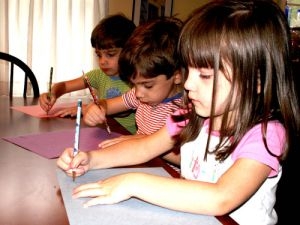 Discover how school readiness programs support children’s independence, confidence, and skills for a successful transition into primary school.
Read More
 When an Educator is not performing their tasks or responsibilities at best practice, these issues need to be addressed for the Educator to understand where… Read More
 Educators can maximise tax deductions by claiming classroom supplies, training, union fees, and home office costs this financial year.
Read More
 A staff appraisal is a formal, systematic process of determining and reviewing the performance of early childhood educators over a period of time, usually a… Read More

No. Under the Education and Care Services National Laws and Regulations: The requirement for an authorised...
See more...
The wellbeing of educators is not peripheral to quality practice—it is central. The health of...
See more...
As parents, we know the indescribable joy of seeing our child’s face light up when...
See more...