



A: Under Regulations 101–102D, approved providers and educators must conduct risk assessments for activities that may pose risks to children’s health, safety, or well-being.

A: As the end of the preschool year approaches, preschool educators begin preparing for graduation ceremonies—complete with miniature caps, choreographed performances, and proud photo ops. While these events can be joyful and affirming, they also invite deeper reflection. Is a formal graduation truly necessary in early childhood education? Or are there more developmentally appropriate, emotionally intelligent ways to honour children’s growth? This question opens space for reimagining what transition rituals could look like—and who they’re really for.

A: There’s no fixed number of observations required from educators across all early childhood services in Australia—it depends on your service’s philosophy, policies, and the needs of the children.

A: You can show individual learning cycles in a simplified way by using visual templates and structured documentation that align with the EYLF. These tools help educators track each child’s progress without overwhelming complexity. Here are a few effective strategies.
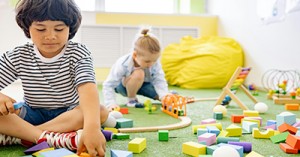
A: It depends on children's engagement and developmental needs. Many educators recommend keeping setups for 2–4 weeks, or even up to 6 weeks, especially if children are still exploring and learning from them. The key is to observe whether the setup continues to spark interest and growth.

A: Employers must give at least 7 days’ notice for changes to rosters, including meeting times. If the meeting is compulsory, it must be paid.

A: This typically refers to opening a room or service with two educators holding Certificate III qualifications. The assumption is that the third staff member (when added) would be diploma-qualified, allowing the team to meet the 50/50 ratio requirement—which mandates that at least half of the educators must hold or be working towards a diploma-level qualification.

A: Under the National Quality Framework (NQF), every time a centre-based early childhood service is open—whether at opening, throughout the day, or at closing—there must be at least one Responsible Person physically present and on duty.

A: In terms of best practice, not every single piece requires a long, formal reflection, but each should invite at least a moment of intentional consideration.
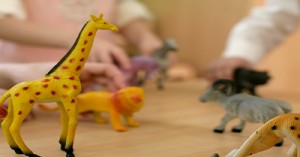
A: Observing a child's interest is key to understanding their passions and learning preferences.
 The Children’s Services Award introduces a streamlined classification system and updated pay rates designed to better recognise the skills, qualifications, and responsibilities of early childhood… Read More
 Children need safe and positive environments to learn and grow. To ensure this, services and educators need to ensure effective supervision at all times. The… Read More
 Floorbook is a documentation approach that uses a large book with blank pages for children to record different aspects of their learning in small groups… Read More
 In Norway and most other Scandinavian countries, children nap in the outdoors. According, to research outdoor sleeping not only promotes better daytime sleeping, but it… Read More
 From 2026, every educator covered by the Children’s Services Award will move into a new, simplified classification structure. Instead of navigating 30 different levels, educators… Read More
 Educational leaders play a crucial role in their early childhood service by ensuring that the educational program aligns with best practices and supports the holistic… Read More
 Nature programs in early childhood settings are a fantastic way to connect children with the natural world and promote holistic development. The following article provides… Read More
 Schemas are patterns of repeated behavior that allow children to explore and express developing ideas and thoughts through their play and exploration. The following article… Read More
 The following article lists 30 art and craft descriptions and links to the EYLF. These can be used as a blurb, during observations, used for… Read More
 Positive phrases play a crucial role in children's growth because they help nurture their emotional, social, and cognitive development. The following article lists 30 positive… Read More

We have now updated our Widgets to include Sleep Checks, Vehicle Transportation and Change Of...
See more...
World Environment Day is on the 5th of June. It is a great opportunity to introduce...
See more...
The Child Safe Standards recommended by the Royal Commission provide a framework for making organisations...
See more...