


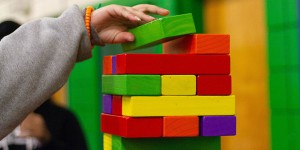
Children are more likely to be confident and involved learners when their family and community experiences and understandings are recognised and included in the early childhood setting. The following article provides activities to promote each of the sub-outcomes of EYLF Outcome 4 - Children Are Confident And Involved Learners.
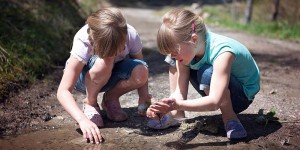
A strong sense of well-being provides children with confidence and optimism which maximises their learning potential. It encourages the development of children’s innate exploratory drive, a sense of agency and a desire to interact with others. Well-being includes good physical health, feelings of happiness, satisfaction and successful social functioning. It influences the way children interact in their environments. The following article provides activities to promote each of the sub outcomes of EYLF Outcome 3 - Children Have A Strong Sense of Wellbeing.
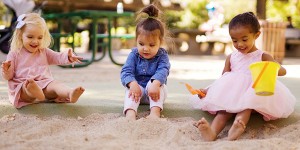
When children move into early childhood settings they broaden their experiences as participants in different relationships and communities. When educators create environments in which children experience mutually enjoyable, caring and respectful relationships with people and the environment, children respond accordingly. The following article provides activities to promote each of the sub outcomes of EYLF Outcome 2: Children Are Connected With And Contribute To Their World.

When children feel safe, secure and supported they grow in confidence to explore and learn. In early childhood settings children develop a sense of belonging when they feel accepted, develop attachments and trust those that care for them. As children are developing their sense of identity, they explore different aspects of it (physical, social, emotional, spiritual, and cognitive), through their play and their relationships. The following article provides activities to promote each of the sub outcomes of EYLF Outcome 1: Children Have A Strong Sense Of Identity.
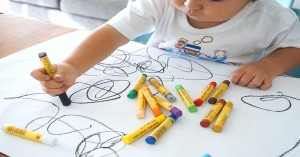
Belonging, Being and Becoming: The Early Years Learning Framework for Australia embeds art in many significant ways to foster the holistic development of children. Here are the main curriculum connections of art in the early childhood learning framework.
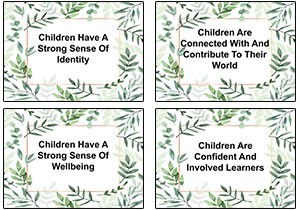
The EYLF Main Outcome Posters includes each of the main outcomes of the early years learning framework. These can be used as a display around the room to show how children achieve each outcome.
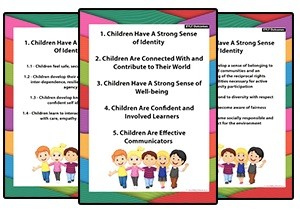
EYLF Learning Outcomes Posters can be used to display within the service or used as a reference for documentation and planning. The Learning Outcomes are to be used to reflect on children’s learning and focus on what a child can achieve.
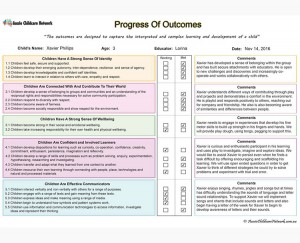
The template is used to record the outcomes the child has met throughout the year based on the EYLF outcomes.
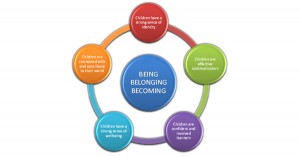
Here is the list of the EYLF Learning Outcomes that you can use as a guide or reference for your documentation and planning. The EYLF Learning Outcomes are goals that can be achieved by a child during their learning.
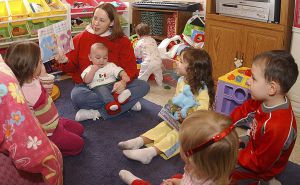
To support children achieve learning outcomes from the EYLF Framework, the following list gives educators examples of how to promote children's learning in each individual learning outcome. These can be used when assessing children's learning, critically reflecting on the experiences planned, strategies to implement for each learning outcome and more. It also encourages and promotes each individual outcome throughout the early childhood setting.
 The Children’s Services Award introduces a streamlined classification system and updated pay rates designed to better recognise the skills, qualifications, and responsibilities of early childhood… Read More
 The Children’s Services Award has 8 clear levels. These levels make it easier to understand where you fit, based on your experience, qualifications, and responsibilities.… Read More
 When working as a qualified early childhood teacher (with a university degree) within a service, your rate of pay will come from the Educational Services… Read More
 Diploma-qualified educators play a vital role in early childhood services, taking on responsibilities that range from supporting children’s learning and development to leading rooms and… Read More
 Certificate III qualified educators form the backbone of early childhood services, providing essential care and learning support for children across all settings. Their wages under… Read More
 Early Childhood Teachers (ECTs) play a vital role in leading curriculum and pedagogy in early learning settings. Regulation 272 of the Education and Care Services… Read More
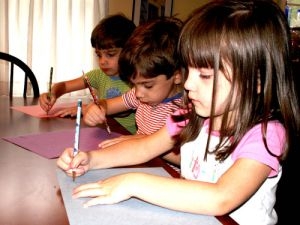 Discover how school readiness programs support children’s independence, confidence, and skills for a successful transition into primary school.
Read More
Discover how school readiness programs support children’s independence, confidence, and skills for a successful transition into primary school.
Read More
 When an Educator is not performing their tasks or responsibilities at best practice, these issues need to be addressed for the Educator to understand where… Read More
 Educators can maximise tax deductions by claiming classroom supplies, training, union fees, and home office costs this financial year.
Read More
Educators can maximise tax deductions by claiming classroom supplies, training, union fees, and home office costs this financial year.
Read More
 A staff appraisal is a formal, systematic process of determining and reviewing the performance of early childhood educators over a period of time, usually a… Read More
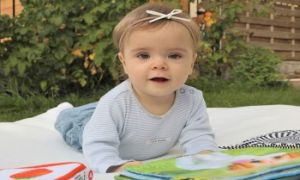
From the earliest months of life, babies thrive when given opportunities to experience the outdoors...
See more...
In early childhood education, numbers matter. Ratios often dominate policy debates, but group size, the...
See more...
Starting the day with a cheerful song can set a positive tone for preschoolers. The...
See more...