



Stimming refers to repetitive movements, sounds, or actions that people use to regulate emotions, manage sensory input, or express themselves. While it’s often associated with autism and ADHD, everyone engages in some form of stimming (like tapping a foot or twirling hair). In early childhood settings, educators frequently observe stimming behaviors and wonder how best to respond. The key is to recognize stimming as a natural form of self-regulation and support it in safe, respectful ways.
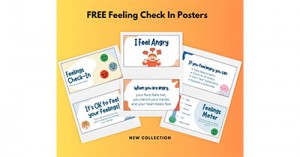
In early childhood settings, emotional literacy is foundational to well-being, learning, and relationships. The free printable Feeling Check-In posters featuring clear visuals, child-friendly language, and actionable strategies offer educators a powerful way to support children in identifying, expressing, and managing their emotions. Whether used during transitions, check-ins, or moments of dysregulation, these posters help embed emotional intelligence into daily practice.

In early childhood education, documentation is often framed as evidence or proof of learning, compliance, or curriculum alignment. But what if we reimagined it as a mirror? A tool that reflects not just cognitive milestones but emotional journeys, identity formation, and the quiet power of self-expression?
Visual documentation drawings, photos, annotated art, and symbolic storytelling can become a language of emotional literacy. It allows children to say what words cannot and invites educators to listen with their eyes, hearts, and intuition.

Helping toddlers and preschoolers build emotional vocabulary is like giving them a toolbox for life—they learn to name what they feel, which helps them express themselves, regulate emotions, and connect with others. Here are some engaging, developmentally appropriate strategies and games to teach emotional vocabulary.

Self-talk is a powerful tool for helping children manage their emotions and behaviors. When used intentionally, it can guide children through tricky moments by giving them the language to pause, reflect, and choose a response. The following article provides information on Why It Works, What Are The Psychological Benefits Of Self-Talk, How to Encourage It, Examples of Self-Talk For Young Children, Activities to Support Self-Talk and more.

Emotional awareness and self-regulation are crucial skills for young children, helping them navigate social interactions, manage their feelings, and develop resilience. The following article provides information on Why Are These Skills Important?, How to Support These Skills in Early Childhood, Using Language To Help With Emotional Awareness and Self-Regulation Skills In Early Childhood, Examples of Self-Talk To Support Self-Regulation, Using Social Scripts, and more.

Emotional regulation refers to the ability to recognize, understand, and manage one's emotions in a way that is appropriate for the situation. It involves strategies and skills that help individuals control their emotional reactions, maintain balance, and respond to challenges constructively. The following article provides 30 fun and effective emotional regulation activities designed for children aged 2–4 years to help them understand and manage their feelings.

Emotional Intelligence is now widely accepted as a fundamental life skill which can be nurtured even in young children. Identifying, labelling and talking about emotions not only helps them regulate their own emotions but also tune in to how people are feeling around them. The following article provide strategies on teaching children about emotions.

Creating a supportive environment where children feel safe to express their emotions is crucial for their emotional and social development. The following article provides information for Strategies To Encourage Children To Express Emotions Activities For Toddlers and Preschoolers, Emotion Vocabulary, Activities to Build Emotion Vocabulary, Activities to Build Emotion Vocabulary, What To Do When A Child Is Angry, What To Do When A Child Is Being Violent/Aggressive, What To Do If A Child Hits You, Alternative Behaviours and more.
This feelings rhyme is sung in the tune of "I'm A Little Teapot" and is simple for both toddlers and preschoolers. It describes facial features when someone is happy and sad. This is a great song for children to get to understand when someone looks happy or sad.
 Working as a childcare professional can be a challenge especially when dealing with behavioural problems which may arise. The techniques we use when dealing with… Read More
 There are different types of behaviour that children can display and sometimes it can be hard to manage, especially if a child is having behavioural… Read More
 As Educators, there will be many instances where you will need to write about a child's behaviour. For a behaviour management plan, assessments, half-yearly or… Read More
 As a parent, your behavioural expectations of your child can be higher than what is actually developmentally appropriate for your child's age.
Read More
As a parent, your behavioural expectations of your child can be higher than what is actually developmentally appropriate for your child's age.
Read More
 As Educators when communicating with Parents (through verbal or non-verbal communication), there will be times where we need to discuss issues or concerns that may… Read More
 Challenging Behaviour is when a child does something that hurts themselves and/or other people.
Read More
Challenging Behaviour is when a child does something that hurts themselves and/or other people.
Read More
 It's always difficult to bring up behavioural issues with parents, it can be nerve wrecking to tell a parent that their child misbehaves but that… Read More
 As part of your child's development it is normal for your child to have anxiety and fears. A baby commonly shows a fearful sign to… Read More
 All children deal with anger on a daily basis. Thinking about it as a child, there is a lot to be angry about. Elder people… Read More
 It is important to understand that your child behaviour problems could not just be from attention seeking. There are many factors to take into consideration… Read More

Supporting a toddler through moments of heightened emotion requires patience and thoughtful strategies. Here are...
See more...
Behaviourism is a learning theory developed by psychologists B.F. Skinner and John Watson, focusing on...
See more...
Phonological awareness covers the child’s ability to recognize and use the spoken parts of sentences...
See more...