



Educators and families deserve a system that mirrors real-time quality and safety—one that responds instantly to compliance breaches or serious incidents rather than waiting years for the next review. Here’s a blueprint for transforming our current “tick-and-forget” model into a living, breathing accountability framework.

In a significant move toward strengthening child protection across Australia, the federal government has mobilized a specialist unit to assist in the rollout of a nationwide Working with Children Check (WWCC) system. This marks a pivotal step in unifying fragmented state and territory-based checks into a cohesive national register.

When a service operates without external cleaning staff, it’s reasonable to expect educators to maintain day-to-day hygiene. However, there’s a clear boundary between routine surface-level cleaning that supports children’s health and deep-cleaning or maintenance tasks that should be outsourced or allocated separately.
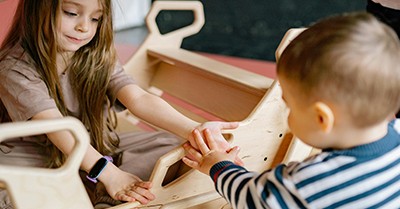
Teaching young children how to use their hands for kindness rather than harm is foundational to building a caring classroom culture. At ages four and five, children are still developing self-regulation and may act out physically when emotions feel overwhelming. As educators, we can guide them toward prosocial alternatives, equip them with emotional vocabulary, and partner with families to reinforce healthy touch at home.

Ensuring families feel informed and engaged is more than a compliance checkbox—it’s the foundation of true collaboration that supports each child’s learning journey. National Quality Standard (NQS) Element 1.3.3 requires services to keep families up-to-date about the educational program and their child’s progress. Simply saying “they had a great day” plus an end-of-year report falls short of this intent. Here’s how to enrich daily communication, meet compliance expectations, and foster home-to-service learning continuity.
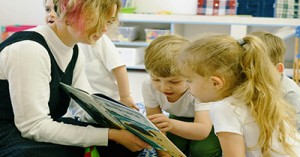
Children don’t learn to read by starting with phonics worksheets—they begin with listening, talking, imagining, and playing. Pre-reading skills emerge organically when environments are rich in language, storytelling, and joyful exploration. These foundational abilities must be nurtured before formal reading instruction begins.

A childcare educator has been dismissed from a service in White Rock following an alleged incident involving a four-year-old boy, who was allegedly struck with a mop and sustained minor injuries. While Queensland Police concluded its investigation without laying criminal charges, the educator’s termination remains upheld by the centre.

Join the Australian Education Research Organisation (AERO) for an engaging panel discussion that explores how intentional teaching within play-based learning can transform outcomes for all children in early childhood education and care settings.

A 26-year-old man, David William James, has been charged with multiple offences after allegedly producing child abuse material while employed at six out-of-school hours (OOSH) care services in Sydney between April 2021 and May 2024.

Parliament has passed legislation enabling the federal government to suspend or revoke Child Care Subsidy (CCS) funding for early childhood education providers that fail to meet prescribed safety standards.

Child wellbeing. It’s a phrase we use daily—but how often do we pause to ask, what does it actually mean here, in this room, for this child? Early childhood settings are shaped by diverse pedagogies, cultural frameworks, and personal experiences. Without a shared definition of well-being, services risk operating on fragmented interpretations—leaving educators navigating blurred expectations and inconsistent approaches to safeguarding, planning, and inclusion.

Reconciliation in Education: An Introduction, produced by Reconciliation Australia and Gilimbaa, provides an introduction to the concept and context of reconciliation in Australia and an overview of the important relationship between reconciliation and education.
In many early childhood settings, we celebrate children's creativity, imagination, and emotional expression—until gendered assumptions silently step in. A boy cradling a doll may still prompt side glances, teasing, or even misguided redirection. But it's time we call out this outdated thinking and reaffirm our professional responsibility: nurturing all children’s capacity for empathy, care, and meaningful connection.
