



This three-part foundational webinar series, from TAFE NSW, presented by Josh Brown, a proud Worimi man and co-founder of Deadly Ed, empowers early childhood educators and teachers to confidently and respectfully embed culturally authentic Aboriginal perspectives into their everyday teaching.
Aligned with the Early Years Learning Framework (EYLF), participants will build confidence in selecting, using, and advocating for authentic Aboriginal resources in their everyday teaching practice.

Creating Aboriginal and Torres Strait Islander displays in early childhood education (ECE) settings is about more than decoration—it’s about embedding cultural respect, identity, and belonging into the learning environment. Here are some practical and meaningful approaches.

Acknowledgement of Country is more than a ritual—it’s a daily opportunity to connect children with respect, gratitude, and belonging.

Embedding Aboriginal and Torres Strait Islander perspectives is not a themed week or a token gesture; it’s a commitment to truth-telling, respect, and inclusion woven through everyday practice. Done well, it strengthens children’s sense of belonging and deepens their connection to Country, done poorly, it risks tokenism, cultural harm, and misrepresentation.
This guide supports educators to embed Indigenous perspectives in ways that are meaningful, safe, and aligned with the EYLF, NQS, and service philosophy.
Australia is home to the world’s oldest continuous cultures, with First Nations Peoples holding stories, knowledge, and connections to Country that stretch back more than 65,000 years. Now, educators and students can explore these stories in a new way through Deep Time, a digital resource created by the ABC Education team.

In early childhood education, stories are more than entertainment; they’re vessels of culture, emotion, and connection. Aboriginal children’s books that explore water, wind, and nature offer rich opportunities to embed Indigenous perspectives, foster environmental awareness, and support holistic development. When paired with the 8 Aboriginal Ways of Learning and the EYLF, these stories become powerful tools for relational, symbolic, and experiential learning.
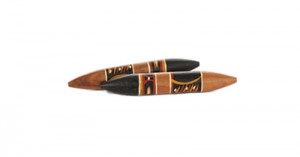
Music is a universal language—and in Aboriginal and Torres Strait Islander cultures, it’s also a powerful vessel for storytelling, ceremony, and connection. Introducing Aboriginal music into early learning environments not only enriches children’s understanding of Australia’s First Nations peoples but also fosters respect, curiosity, and cultural awareness from a young age.
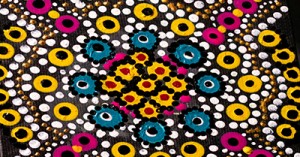
NAIDOC Week is a powerful opportunity to introduce toddlers and preschoolers to Aboriginal and Torres Strait Islander cultures in ways that are respectful, age-appropriate, and deeply meaningful. The following article provides a list of celebration ideas tailored for early childhood settings, blending creativity, sensory exploration, and cultural appreciation.
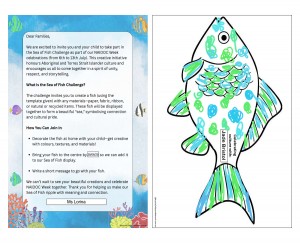
This is a free template for families to participate in the Sea of Fish Challenge during NAIDOC Week 2025.

As part of National Reconciliation Week, Early Childhood Australia is offering two free professional learning courses. Initiating a Reconciliation Action Plan: Where do I start? and Reconciliation in Children’s Education and Care: Taking the First Steps, available free until 3 June.
 Educators across Australia are raising urgent concerns that they cannot adequately supervise all children in their care due to staffing shortages and lack of extra… Read More
 Child care enforcement hits record highs, but educators call for lower ratios, fair pay, and faster inclusion support to truly lift standards.
Read More
Child care enforcement hits record highs, but educators call for lower ratios, fair pay, and faster inclusion support to truly lift standards.
Read More
