


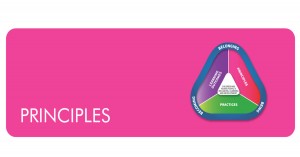
The following are 8 Principles that reflect contemporary theories and research evidence concerning children and young people’s play, leisure and learning and place-based and relational pedagogies.
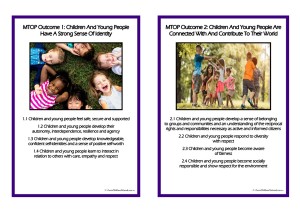
The MTOP Posters With Images can be used to display within the service. Each individual outcome includes an image and the sub-outcomes. The Learning Outcomes are to be used to reflect on children’s learning and focus on what a child can achieve. These include Version 2.0 outcomes which were recently updated (2023).
MTOP Learning Outcomes Posters Version 2.0 displays the main MTOP Learning Outcomes and the sub-outcomes. They can be used to display within the service or used as a reference for documentation and planning. The Learning Outcomes are to be used to reflect on children’s learning and focus on what a child can achieve.
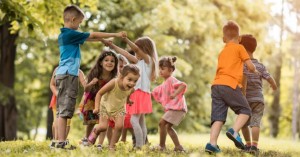
The following lists the sub-outcomes, examples of evidence of when children can achieve each sub-outcome and how educators can promote and help children to MTOP Outcome 2: Children And Young People Are Connected With And Contribute To Their World V2.0.
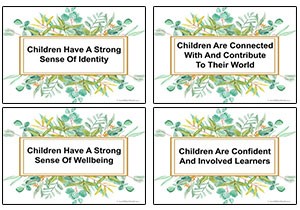
The MTOP Main Outcome Posters includes each of the main outcomes of the My Time Our Place framework for oosh services. These can be used as a display around the room to show how children achieve each outcome.
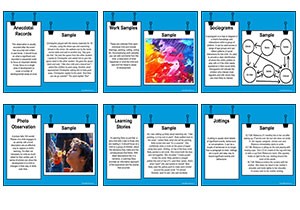
The following Child Observation Posters provides a range of different observation methods that can be used when observing children. Each poster provides a brief description of the observation method and a sample. These posters can be displayed within the room to assist parents in understanding the purpose of observations and it can also be displayed in the staff room as a reminder for Educators. Using a variety of different observation methods provides a foundation for a child's individual assessment and planning and a well rounded and holistic picture of the child.
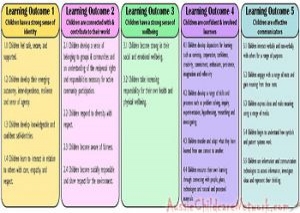 Here is the list of the EYLF Learning Outcomes that you can use as a guide or reference for your documentation and planning. The EYLF… Read More
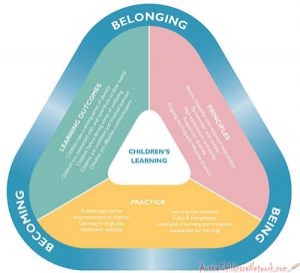 The EYLF is a guide which consists of Principles, Practices and 5 main Learning Outcomes along with each of their sub outcomes, based on identity,… Read More
 This is a guide on How to Write a Learning Story. It provides information on What Is A Learning Story, Writing A Learning Story, Sample… Read More
 One of the most important types of documentation methods that educators needs to be familiar with are “observations”. Observations are crucial for all early childhood… Read More
 To support children achieve learning outcomes from the EYLF Framework, the following list gives educators examples of how to promote children's learning in each individual… Read More
 Reflective practice is learning from everyday situations and issues and concerns that arise which form part of our daily routine while working in an early… Read More
 When observing children, it's important that we use a range of different observation methods from running records, learning stories to photographs and work samples. Using… Read More
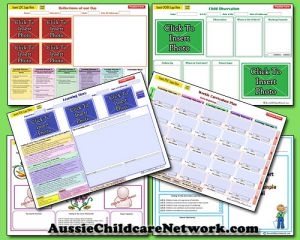 Within Australia, Programming and Planning is reflected and supported by the Early Years Learning Framework. Educators within early childhood settings, use the EYLF to guide… Read More
 This is a guide for educators on what to observe under each sub learning outcome from the EYLF Framework, when a child is engaged in… Read More
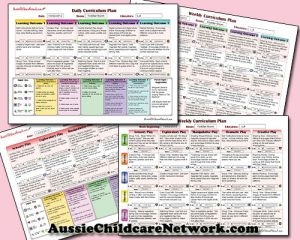 The Early Years Learning Framework describes the curriculum as “all the interactions, experiences, activities, routines and events, planned and unplanned, that occur in an environment… Read More

Recent headlines have sounded alarms about the sharp rise in “serious incidents” reported in Australian...
See more...
Early childhood work is fast‑paced, relational, and constantly shifting. Good time management isn’t about squeezing...
See more...
Achieving EYLF Outcome 1: Children have a strong sense of identity in the babies' room...
See more...