Discover the childcare planning cycle made simple, from observations to follow-ups, with practical examples for new educators.
Step 1: Observations
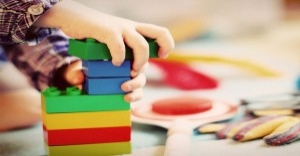
- Example: You notice a child stacking blocks very carefully.
- What to write: “Child stacked 10 blocks, showed concentration and balance.”
Tip: Keep it short and factual—just what you saw.
Step 2: Analysis of Learning
This is where you think about what the observation means.
- Example: Stacking blocks shows fine motor skills, problem‑solving, and persistence.
- Link to EYLF outcomes: Outcome 4—"Children are confident and involved learners.”
Tip: Use educator language like “demonstrates persistence” or “shows emerging problem‑solving skills.”
Step 3: Planning
Now you plan experiences that build on what you saw.
- Example: Plan a group activity with different building materials (blocks, Lego, recycled boxes).
- Individual plan: Encourage the child to try taller towers or different shapes.
Tip: Balance child‑led interests with educator‑led ideas.
Step 4: Implementation
This is the “doing” stage—setting up the activity and supporting children.
- Example: Set up a building corner with blocks, Lego, and photos of famous towers.
- Educator role: Sit nearby, ask questions (“How can we make it taller?”), and encourage teamwork.
Tip: Be flexible; if children turn the blocks into a pretend shop, follow their lead.
Step 5: Reflection & Evaluation
After the activity, reflect on what happened.
- Example: The child built a taller tower with help from a peer.
- Evaluation: Goal achieved—persistence and teamwork observed.
Tip: Ask yourself, "Did the plan meet the learning goal?" What could I change next time?
Step 6: Follow‑Ups
Follow-ups keep the cycle alive. They show how you extend learning beyond the first plan.
- Example: After block play, plan a STEM activity—measuring towers with rulers.
- Another follow‑up: Introduce storybooks about buildings or take a walk to see local architecture.
Tip: Always ask, "What's the next step for this child’s learning journey?"
The Planning Cycle in Action
- Observe → Child stacks blocks.
- Analyse → Shows persistence and fine motor skills.
- Plan → Provide more building materials.
- Implement → Set up building corner.
- Reflect → Child builds taller tower with peer.
- Follow‑Up → Add STEM measuring activity.
- Back to Observe → Notice new math skills.
The planning cycle is not about perfection; it’s about progress. By observing, analysing, planning, implementing, reflecting, and following up, educators create a continuous loop that keeps children’s learning alive and evolving.
Remember:
-
Observations capture the moment.
-
Analysis gives meaning.
-
Planning sets direction.
-
Implementation brings ideas to life.
-
Reflection ensures growth.
-
Follow‑ups extend learning further.
When educators see the cycle as a story of learning, each step becomes easier to understand and apply. Over time, this process builds confidence, strengthens practice, and ensures every child’s journey is valued and supported.
Further Reading
The Planning Cycle To Document Children's Learning
5 Stages Of The EYLF Planning Cycle
Practical Examples Of The Planning Cycle In Action
Simplified Observation & Planning Cycles

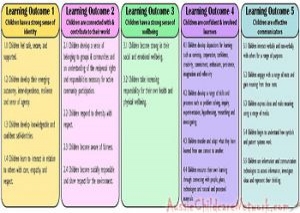 Here is the list of the EYLF Learning Outcomes that you can use as a guide or reference for your documentation and planning. The EYLF
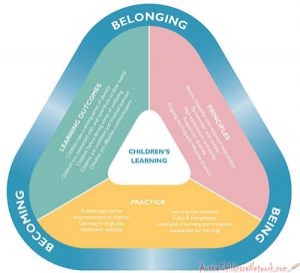 The EYLF is a guide which consists of Principles, Practices and 5 main Learning Outcomes along with each of their sub outcomes, based on identity,
 This is a guide on How to Write a Learning Story. It provides information on What Is A Learning Story, Writing A Learning Story, Sample
 One of the most important types of documentation methods that educators needs to be familiar with are “observations”. Observations are crucial for all early childhood
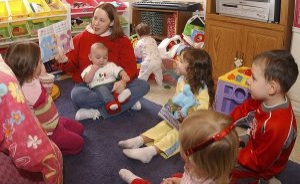 To support children achieve learning outcomes from the EYLF Framework, the following list gives educators examples of how to promote children's learning in each individual
 Reflective practice is learning from everyday situations and issues and concerns that arise which form part of our daily routine while working in an early
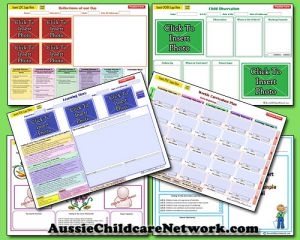
 When observing children, it's important that we use a range of different observation methods from running records, learning stories to photographs and work samples. Using
 Within Australia, Programming and Planning is reflected and supported by the Early Years Learning Framework. Educators within early childhood settings, use the EYLF to guide
 This is a guide for educators on what to observe under each sub learning outcome from the EYLF Framework, when a child is engaged in
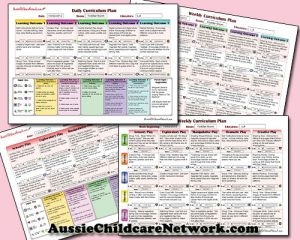 The Early Years Learning Framework describes the curriculum as “all the interactions, experiences, activities, routines and events, planned and unplanned, that occur in an environment