


Educators often wonder: Do we need to display something from every culture every day to be inclusive? The answer is no. The EYLF not require a daily checklist of cultural artifacts. Instead, it emphasises creating environments that are inclusive, meaningful, and responsive to the children, families, and communities you serve.
Authentic representation is about embedding diversity across the year and ensuring children see their identities reflected in ways that feel genuine, not tokenistic. This article provides a practical framework for balancing broad diversity with specific cultural representation.

Lunar New Year (17th February 2026) is a vibrant celebration observed across many Asian cultures, symbolizing renewal, family, and hope for the year ahead. In early childhood settings, it offers a rich opportunity to honor cultural diversity, foster inclusion, and spark joy through sensory experiences, storytelling, and creative play. By tailoring activities to babies, toddlers, and preschoolers, educators can create meaningful, age-appropriate engagements that respect traditions while nurturing curiosity and belonging.

Calendars are not just tools for marking days—they are cultural narratives that shape identity, belonging, and worldview. In early childhood education, respecting diverse calendars means recognizing that families may follow the Gregorian calendar but also lunar cycles, seasonal markers, or religious observances. For children, seeing their traditions acknowledged validates their identity and builds emotional safety. For educators, embedding diverse calendars into practice enriches curriculum, strengthens family partnerships, and aligns with the NQS focus on cultural competence and inclusion.

Here’s a thoughtful set of critical reflection questions you can use to evaluate and enrich cultural displays in your service.
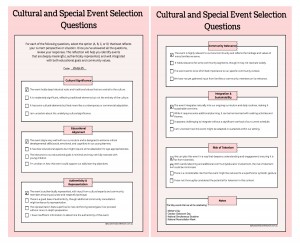
This template offers a list of questions to select the cultural and special events to celebrate at your service.

When celebrations are well thought out—integrating community input, respecting complexity, and linking meaningfully with the curriculum—they transform into powerful learning experiences. But when they become obligatory, surface-level gestures, they risk doing more harm than good by trivializing cultural significance. Here are some reflective questions you can ask to guide your decision on which significant cultural event to celebrate in an early childhood setting.
The following article lists 20 Cultural Games, Instructions For Each Game, Benefits Of Teaching Children These Games, Linking To The EYLF and more.
Incorporating cultural texts into nursery rhymes is a fantastic way to celebrate diversity and introduce children to different cultures. The following article provides information on The Importance To Incorporate Cultural Text Into Nursery Rhymes, Steps To Incorporate Cultural Texts, Example Adaptions, and more.
There is enough evidence in the history of the world to show the steep cost that societies pay when racism in its processes and institutions is not addressed and combated. In Australia, all early childhood learning frameworks mandate that all children should feel safe, secure and supported in their learning environment. Additionally, learning frameworks are underlined by the principle of respect for diversity in all forms. The following article provides strategies to ensure zero tolerance for racism in early childhood settings.
Anti-bias experiences are about guiding children to be able to think about and have words for how people are the same and how they are different. It includes helping children feel and behave respectfully, warmly, and confidently with people who are different from themselves. It includes encouraging children to learn both about how they are different from other children and about how they are similar.
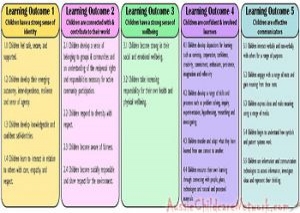 Here is the list of the EYLF Learning Outcomes that you can use as a guide or reference for your documentation and planning. The EYLF… Read More
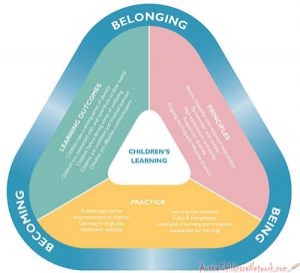 The EYLF is a guide which consists of Principles, Practices and 5 main Learning Outcomes along with each of their sub outcomes, based on identity,… Read More
 This is a guide on How to Write a Learning Story. It provides information on What Is A Learning Story, Writing A Learning Story, Sample… Read More
 One of the most important types of documentation methods that educators needs to be familiar with are “observations”. Observations are crucial for all early childhood… Read More
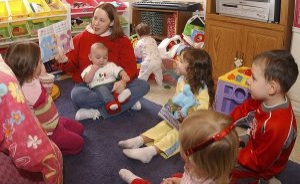 To support children achieve learning outcomes from the EYLF Framework, the following list gives educators examples of how to promote children's learning in each individual… Read More
 Reflective practice is learning from everyday situations and issues and concerns that arise which form part of our daily routine while working in an early… Read More
 When observing children, it's important that we use a range of different observation methods from running records, learning stories to photographs and work samples. Using… Read More
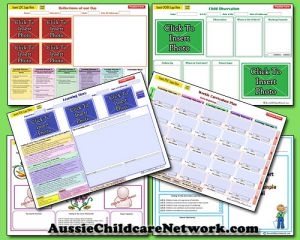 Within Australia, Programming and Planning is reflected and supported by the Early Years Learning Framework. Educators within early childhood settings, use the EYLF to guide… Read More
 This is a guide for educators on what to observe under each sub learning outcome from the EYLF Framework, when a child is engaged in… Read More
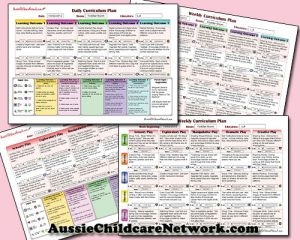 The Early Years Learning Framework describes the curriculum as “all the interactions, experiences, activities, routines and events, planned and unplanned, that occur in an environment… Read More
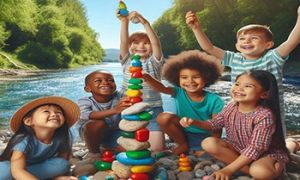
Loose parts are open-ended materials that children can move, manipulate, stack, and combine in countless...
See more...
Weekly summaries are collective reflections that capture the learning, play, and experiences of a group...
See more...
Independent play is a fantastic way for children to develop creativity, problem-solving skills, and confidence...
See more...