


EYLF Outcomes In Action provides examples of how each learning outcome can be demonstrated within the learning environment. These are great to display to show how children and Educators are actively engaging in each learning outcome.

In an early childhood setting pedagogical documentation refers to the practice of collecting and displaying evidence of the different ways children think and learn over a specific period of time. The following article provides strategies for collecting pedagogical documentation for future planning.
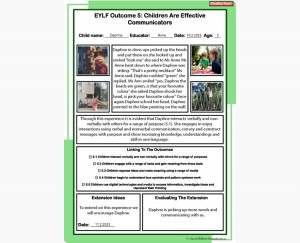
This template is used by Educators for observations. This template links to the sub-outcomes of Learning Outcome 5 - Children Are Effective Communicators.
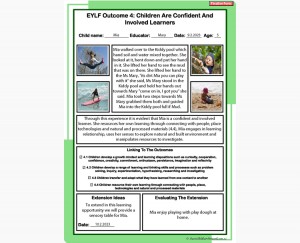
This template is used by Educators for observations. This template links to the sub-outcomes of Learning Outcome 4 - Children Are Confident And Involved Learners.
To support children achieve learning outcomes from the EYLF Framework Version 2.0, the following list gives educators examples of how to promote children's learning in each individual learning outcome. These can be used when assessing children's learning, critically reflecting on the experiences planned, strategies to implement for each learning outcome and more. It also encourages and promotes each individual outcome throughout the early childhood setting.
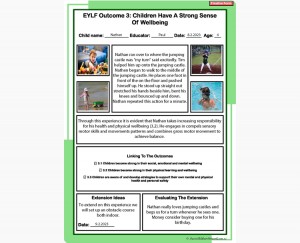
This template is used by Educators for observations. This template links to the sub-outcomes of Learning Outcome 3 - Children Have A Strong Sense Of Wellbeing.
This is a guide for educators on what to observe under each sub-learning outcome from the EYLF Framework Version 2, when a child is engaged in play and learning. Educators can plan experiences for the curriculum and for individual learning and gain an understanding of how children can achieve each individual outcome.
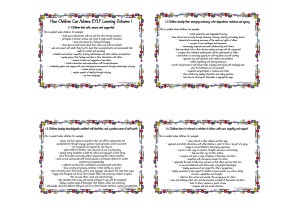
THE EYLF Outcomes and Children Achievement Posters is a guide for educators on how children can achieve under each sub-learning outcome of the EYLF Learning Outcomes Version 2.0. When evaluating individual and group experiences under a particular outcome, educators can use this to see if a child has achieved each outcome. Educators can also plan experiences for the curriculum and for individual learning and gain an understanding of how children can achieve each individual outcome.
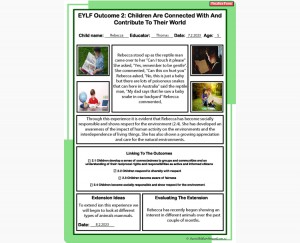
This template is used by Educators for observations. This template links to the sub-outcomes of Learning Outcome 2 - Children Are Connected With And Contribute To Their World.
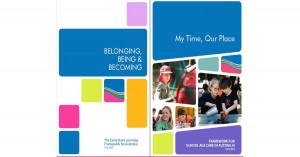
ACECQA has released new resources explaining the updates to the nationally approved learning frameworks EYLF, and MTOP and clarification and expanded explanation across parts of the original learning frameworks. The following provides the EYLF and MTOP Version 2 Booklets as well as other information resources.
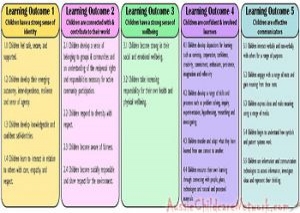 Here is the list of the EYLF Learning Outcomes that you can use as a guide or reference for your documentation and planning. The EYLF… Read More
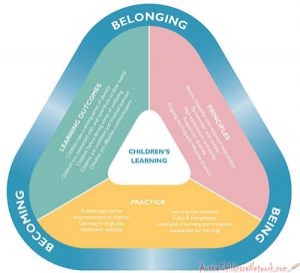 The EYLF is a guide which consists of Principles, Practices and 5 main Learning Outcomes along with each of their sub outcomes, based on identity,… Read More
 This is a guide on How to Write a Learning Story. It provides information on What Is A Learning Story, Writing A Learning Story, Sample… Read More
 One of the most important types of documentation methods that educators needs to be familiar with are “observations”. Observations are crucial for all early childhood… Read More
 To support children achieve learning outcomes from the EYLF Framework, the following list gives educators examples of how to promote children's learning in each individual… Read More
 Reflective practice is learning from everyday situations and issues and concerns that arise which form part of our daily routine while working in an early… Read More
 When observing children, it's important that we use a range of different observation methods from running records, learning stories to photographs and work samples. Using… Read More
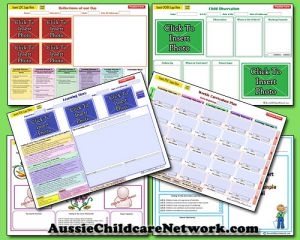 Within Australia, Programming and Planning is reflected and supported by the Early Years Learning Framework. Educators within early childhood settings, use the EYLF to guide… Read More
 This is a guide for educators on what to observe under each sub learning outcome from the EYLF Framework, when a child is engaged in… Read More
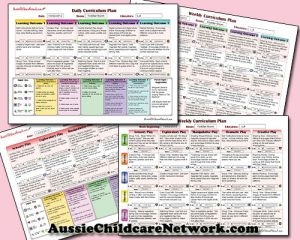 The Early Years Learning Framework describes the curriculum as “all the interactions, experiences, activities, routines and events, planned and unplanned, that occur in an environment… Read More

Reflection is a valuable tool for personal growth and learning; critical reflection takes it a...
See more...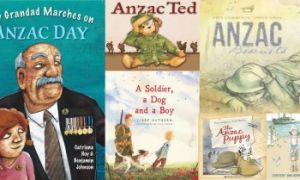
ANZAC Day is commemorated on 25th April. Learning about ANZAC Day helps young children to...
See more...
As early childhood services increasingly consider CCTV to bolster child safety and meet compliance expectations...
See more...